Wednesday, April 05, 2006

WSJ.com - Drug Cuts Risks Of Colon Cancer In Two Studies

WSJ.com - Drug Cuts Risks Of Colon Cancer In Two Studies: "The popular painkiller Celebrex sharply reduced the risk of colon cancer in patients prone to the disease, according to results of two large studies.

Researchers behind the work said the results confirmed that a drug could help prevent the common cancer but cautioned that problems with side effects, including heightened risk of heart attacks and strokes, must be addressed before the approach could become routine."

WSJ.com - A New Approach to Treating Cancer

WSJ.com - A New Approach to Treating Cancer: "Cancer has long been defined by where it is found in the body. Patients have breast cancer, prostate cancer, lung cancer.

In a significant shift, researchers are coming to believe that cancer comprises hundreds of subgroups based more on genetic makeup than location.

This new thinking means that instead of focusing cancer treatment on organs, the emphasis increasingly is going to be on finding the specific genetic changes driving an individual's cancer and targeting them with drugs. Some people who have cancers in different organs may end up taking the same drugs because common genetic mutations are involved.

Already, researchers have identified a number of genetic variations, resulting in some of the most exciting breakthroughs in oncology: Doctors now believe that the drugs Tarceva and Iressa work best in a certain subgroup of patients with lung cancer, Gleevec in particular subtypes of leukemia and sarcoma patients, and Herceptin in certain breast-cancer patients. Cancer researchers also continue to announce discoveries of new cancer subtypes in liver, brain and prostate cancer, among others."

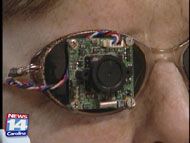
Bionic Eye Posted by Picasa

News 14 Carolina | 24 Hour Local News | TOP STORIES | New device allows woman to see, even without eyes

The latest on bionic eyes...
News 14 Carolina | 24 Hour Local News | TOP STORIES | New device allows woman to see, even without eyes: "(ST. LOUIS) - More than a million people in the United States are legally blind. Many of them once had vision but tragically lost it. Now a breakthrough device could give them back some of their sight.

Some call her the bionic woman. Others call her a medical miracle. But Cheri Robertson has given herself another title:

'I just call myself the robo-chick.'

Robertson is blind, but this device allows her to see, not with her eyes but with her brain! Fifteen years ago, she lost both of her eyes in a car accident. She was just 19 years old."

Intel Launches New Ruggedized PC Platform For India

Intel Launches New Ruggedized PC Platform For India: "NEW DELHI, March 29, 2006 – Intel Corporation today officially launched an innovative PC platform that has been developed exclusively to meet the needs of rural villages and communities in India. Designed as a result of defining locally relevant computing solutions based on Intel technology, the Intel-powered “Community PC” platform is equipped to operate in a community setting while accommodating the varying environmental conditions prevalent in the country."

Tuesday, April 04, 2006

: "The world's deadliest humanitarian crisis goes almost unnoticed in the media, even though a thousand are dying every day."

Congo's Street Kids Could Be Election Weapon: Group - New York Times

Congo's Street Kids Could Be Election Weapon: Group - New York Times: "KINSHASA (Reuters) - Tens of thousands of street children across Congo risk being recruited by political parties to create chaos, intimidate voters and contest the results of up-coming elections, Human Rights Watch said on Tuesday.

The New York-based watchdog warned that the children faced death or injury as Congo's security forces -- who killed or wounded scores of anti-government demonstrators in 2005 -- frequently respond to protests with excessive force."

Uganda Army Halts Training for HIV - Infected Troops - New York Times

Uganda Army Halts Training for HIV - Infected Troops - New York Times: "KAMPALA (Reuters) - The Ugandan army will halt training for HIV-positive soldiers for fear it could worsen their condition, a military spokesman said on Tuesday.

``We do not want to put any more stress on our brothers who are already suffering. This move was made out of our concern for their health,'' Major Felix Kulayigye told Reuters.

The east African country has been praised for running the continent's most successful fight against the disease, cutting infection rates to around six percent today from more than 30 percent in its worst affected districts in the 1990s.

Most Ugandans attribute the fall to a frank education campaign about condoms by President Yoweri Museveni at a time when many other African leaders seemed embarrassed to discuss

AIDS."

Fungal Contact - Lens Infections Rising - New York Times

Fungal Contact - Lens Infections Rising - New York Times: "It wasn't until several doctor visits later that Bregman-Rodriguez was diagnosed with a fungal eye infection, a condition difficult to treat that can cause blindness.

She's one of an alarming 21 cases treated so far this year at the University of Miami's Bascom Palmer Eye Institute, which typically sees that many in a year.

Even more peculiar is that 12 cases involved patients with contact lenses, while previously fewer than 2 percent of those infected wore them.

Increases have also surfaced in Singapore, Malaysia and Hong Kong, and the Centers for Disease Control and Prevention are monitoring a dozen states -- which are not being named -- for an uptick.

The fungus, called fusarium, is commonly found in plant material and soil in tropical and subtropical areas. Without eyedrop treatment, which can last 2-3 months, the infection can scar the cornea and blind its victims."

Monday, April 03, 2006

Poverty and Growth Blog |

A new blog from the world bank...

Poverty and Growth Blog |: "Maintained by the Poverty and Growth Program (PGP) of the World Bank Institute (WBI), the Poverty and Growth Blog will be one more instrument to share knowledge and help build capacity in poverty-related issues. It will bring together knowledge, news, resources, ideas and commentary on issues relating to the design, implementation, monitoring, and evaluation of poverty reduction policies and strategies, and on other issues related to poverty and growth. Finally, it will also allow us to maintain an open, on-going dialogue with participants in our courses, with partners and, in general, with the broad public interested in poverty reduction."

A Depression Switch? - New York Times

Area 25--where neurosurgeos bomb away depression. This is an exciting new neurosurgical approach to depression treatment, in its efficacy, but also in its approach of honing in on an area of the brain wherein emotional states reside as opposed to approaches which treat the brain globally, via e.g. anti-serotonin agents or electroconvulsive therapy...

A Depression Switch? - New York Times: "Along with redirecting research, the quieting of Area 25 may also change our conception of depression from a condition in which something is lacking — self-esteem, resilience, optimism, energy, serotonin, you name it — to one in which an active agent makes a person sick."

Saturday, April 01, 2006

The Siren Song of Mali - New York Times

Malian music has always been a favorite of mine. Specifically, I would recommend Rokia Traoré, Ali Farka Touré, and Habib Koité and Bamada. Check the link for more information on the music of this small West African country...

The Siren Song of Mali - New York Times: "We were walking down a dirt road in a neighborhood of Bamako with the mellifluous name of Badalabougou, following the rhythmic beating of a bongo drum. Then we saw it: down an alley lined with dusty neem trees and flowering jacarandas, a few hundred wedding celebrants had gathered under a canopy made from scraps of United Nations-issue sheeting, intently watching a local percussion band play a rousing music known as deedadee."

Wednesday, March 29, 2006


Total Eclipse of the Sun Posted by Picasa

NASA - Total Solar Eclipse of 2006 March 29

NASA - Total Solar Eclipse of 2006 March 29: "On Wednesday, 2006 March 29, a total eclipse of the Sun will be visible from within a narrow corridor which traverses half the Earth. The path of the Moon's umbral shadow begins in Brazil and extends across the Atlantic, northern Africa, and central Asia where it ends at sunset in western Mongolia. A partial eclipse will be seen within the much broader path of the Moon's penumbral shadow, which includes the northern two thirds of Africa, Europe, and central Asia."

Talking Points: The Scandal of 'Poor People's Diseases' by Tina Rosenberg - New York Times

A very well written article on the intersection of diseases of the rich and diseases of the poor. Highly recommended reading...
Talking Points: The Scandal of 'Poor People's Diseases' by Tina Rosenberg - New York Times: "It's hard to imagine how a Rwandan woman with AIDS might be considered lucky, but in a way, she is. Effective drugs exist to treat her disease, and their price has dropped by more than 98 percent in the last six years. Research speeds ahead on treatments and vaccines. Although much more needs to be done, the world takes AIDS seriously: rich countries provide money, drug companies have lowered their prices and accepted generic competition, and poor countries like Rwanda are scrambling to provide free treatment to all who need it. None of this is true for people who suffer from malaria, tuberculosis, or a host of other diseases that citizens of rich countries haven't even heard of – like kala azar, sleeping sickness and Chagas disease. Even children with AIDS are out of luck compared to their parents.

All these diseases have been abandoned in some important way. For some, no good treatments exist and there is little attempt to invent them. For others, effective drugs exist, but aren't being made. Or those drugs are so expensive that poor people and poor countries have no hope of buying them. Most of these diseases are easily preventable and completely curable. Saving the lives of their sufferers is much cheaper and easier than treating AIDS. Yet millions of people die of them. Why the difference?

As fatal illnesses go, AIDS is the best one for a poor person to catch because rich people get it, too. The other diseases might as well hang out a sign: "Poor People Only." They offer researchers no profitable market. They have little political constituency. There is no well-connected group of sufferers who stage protests and lobby pharmaceutical companies and Congress to develop better medicines or make existing ones more available. The response to disease is political: the illnesses of invisible people usually stay invisible."...

Tuesday, March 28, 2006

Worldmapper: The world as you've never seen it before

Worldmapper: The world as you've never seen it before: "Worldmapper is a collection of world maps, where territories are re-sized on each map according to the subject of interest."

In Disgrace, and Facing Death - New York Times

"God should not give daughters to poor people," she said in despair. "And if a daughter is born, God should grant her death."
In Disgrace, and Facing Death - New York Times: "Aisha Parveen will live another day. Indeed, at least another week.

Ms. Parveen, the young Pashtun woman I wrote about on Sunday, was kidnapped at the age of 14 and imprisoned in a brothel here in southeastern Pakistan for six years. She escaped in January and married the man who helped her flee, but now a Pakistani court has charged her with adultery and is threatening to hand her back to the brothel owner — even though she is adamant that he will then torture and kill her."
(...)

Ms. Parveen, now living in hiding after several kidnapping attempts in the last few days, faces an even more brutal struggle. Her only stroke of luck is having her new husband, Mohamed Akram, who rescued her from the brothel, on her side. The young couple are lovebirds, and each keeps talking about being so lucky to have found the other.

But Mr. Akram, while unwavering in his love, has disgraced his family by marrying a supposedly fallen woman, and his older sister is suffering.

"My brother-in-law sent me a message: 'Unless you divorce her, I will divorce your sister,' " Mr. Akram lamented. "She has two kids. And he's also beating her now. He's very upset because I married a girl who was in a brothel, who is not a virgin."

The couple cannot seek refuge with Ms. Parveen's parents, because Pashtun parents routinely protect their family honor by killing daughters accused of zina.

"I cannot go back there because if I do, they'll kill me," Ms. Parveen said. "In their eyes I'm dishonored, because even if a girl is kidnapped, then in their eyes she still should be killed."

Saddest of all, her story isn't newsworthy in a classic sense. There's nothing at all unusual about a young Asian woman suffering years of sexual enslavement, or judicial malpractice or murder.

And that's the challenge for us all, Asians and Americans alike — to change our worldview and put gender issues like sex trafficking higher on the global agenda.

A quarter-century ago, Jimmy Carter plucked human rights abuses from the backdrop of the international arena and put them on the agenda. Now it's time to focus on gender inequality in the developing world, for that is the greatest single source of human rights violations today.

Political dissidents tend to get the world's attention. But for every dissident who is beaten to death by government torturers somewhere in the world, thousands of ordinary women or girls die prematurely because of the effects of discrimination. In India, for example, girls 1 to 5 years old are 50 percent more likely to die than boys of the same age, because the boys are favored. That differential accounts for the death of a young Indian girl every four minutes.

Since these victims usually are voiceless, I'll give Ms. Parveen the last word so she can prick our consciences.

"God should not give daughters to poor people," she said in despair. "And if a daughter is born, God should grant her death."

Crossroads Arabia

Crossroads Arabia: " Why Is There So Much Hate Inside Us?
Abdullah Al-Mutairi • Al-Watan
(via crossroads arabia)

In the shop next to my house, there is a home delivery service which is run by an Indian. He is a good man, hardworking and devoted to his job. I talk to him whenever he delivers something to my house and he talks to me about the time he spent working in Abu Dhabi and of his dream to live in London.

Last week I asked him to deliver a newspaper to my house. When he delivered it to me, he asked me whether I wrote in it. I told him that I did and he asked me to write about why young Saudis hate foreign workers, particularly Indians, Pakistanis and Bangladeshis. He asked, “Why do they throw rocks at us when they see us in the street?” He said that in India they were taught to love others because that is the teaching of the Prophet Muhammad (peace be upon him). I was moved by his words and promised him that I would write on the subject.

This article, from the Arabic daily Al-Watan (translated and republished in Arab News) is written by a Saudi teacher who believes that his countrymen have a long way to go when dealing with 'The Other.'

That issue is one that King Abdullah has made his own, through the series of National Dialogues bringing together Saudis of varied backgrounds. These Dialogues have addressed the matter"

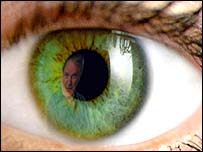
lazy eye Posted by Picasa

BBC NEWS | Technology | Video games tackle 'lazy eye'

BBC NEWS | Technology | Video games tackle 'lazy eye': "Playing virtual reality computer games may help treat the condition known as amblyopia, or lazy eye, say researchers.

In patients with amblyopia, one eye works better than the other. Because the amblyopic eye is inferior for some reason, the brain decides to use the good eye.

Over time, the neural connection to the bad eye becomes gradually weaker in favour of the good eye.

The traditional way of fixing the problem is for patients to force the bad eye to work harder by wearing a patch over the good eye.

The treatment usually involves patching for around 400 hours and can cause the eyes not to work together, resulting in double vision.

Researchers at Nottingham University say that an experimental treatment using virtual reality (VR) may offer the best of both worlds, encouraging the lazy eye to be more active and getting both eyes to work together.

'Traditionally VR has been used to present realistic environments in 3D so you imagine you're there because of the depth of the world around you,' said Richard Eastgate of the university's Virtual Reality Applications Research Team.

'But we're using VR to make something unrealistic. You could call it virtual unreality,' he told Digital Planet.

'We're actually presenting two different versions of the world to each eye.'

Effective treatment

In one experiment, the team has been trying out a racing game where the computer sends images of the player's own car to the amblyopic eye, but the other cars go to the good eye.

A racing game was used for the research
Obstacles on the track are sent alternately to each eye, so both eyes team up to get the patient through the game.

The researchers are encouraged by the results.

'We thought we'd develop a system that needed about 400 hours of treatment like patching. In the end we achieved the same effect in an hour,' said Dr Eastgate.

It is not entirely clear how the treatment works on a neurological level.

Research in the past has tried static images. But the team believes that modern virtual reality has allowed different but related dynamic information to be sent to each eye for the first time.

"The technique hasn't been proven with rigorous trials but the early results show a very rapid effective treatment through this system," said Dr Eastgate. "
Related Posts with Thumbnails

ShareThis