Monday, November 20, 2006

China's Africa Adventure

This is a very well done 6 page piece about the history of Anhttp://beta.blogger.com/img/gl.link.gifgola and the increasing influence of China in this oil-rich country. It highlights the type of investment relationship that China is creating all over Africa...


Angola is a very, very poor country, but it is also an extremely rich one, for immense deposits of oil lie under the South Atlantic Ocean within its territorial waters. Thanks to the growing appetites of several developing nations, China in particular, that need oil to sustain the furious expansion of their economies, last year Angola, which otherwise has almost no economy, had more than $10 billion to play with. And it has used that money to pay more advanced countries to rebuild its infrastructure. This vision — call it “Development by China” — looks like a catastrophic mistake to the Western experts and institutions that have scrutinized, invested in and at times despaired of Angola.
(..)
Angola traditionally exported not only oil but diamonds, iron ore, cotton, sisal and corn. But Portugal, Angola’s colonial master for four centuries, abruptly abandoned the country in 1975, provoking a civil war between a government backed by the Soviet Union and Cuba, and Unita, a rebel force supported by South Africa and the United States. The war waxed and waned through stalemates, cease-fires and even, in 1992, an election. By the end, in 2002, more than a million people had died and about a third of Angola’s population of 12 million had fled from their homes. The war reduced Angola to a beggar nation, dependent on handouts from the World Food Program.
(..)

The one industry that continued to function throughout the war was oil, for even Angola’s fighting couldn’t spread to the ocean floor. Oil revenue allowed the regime of President José Eduardo dos Santos, who took power in 1979, to buy weapons and mercenaries, and ultimately to destroy the Unita army. A bizarre wartime financial system evolved in which revenue flowed into the national oil company, known as Sonangol, and then . . . disappeared.
(..)
Vast sums — no one knows how much — were stolen by members of the regime. By the mid-’90s, the government was running enormous deficits, and inflation was zooming past 1,000 percent. The end of the cold war had deprived Angola of its Soviet patron; the regime, which in 1990 officially forswore Marxist-Leninist doctrine and supposedly began making a transition to a market economy, now turned to the West for help. But the United States and other donor nations no longer needed to prop up sympathetic dictators. And they had learned, through painful experience, that aid given to corrupt regimes with opaque financial systems was bound to be wasted.
(..)
An I.M.F. team that came in 2002 to help the country put its financial affairs in order was flabbergasted by Angola’s Potemkin economy, and even more by the nonchalance of its leading officials.
(..)
After the I.M.F. report, the United States and Britain pulled out, and Angola, still deeply in debt despite billions in oil revenue, was left to bitterly contemplate its options.
(..)
And China offered a model of development, driven from above and powered by high-tech investment, vastly more gratifying and reassuring to third-world elites than the Western gospel of unleashing growth through democratic and marketplace reform. Western donors, led by the I.M.F., conditioned aid on the achievement of meaningful, and often painful, reform. China, by contrast, offered aid without “conditionality.” According to China’s official African policy, published earlier this year, China seeks “a new type of strategic partnership,” which, among other things, “respects African countries’ independent choice of the road of development.” China invokes this doctrine of noninterference when defending the grossly abusive regimes in Sudan, Zimbabwe, Eritrea and elsewhere with which it carries on a flourishing business.
(..)

By 2003, the regime in Angola was every bit as disgusted with the I.M.F. as the I.M.F. was with it.
(..)
In November 2003, Angola’s finance minister traveled to China to discuss a financial package. One year later, China announced that it had extended to Angola a $2 billion oil-backed loan, an Angolan specialty in which credit is secured by future oil production — just the kind of risky gimmick the I.M.F. had preached against. China uses its foreign aid as a means to promote opportunities for private investment, and the two countries agreed that Chinese construction companies would build the giant infrastructure projects financed by the loans.

China immediately began to increase its purchase of Angolan oil; by early this year, Angola had replaced Saudi Arabia as its single-largest source of oil. The extent of China’s commitment to Angola became stunningly clear this spring, when Sinopec, a Chinese state-owned energy company, bid $2.2 billion for the right to develop two deep-water blocks — a sum that shattered all previous records anywhere in the world.
Sinopec made its investment in partnership with Sonangol. The billions China offered astonished the Western oil companies, which had already explored adjacent areas and had submitted only modest bids.
(..)
Everything seems to be breaking right for Angola just now. Angola is swimming in oil money. Last year’s oil revenue of $10.6 billion was almost double the figure from 2004. A recent report by The Economist Intelligence Unit projects the country’s growth rate at 16.7 percent this year and 20.8 percent in 2007, making Angola’s one of the world’s fastest-growing economies
(..)
And yet this is the same country where one out of three children dies before reaching the age of 5, where average life expectancy is 38, where cholera, polio and hemorrhagic fevers like the Marburg virus flourish — a country that ranks 160th out of the 177 countries on the United Nations’ Human Development Index. How, and when, will the cataract of oil money flow down the hill from Luanda Sul to improve the lives of Angola’s impoverished, war-weary citizens?
(..)
“If you don’t have roads, if you don’t have bridges, if you don’t have the energy system, electricity, water,” he said, “how can you expect the private sector to invest in such a country?” Yes, he said, Angola needed to pay teachers better. “But public expenses for personnel account for 50 percent of the current budget. Some people”—I.M.F.-type people, presumably —“say that you have to bring down your expenses for personnel. How do you solve that in a postconflict situation? Do you create massive unemployment?”
(..)
Jaime had, of course, glossed over the untold sums lost to corruption, but he had also neglected to mention another distinctly Angolan factor: the combination of war, theft and indifference to the plight of the ordinary Angolan had rotted away the machinery of government. The state’s capacities, whether in regard to bricklayers or teachers or civil servants, or banks, or power grids, were so feeble that any attempt to push all those billions through normal government channels would produce a colossal blockage. The only way to actually put the money to use was to pay the Chinese — or the Portuguese or the Brazilians — to build things. And so Angola was spending staggering sums to repair its infrastructure: $2.7 billion for a dam in the north, $4 billion for three railway lines, including the one that ran through Huambo. The regime wouldn’t be able to provide a public health care system or a skilled work force for years, but it could deliver passable roads. And roads mattered. “By the end of 2007,” Jaime grandly predicted, “most roads linking main production centers will be finished, and the economy will just jump.”(..)
China is now one of Africa’s largest customers not only for oil but also for timber, minerals, cotton and other natural resources. China in turn has flooded Africa with cheap consumer goods. The I.M.F. forecasts that China’s trade with Africa will top $50 billion this year and could reach $100 billion by 2010. Over the last five years, sub-Saharan Africa’s growth rate has almost doubled, to 5.8 percent from 3 percent; economists attribute much of the increase to trade with China and other Asian countries.
(..)
The People’s Republic has declared 2006 “the Year of Africa.” The West had its own unofficial Year of Africa in 2005, and it is instructive to compare the two.
The industrial nations conducted a sort of moral crusade, with advocacy organizations exposing Africa’s dreadful sores and crying shame on the leaders of wealthy nations and those leaders then heroically pledging, at the G8 meeting in July, to raise their development assistance by billions and to open their markets to Africa. Once everyone had gone home, the aid increase turned out to be largely ephemeral and trade reform merely wishful. China, by contrast, offers a pragmatic relationship between equals: the “strategic partnership” promised in China’s African policy is premised on “mutual benefit, reciprocity and common prosperity.”
(..)
If we believe that a model of development that strengthens the hand of authoritarian leaders and does little, if anything, to empower the poor is a bad long-term strategy for Africa, then we are going to have to come up with a strategic partnership of our own. And it is not only a question of what is good for the African people. The United States has a real security interest in avoiding failed states and in blocking the spread of terrorism in East and North Africa. What’s more, the United States already imports 15 percent of its oil from Africa, mostly from Angola and Nigeria; that figure is bound to rise and could even double, eventually making Africa as large a supplier of oil as the Middle East now is. China’s Africa policy shows that globalization is increasingly divorced from Westernization. We have grown accustomed to the idea that Africa needs us; it’s time to recognize that we, like China, need Africa.

Thursday, November 16, 2006

Stephen Colbert Election NIght Rant

I have been waiting for this clip to appear on the net. (Tip of the hat to Freeze for finding it)...

U.S. Bombards Insurgents with Negative Ads

The latest from Andy Borowitz...

In a bold change of strategy in the war in Iraq, President George W. Bush announced today that the U.S. had begun bombarding Iraqi insurgents with negative ads in the hopes of bringing the insurgency to its knees.

At a White House briefing today, spokesman Tony Snow said that the new military campaign, called Operation Relentless Smear, would focus on attacking the personal missteps and hypocrisies of key Iraqi insurgents on a twenty-four-hour basis.

"This new strategy is playing to our strengths," Mr. Snow told reporters. "The insurgents are good at blowing things up and creating chaos, but no one is better than we are at creating negative ads."

According to Mr. Snow, Operation Relentless Smear will re-deploy thousands of negative ad producers, directors, and voiceover artists who were momentarily idle at the conclusion of the U.S.'s midterm election campaign.

Masterminded by the White House's top political strategist Karl Rove, the bombardment of negative ads began at midnight Wednesday, interrupting all local Iraqi programming with a nonstop diet of half-truths, corrosive accusations and character assassination.

By Thursday morning, there were already signs that Operation Relentless Smear was working, as Iraqi insurgents in such key cities as Baghdad and Tikrit appeared worn out by the onslaught of slickly produced attack ads.

"The air strikes and the curfews were one thing," said Hassan El-Medfaii, an insurgent who is based in Baghdad's Sadr City district. "But this is messing with my TV."

Elsewhere, US Airways made an $8 billion bid for Delta, including $4 billion in cash and $4 billion in lost luggage.

Wednesday, November 15, 2006

In Medicaid, Private HMOs Take a Big and Profitable Role

Some 55 million poor and disabled Americans are covered by Medicaid. With an annual price tag topping $300 billion, it's among the biggest government programs around.

It's also a lucrative business for some private companies that act as middlemen between the government and patients. Instead of directly paying the bills when a Medicaid patient goes to the doctor, state governments increasingly outsource the job to private contractors. More than one in three Medicaid beneficiaries now receive care through a private insurer.


The potential gains are big. Four years ago, a private-equity fund in which George Soros was the largest investor took a 70% stake in WellCare Health Plans Inc., a leading Medicaid health-maintenance organization. The fund finished cashing out the stake this August, bringing in a total of $870 million for an investment that originally cost $220 million.

Four of the biggest Medicaid HMOs -- WellCare, Centene Corp., Molina Healthcare Inc. and Amerigroup Corp. -- have seen their shares surge on the New York Stock Exchange over the past few years, although prices of the latter three have been volatile. WellCare's stock price has tripled since it began trading in July 2004, bringing the value of stock and options held by its chief executive, Todd S. Farha, to $77 million.

The companies are growing fast. Centene boasts nearly 1.2 million members and posted $1.5 billion in revenue last year. That compares with 142,000 members and $200 million in revenue six years earlier.

With the growth has come criticism from some doctors and patients who accuse Medicaid HMOs of scrimping on care. Even as they restrict medical tests and use of prescription drugs, the companies spend the money they get from states on items that don't have an obvious connection to patients. Centene has funded a multimillion-dollar arts center in St. Louis and paid to put its name on stadiums in Montana and Missouri. The HMOs are also big donors to political campaigns.

Link:http://online.wsj.com/article/SB116354350983023095.html?mod=djemHL (subscription required)

Thursday, November 09, 2006

Gorillas Harbor AIDS like virus

This was a concern in the back of my mind when bush meat was served for dinner when I was in Sierra Leone last month...

PARIS (AFP)—Gorillas appear to be widely infected by a close relation to the AIDS virus, according to a study that appears in the British journal Nature.

French scientists made the startling discovery—which has wide implications for the illegal market in bushmeat
—as they were looking for traces of the simian immunodeficiency virus (SIV) among chimpanzees.

Monday, November 06, 2006

The Beauty of Mathematics

The Beauty of Mathematics: http://canadared.blogspot.com/2006/11/beauty-of-mathematics.html

Some Nevada doctors are flat-lining over reimbursement plans

This article highlights some experiences that jibe with our experience in the practice ofophthalmolog in Nevada. The article misses the fact that Blue Cross Blue Shield also provide minimal coverage for their patients--it is a moneymaking monster for itself, that rips off patients and doctors...


LAS VEGAS (AP) -- Some Nevada doctors are flat-lining economically over reimbursement plans they say are too low. The dilemma could force many to leave a state that already faces a shortage of doctors, according to the president of the Nevada Association of Family Physicians.

"We're chasing our tails. We're in a losing game," said president Bill Pierce.

Pierce's solo family doctor practice in 2005 brought in a half-million dollars, but he ended up $32,000 in the hole. He took out a $100,000 home-equity loan to cover the difference.

Today's world of health care has forced Pierce to be as much a businessman as a healer and he said he's not alone.

Doctors' biggest challenge these days is not treating ailing patients but navigating a complex maze of reimbursements from 150 insurance companies, he said.

Each insurer reimburses doctors at different amounts based on separately negotiated contracts - and physicians' revenues can drop even as costs increase.

Pierce estimates he needs to generate $272 an hour to cover his costs - from malpractice insurance to rent.

That means seeing dozens of patients every day. He doesn't want to treat them as so many widgets, so he tries to spend a decent amount of time with each. But that just gets him in financial trouble.

His practice has 4,300 patients. A third of them are covered by Anthem Blue Cross and Blue Shield. It used to pay Pierce $66.53 to see a patient for a typical 20-minute visit. It was recently cut to $47.37, some of which may be paid directly by the patient.

By comparison Medicare, the federal government's insurance program for people who are disabled or over age 65, pays $84.51 for the same type of visit, Pierce said, though those rates are also expected to drop.

The reimbursement rules mean that sometimes it pays more for the doctor to inconvenience patients, he said.

For example, when a Blue Cross patient needed a skin lesion removal, a procedure that takes 30 minutes of staff time, Pierce had the option of delaying the procedure to a future visit and receiving about $30 from Blue Cross. Instead, he removed it immediately and was reimbursed 73 cents.

In most industries, business owners can charge more when their costs rise, but that's not the case for doctors.

Dr. Florence Jameson, an obstetrician-gynecologist and president of the Clark County Medical Society, said many doctors are forced to join groups and share administrative costs. The solo practice, she said, may become a relic.

"It is a big deal and it's a sad thing, and it's unfortunate that medicine now is just big business, it's now corporate," Jameson said. "It will never go back to the way it was 20 or 30 years ago. Too many people have found out how lucrative it is to be a middle man in medicine."

Jameson said insurance companies are forcing family doctors to change the way they practice. For example, many doctors are extending the reach of their practices by using more physician assistants or nurse practitioners to treat patients. Fewer patients are treated by doctors.

Pierce said he can't keep up with the insurance companies' changing rules and guidelines.

He just knows one thing: If they cut back on how much they reimburse him to see their customers, he may be forced to stop seeing them. Other doctors have dropped patients for the same reason - inadequate insurance reimbursements.

Pierce said he is forming an additional branch of his practice that will bypass insurance companies.

Patients who join the program - tentatively called Your MD -would eliminate their comprehensive health coverage. Instead, they would carry less-expensive catastrophic coverage and pay Pierce $2,000 a year - about what many people pay for health insurance - for up to 10 visits, annual lab work and a nutritional assessment.

He said he would limit the number of patients in the new program to 600, so they can have his full attention. In return, he'll get paid up front by patients.

And he won't have to deal with their insurance companies.

---

Information from: Las Vegas Sun, http://www.lasvegassun.com

Saturday, November 04, 2006

Dave Chapelle as Rapper Li'l John

Make sure you watch this video all the way through the end for some good laughs...

Monday, October 30, 2006

Africa’s World of Forced Labor, in a 6-Year-Old’s Eyes


This article highlights the miserable life of child slaves in Western Africa. My experiences in Africa seem to confirm much of what this article states regarding the lack of respect for individual life, the differing attitudes toward children between here and much of the third world, the terrible choices people make in the face of overwhelming poverty...

Mark Kwadwo is 6 years old. About 30 pounds, dressed in a pair of blue and red underpants and a Little Mermaid T-shirt, he looks more like an oversized toddler than a boat hand. He is too little to understand why he has wound up in this fishing village, a two-day trek from his home.

But the three older boys who work with him know why. Like Mark, they are indentured servants, leased by their parents to Mr. Takyi for as little as $20 a year.

Until their servitude ends in three or four years, they are as trapped as the fish in their nets, forced to work up to 14 hours a day, seven days a week, in a trade that even adult fishermen here call punishing and, at times, dangerous.

Mr. Takyi’s boys — conscripts in a miniature labor camp, deprived of schooling, basic necessities and freedom — are part of a vast traffic in children that supports West and Central African fisheries, quarries, cocoa and rice plantations and street markets. The girls are domestic servants, bread bakers, prostitutes. The boys are field workers, cart pushers, scavengers in abandoned gem and gold mines.
(..)

The International Labor Organization, a United Nations agency, estimates that 1.2 million are sold into servitude every year in an illicit trade that generates as much as $10 billion annually.
(..)

John R. Miller, the director of the State Department Office to Monitor and Combat Trafficking in Persons, said the term trafficking failed to convey the brutality of what was occurring.

“A child does not consent,” he said. “The loss of choice, the deception, the use of frauds, the keeping of someone at work with little or no pay, the threats if they leave — it is slavery.”

Some West African families see it more as a survival strategy. In a region where nearly two-thirds of the population lives on less than $1 a day, the compensation for the temporary loss of a child keeps the rest of the family from going hungry. Some parents argue that their children are better off learning a trade than starving at home.

(..)

To reduce child trafficking significantly, said Marilyn Amponsah Annan, who is in charge of children’s issues for the Ghanaian government, adults must be convinced that children have the right to be educated, to be protected, and to be spared adult burdens — in short, the right to a childhood.

“You see so many children with so many fishermen,” she said. “Those little hands, those little bodies. It is always very sad, because this is the world of adults.
(..)

“It was hunger, to get a little money; the whole today, I have not eaten,” said Efua Mansah, whose 7-year-old son, Kwabena, boarded a small blue bus with Mr. Takyi four years ago for the 250-mile trip to Kete Krachi.

She has seen him only twice since then. In all that time, Mr. Takyi has paid her $66, she said, a third of which she spent on buses and ferries to pick up the money.

(..)

Mr. Takyi, who sleeps and works in the same gray T-shirt, is disarmingly frank about his household. He can afford to feed the children only twice a day, he said, and cannot clothe them adequately. He himself has been paddling the lake since age 8.

“I can understand how the children feel,” he said. “Because I didn’t go to school, this is work I must do. I also find it difficult.”

Yet he does not hesitate to break a branch from the nearest tree to wake the boys for the midnight shift.

“Almost all the boys are very troublesome,” he complained. “I want them to be humble children, but they don’t obey my orders.”
(..)

Running away is a common fantasy among the boys. Kofi Nyankom, who came from Mark’s hometown three years ago, at age 9, was one of the few to actually try it.

Last December, he ran to town half-naked, his back a mass of bruises. He said Mr. Takyi had tied up him and whipped him.

Wednesday, October 25, 2006

Tuesday, October 24, 2006

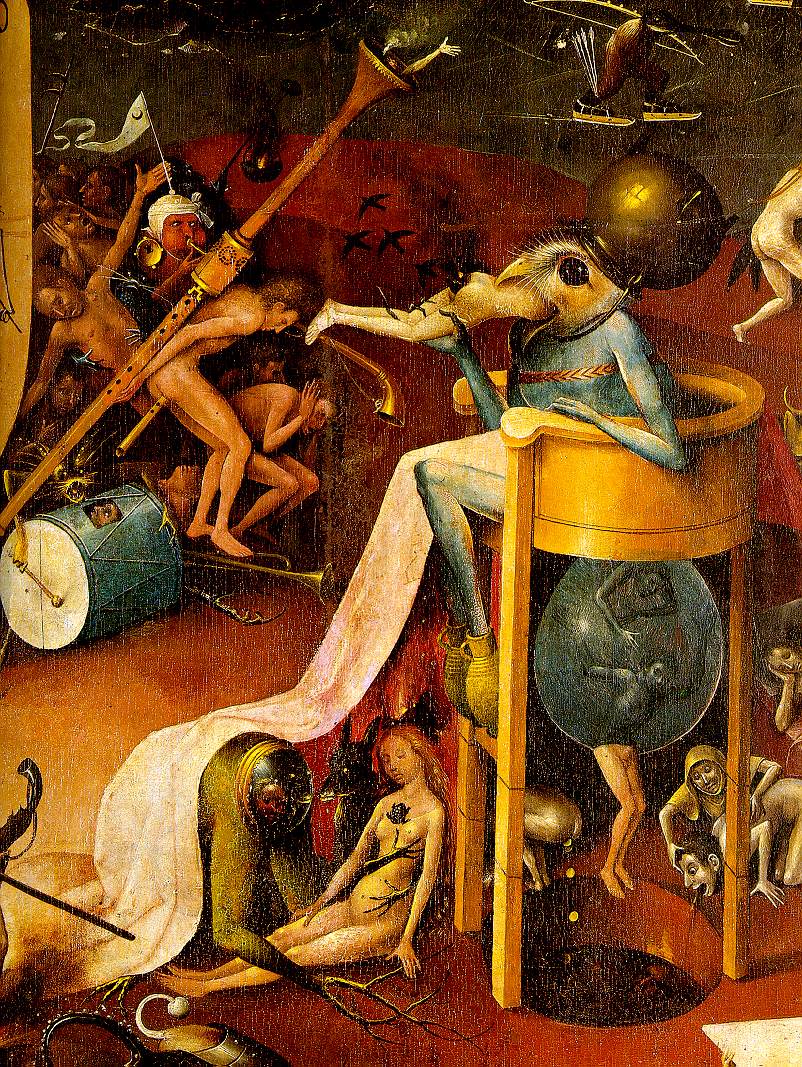
The Garden of Earthly Delight

With Her Malawi Adoption, Did Madonna Save a Life or Buy a Baby?

Viewpoint: The problem is that David was no orphan, and moral instinct tells us that a father's love should count for something

Madonna is so easy to revile that you start to wish she'd make it a little harder. She knows symbolism like a Renaissance painter, and so you wonder whether all her world really is a stage, whether she knew that the whole world would watch her dance in the dusty Malawian village in her crisp white linens with the cosmically cute baby boy strapped to her back; that the press would be there waiting, scribbling, flashing when Baby David arrived with a bodyguard and nanny to join Madonna in her $15 million London home. Did she hope that by courting controversy, the stories that followed would get around to mentioning that Baby David's his life expectancy was in the process of doubling from 40 in Malawi to 78 in Britain? Or that she has donated $3 million to help 900,000 Malawian orphans with food, school, shelter?

Behind America's Different Perceptions of God


Chck out the graphic in the article: "How we view God"


An extensive survey divided religion into four ways of seeing God, which they say is a better indicator of political and moral attitudes than denomination

Iraq and Your Wallet

For every additional second we stay in Iraq, we taxpayers will end up paying an additional $6,300.

So aside from the rising body counts and all the other good reasons to adopt a timetable for withdrawal from Iraq, here’s another: We are spending vast sums there that would be better spent rescuing the American health care system, developing alternative forms of energy and making a serious effort to reduce global poverty.
(..)

But now several careful studies have attempted to tote up various costs, and they suggest that the tab will be more than $1 trillion — perhaps more than $2 trillion. The higher sum would amount to $6,600 per American man, woman and child.

“The total costs of the war, including the budgetary, social and macroeconomic costs, are likely to exceed $2 trillion,” Joseph Stiglitz, the Nobel-winning economist at Columbia

(..)

Just to put that $2 trillion in perspective, it is four times the additional cost needed to provide health insurance for all uninsured Americans for the next decade.

(..)

The administration didn’t raise taxes to pay for the war, so we’re financing it by borrowing from China and other countries. Those borrowing costs are estimated to range from $264 billion to $308 billion in interest.
(..)

The bottom line is that not only have we squandered 2,800 American lives and considerable American prestige in Iraq, but we’re also paying $18,000 per household to do so.

We still face the choice of whether to remain in Iraq indefinitely or to impose a timetable and withdraw U.S. troops. These studies suggest that every additional year we keep our troops in Iraq will add $200 billion to our tax bills.

My vote would be to spend a chunk of that sum instead fighting malaria, AIDS and maternal mortality, bolstering American schools, and assuring health care for all Americans. We’re spending $380,000 for every extra minute we stay in Iraq, and we can find better ways to spend that money.

(subscription required)

War in Sudan? Not Where the Oil Wealth Flows

War in Sudan? Not Where the Oil Wealth Flows

Despite the image of Sudan as a land of cracked earth and starving people, the economy is booming, with little help from the West. Oil has turned it into one of the fastest growing economies in Africa — if not the world — emboldening the nation’s already belligerent government and giving it the wherewithal to resist Western demands to end the conflict in Darfur.

American sanctions have kept many companies from Europe and the United States out of Sudan, but firms from China, Malaysia, India, Kuwait and the United Arab Emirates are racing in. Direct foreign investment has shot up to $2.3 billion this year, from $128 million in 2000, all while the American government has tried to tighten the screws.
(..)

But the country’s G.D.P. grew 8 percent in 2005, according to the International Monetary Fund, and is predicted to increase by 12 percent this year. Cotton and other agricultural products have traditionally been the engines of the economy here, but the new growth comes largely because Sudan has substantially increased its crude oil production to 512,000 barrels a day — a drop compared with Saudi Arabia’s or Iran’s, but enough to bring billions of dollars to a country that until recently was one of the poorest on earth.
(..)

The traditional meal of ful, a bean stew eaten for breakfast and lunch, is giving way to kebabs, yogurt, hamburgers and hot dogs.

“We even have Pringles,” said Mohammed Abdelwahab Salih, a 26-year-old entrepreneur who recently started a business in Khartoum designing Web sites.

Mr. Salih remembers the days, not so long ago, when he used to have to wait in line for hours for a single loaf of bread.

“And it wasn’t even good bread,” he said. “When we got home, we had to pick out the flies.”

(..)

“The Americans are not a threat, but if the international community lines up against us, ahh, that is a different issue,” said Osama Daoud Abdellatif, chairman of the DAL Group, a conglomerate that owns the Coke factory, the Ozone Café and a number of other businesses. “Everything has been going so well, but Darfur could spoil the party.”

Worrisome New Link: AIDS Drugs and Leprosy

With affordable AIDS drugs arriving in many poor countries, experts say a startling and worrisome side effect has emerged: in some patients, the treatment uncovers a hidden leprosy infection.
(..)

And in the third world, where 300,000 new cases of leprosy were discovered last year and where 38 million are infected with the AIDS virus, the problem will inevitably get worse, experts say.

“This is just the peak of the iceberg,” said Dr. William Levis, who treats leprosy patients at Bellevue Hospital in New York City. “It’s early in the game. Most physicians don’t even think about leprosy, so there’s probably much more around than we know.”
(..)

Experts say the problem arises when the AIDS drugs cause the immune system to recover. It then generates new white blood cells that carry the bacteria from old, silent leprosy infections to the skin of the face, hands and feet.

That is a new twist on a medical paradox that has confounded tropical-disease specialists for 20 years....

Monday, October 23, 2006

A new use for google earth

Beginning Sunday evening, when you check out Google Earth's map of the United States, you'll see little stars bearing the likeness of the American flag dotting the landscape. Click on the one where you live, and a box will come up with the candidates running for House and Senate seats. The list goes beyond Ds and Rs to include the Green Party and even the Pirate Party candidate in Iowa.

The most practical feature is the link in each box to a Web site often used by reporters, the Center for Responsive Politics. Here, you can check out the political contributions each candidate has received and follow the money yourself.

Sunday, October 22, 2006

Darfur on 60 minutes tonight

Anti-Genocide Activists,

Tonight, CBS� �60 Minutes� will air a report by journalist Scott Pelley about the continuing genocide in Darfur � along with the remarkable story of a boy�s schoolbooks found in the ashes of his burned home.

Pelley, denied a visa by Sudan, sneaks across the border from Chad in search of the boy, swept into the heart of the first genocide of the twenty-first century.

Watch a preview of the report.

The episode will air tonight at 7:00 PM Eastern/Pacific. For more information, check the CBS website.

Wednesday, October 18, 2006

Can You Tell a Sunni From a Shiite?

Incredible...(but not surprising I guess)

FOR the past several months, I’ve been wrapping up lengthy interviews with Washington counterterrorism officials with a fundamental question: “Do you know the difference between a Sunni and a Shiite?”

A “gotcha” question? Perhaps. But if knowing your enemy is the most basic rule of war, I don’t think it’s out of bounds. And as I quickly explain to my subjects, I’m not looking for theological explanations, just the basics: Who’s on what side today, and what does each want?

After all, wouldn’t British counterterrorism officials responsible for Northern Ireland know the difference between Catholics and Protestants? In a remotely similar but far more lethal vein, the 1,400-year Sunni-Shiite rivalry is playing out in the streets of Baghdad, raising the specter of a breakup of Iraq into antagonistic states, one backed by Shiite Iran and the other by Saudi Arabia and other Sunni states.
(..)

But so far, most American officials I’ve interviewed don’t have a clue. That includes not just intelligence and law enforcement officials, but also members of Congress who have important roles overseeing our spy agencies. How can they do their jobs without knowing the basics?

Barney and Baghdad

Friedman arguing that the Jihadists are trying to influence U.S. elections...

Total U.S. troop deaths in Iraq this month have reached at least 53, putting October on a path to be the third deadliest month of the entire war for the U.S. military. Iraqis are being killed at a rate of 100 per day now. The country has descended into such a Hobbesian state that even Saddam called on Iraqis from his prison cell to stop killing each other. He told insurgents, “Remember you are God’s soldiers and, therefore, you must show genuine forgiveness and put aside revenge over the spilled blood of your sons and brothers.” When Saddam is urging calm, you know things have hit a new low. (subscription required)

Tuesday, October 17, 2006

African Stocks Outpace Emergent Peers

LONDON -- Emerging markets from Asia to Latin America got a rude awakening earlier this year when investors withdrew money on fears of a global economic slowdown.

Markets across Africa, though, are showing some of the best returns of the year
, outperforming the benchmark MSCI Emerging Market Index of global emerging-market stocks, amid their relative isolation from global capital flows and economic growth.

(..)

While the MSCI index fell 11% in May, however, two of Africa's most-promising sub-Saharan markets, Kenya and Nigeria -- which have both more than doubled in size in U.S. dollar terms during the past three years -- rose 6.5% and 5.6% respectively, according to Investec Asset Management.

Kenya's Nairobi Stock Exchange has seen its NSE 20 share index rise 20% in U.S. dollar terms from January through September while Nigeria's All Share Index is up 40%, according to Liquid Africa, a financial-services company based in South Africa that tracks 19 African stock exchanges on its Web site.

Indeed, the continent's so-called frontier markets, such as Nigeria, Kenya, Ghana, Mauritius and Botswana, are up an average of 26% so far this year in dollar terms, according to Liquid Africa. By comparison, the MSCI Emerging Market Index, which includes just three African countries -- South Africa, Egypt and Morocco -- has risen 9.5% during the same period.

Most of the markets are tiny, often with stock-market capitalizations of less than $3 billion, and most stocks are illiquid. Although there are few restrictions to foreign investment, few mutual funds in the U.S. and Europe invest in them. Total market capitalization across the continent's major markets totaled $791.7 billion in August according to Liquid Africa -- around a fifth of the size of the London Stock Exchange. South Africa is by far the dominant market with $527 billion capitalization.

Friday, October 13, 2006

Bangladesh banker wins Nobel Peace Prize

Can't argue with a 99% loan repayment rate! There are numerous websites now which allow individuals like you or I to provide micropayment loans to individuals all over the world. One such site is kiva.org...

OSLO, Norway - Bangladeshi economist Muhammad Yunus and the Grameen Bank he founded won the Nobel Peace Prize on Friday for their pioneering use of tiny, seemingly insignificant loans — microcredit — to lift millions out of poverty.

Through Yunus's efforts and those of the bank he founded, poor people around the world, especially women, have been able to buy cows, a few chickens or the cell phone they desperately needed to get ahead.

The 65-year-old economist said he would use part of his share of the $1.4 million award money to create a company to make low-cost, high-nutrition food for the poor. The rest would go toward setting up an eye hospital for the poor in Bangladesh, he said.

The food company, to be known as Social Business Enterprise, will sell food for a nominal price, he said.

"Lasting peace cannot be achieved unless large population groups find ways in which to break out of poverty," the Nobel Committee said in its citation. "Microcredit is one such means. Development from below also serves to advance democracy and human rights."
(..)

Grameen Bank was the first lender to hand out microcredit, giving very small loans to poor Bangladeshis who did not qualify for loans from conventional banks. No collateral is needed and repayment is based on an honor system.

Anyone can qualify for a loan — the average is about $200 — but recipients are put in groups of five and once two members of the group have borrowed money, the other three must wait for the funds to be repaid before they get a loan.

Grameen, which means rural in the Bengali language, says the method encourages social responsibility. The results are hard to argue with — the bank says it has a 99 percent repayment rate.

Since Yunus gave out his first loans in 1974, microcredit schemes have spread throughout the developing world and are now considered a key approach to alleviating poverty and spurring development.

Wednesday, October 11, 2006

Genentech's Profit Climbs 58% Amid Pressure to Pare Drug Prices

The South San Francisco, Calif., biotechnology company yesterday reported net income for the period of $568 million, or 53 cents a share, compared with $359 million, or 33 cents a share, in the year-ago quarter. Revenue rose 36% to $2.38 billion, compared with $1.75 billion.
(..)

Genentech faces challenges on several fronts. Its mainstay colon-cancer drug, Avastin, has demonstrated effectiveness against several forms of cancer, and may be approved for use in lung-cancer patients as early as today. Yet growth in Avastin sales could begin to slow, in part, because cancer specialists

already use the drug against a number of different tumors, limiting its upside.
(..)

Sales of several Genentech drugs, including Avastin, fell slightly short of analyst estimates in the third quarter. The major exception was Lucentis, Genentech's new drug for age-related macular degeneration, which posted sales of $153 million, well above expectations of roughly $30 million.
(..)

Genentech also may face resistance to the price of its drugs. Using Avastin to treat lung cancer requires twice the dose needed in colon cancer, meaning the drug could cost patients or their insurers close to $100,000 a year.


Two weeks ago, Genentech competitor Amgen Inc. announced plans to cap out-of-pocket costs for a cancer drug to 5% of patients' income. Mr. Clark said Genentech was looking into the possibility of expanding a program that assists patients with the cost of drug co-payments, but said the company had no formal announcement yet.

In Brazil, Field Trials To Treat World's Poor


More good work from the Gates Foundation...


The global health community has known for a long time about the wide-ranging complications that hookworm causes, but pharmaceutical companies have had little incentive to develop a vaccine: Most of those infected are too poor ever to pay for medicine, so recovering expensive development costs would be a long shot.
But now the medical ghetto of neglected diseases -- the field concerned with ailments affecting the 2.7 billion people who live on less than $2 a day -- is undergoing a transformation, thanks to an influx of cash from wealthy philanthropists and an emerging development model that promotes public-private partnerships.
(..)

The effects of the funding are hard to miss: Since 1975, only 13 drugs targeting neglected diseases have been launched, according to a study published this year by the London School of Economics and Political Science. But at the end of 2004 alone, 63 projects to develop such drugs were underway, according to the study, and standard attrition rates indicate that eight or nine of those would reach the market.

Although sub-Saharan Africa is generally hit hardest by neglected diseases, Brazil has emerged as an important testing ground for the approach. In addition to the hookworm trial, tests across the country are targeting diseases such as leishmaniasis and schistosomiasis.

FBI Agents Still Lacking Arabic Skills

Article references my good friend Bassem, whom I got to know well when he was stationed as the legal attache in Saudi Arabia--one of the most upstanding individuals I have ever met...
Five years after Arab terrorists attacked the United States, only 33 FBI agents have even a limited proficiency in Arabic, and none of them work in the sections of the bureau that coordinate investigations of international terrorism, according to new FBI statistics.
(..)

Some of the new information about language abilities at the FBI has emerged in connection with a lawsuit by one of the FBI's highest-ranking Arabic speakers, Special Agent Bassem Youssef, who sued the Justice Department and the bureau alleging retaliation after he complained that he was cut out of terrorism cases after the Sept. 11 attacks. Youssef, a naturalized U.S. citizen who was born in Egypt, is one of only six FBI agents who scored a 4 for "advanced professional proficiency" in Arabic on standardized speaking tests administered by the Interagency Language Roundtable for federal agencies. Youssef's attorney, Stephen M. Kohn, said the statistics indicate that most FBI agents have no way to gauge the accuracy of translated materials and must rely on linguists or other third parties for their information. "How do you fight a war with that kind of disadvantage?" Kohn asked.

Across Europe, Worries on Islam Spread to Center - New York Times

This article echoes conversations with numerous individuals last week while in England. The question of reconciliation of Islam and Western values, cultures etc... seems to be on many European's minds at the moment...

Europe appears to be crossing an invisible line regarding its Muslim minorities: more people in the political mainstream are arguing that Islam cannot be reconciled with European values.

Thanks to guest blogger.

Despite guest blogger's busy schedule in medical school, he was able to get up several insightful posts which were much appreciated....If anyone else would like to be a guest blogger or better yet, a coblogger, please let me know!

Why Are They Poor?

A five-part series examines some of the factors impeding development in Africa,

Tuesday, October 10, 2006

Generating Power from Kites

Researchers in Italy have high hopes for a new wind-power generator that resembles a backyard drying rack on steroids. Despite its appearance, the Kite Wind Generator, or KiteGen for short, could produce as much energy as a nuclear power plant.

Jailed for 34 days, Tribune reporter writes: What I saw in Darfur (by Paul Salopek)

A compelling account of a reporter jailed in Darfur...

One cloudless Sunday morning in early August, while traveling on a desert road in the remote Darfur region of western Sudan, a teenager sporting dreadlocks and an AK-47 rifle stopped my vehicle. My translator, Suleiman Abakar Moussa, stepped out and offered the youth a cigarette--standard etiquette in African war zones. But Moussa immediately returned to the car, frowning.

In this incidental way, I learned that we had just lost our freedom.

Monday, October 09, 2006

Conflict Diamonds

Having just returned from Sierra Leone several days ago, diamonds have been on my mind. As oil in Nigeria seems to encourage corruption, diamonds seem to have done the same in Sierra Leone...Here are some current links

ANTWERP, Belgium, Oct 9 (Reuters Life!) - The biggest diamond to be found in 13 years, the "Lesotho Promise," was sold on Monday at auction for more than $12 million and is expected to fetch in excess of $20 million once it is cut up. ADVERTISEMENT The 603-carat (120 gram) diamond, named after the tiny African mountain kingdom where it was found, went under the hammer at the Antwerp Diamond Center and was sold to the South African Diamond Corporation, owner of luxury jewellers Graff.
(I wonder how much money the woman who found the diamond will receive...)


The RUF began its jewelry heist in 1991, using the support of neighboring Liberia to capture Sierra Leone's vast wealth of diamond mines. Since then, the rebels have carried out one of the most brutal military campaigns in recent history, to enrich themselves as well as the genteel captains of the diamond industry living far removed from the killing fields.

The RUF's signature tactic was amputation of civilians: Over the course of the decade-long war, the rebels have mutilated some 20,000 people, hacking off their arms, legs, lips, and ears with machetes and axes. This campaign was the RUF's grotesquely ironic response to Sierra Leone President Ahmad Tejan Kabbah's 1996 plea for citizens to “join hands for peace.” Another 50,000 to 75,000 have been killed. The RUF's goal was to terrorize the population and enjoy uncontested dominion over the diamond fields...

Beginning as early as 1998, the same year Al Qaeda operatives reportedly blew up U.S. embassies in Kenya and Sudan, Osama bin Laden's terrorist network began buying diamonds from the RUF of Sierra Leone, according to FBI sources quoted in the Washington Post.

The paper also reported that two of the Al Qaeda men implicated in those attacks—Ahmed Khalfan Ghailani and Fazul Abdullah Mohammed—were in Sierra Leone in 2001, overseeing RUF diamond production.

As recently as mid-2001, a mere three months before the World Trade Center and Pentagon attacks, Al Qaeda had laundered millions of dollars by buying untraceable diamonds from the rebels. In the wake of Sept. 11, the United States and its allies in the “war on terrorism” froze more than $100 million worth of Al Qaeda assets worldwide. But the terrorists likely have an ace in the hole in the form of diamonds from Sierra Leone, wealth that can be easily and quickly sold and is virtually untraceable....

SURAT: This Christmas, Blood Diamond may take the sheen off Surat’s glittering Rs 45,000-crore gems and jewellery industry. Traders in the city, where 9 of the world’s 11 rough diamonds are cut or polished, fear their business may bleed after the release of Warner Bros’ forthcoming flick Blood Diamond, a film based on a story about the business of 'conflict diamonds' and how its perpetrators used the profits to fund terrorist cells to establish brutal dictatorships in poor African nations.

Breaking the Cycle

A comprehensive article on current attempts at malaria vaccine development with depictions of the sad state of health systems and infrastructure in Eastern Africa...

The U.S. Army and its partners have been trying to develop a malaria vaccine for decades. But given a disease that has thwarted man for centuries and gets scant attention from the West, is this a battle they can win?

Strife lets river blindness regain ground in Africa

YAOUNDE, Sept 21 (Reuters) - Seven years after the World Health Organisation heralded the virtual elimination of river blindness from West Africa, the debilitating disease is regaining ground in several countries due to civil conflict.

"The disease is re-invading some regions where it was thought to have been eradicated," Marcelline Ntep, head of Cameroon's river blindness programme, told Reuters.

She said many of those countries "have been plunged into prolonged civil strife and armed conflicts, thereby interrupting the distribution process and preventing the drug from reaching affected persons in some remote areas."

She cited Liberia, Sierra Leone, Ivory Coast, Central African Republic, Democratic Republic of Congo, Chad, Sudan and the Great Lakes region as areas where the disease had returned.
(..)
The World Health Organisation estimates some 17.7 million people are affected by river blindness, about 90 percent of them in Africa.

In 1974, the international community began the fight against the disease in 11 countries in West Africa, its original home....

Mean Vegetables

Good news. Spinach is safe to eat again, according to the Food and Drug Administration. So dig in if you dare. But beware of carrot juice. Last week, just two days before spinach got the clear, a brand of carrot juice from California was linked to botulism from a bacterium in soil that increases when juice isn’t properly refrigerated.

Maybe you should have some chocolate and red wine instead. Studies in recent years show that they’re linked with phenols that will lower your cholesterol levels.

No need to worry about their extra calories, either. Research from the Centers for Disease Control and Prevention published last spring suggests that overweight people live longer.

And now that a couple stiff drinks a day are deemed good for men’s hearts and Viagra is under study for the same thing, a longer life may be more appealing.

This is becoming the decade when bad is the new good and vice versa.

Sunday, October 08, 2006

Genentech - Lucentis: NIH to fund study vs Avastin

Genentech - Lucentis: NIH to fund study vs Avastin


The "blind greed" saga continues.
The US National Institutes of Health said Thursday that it will fund a study to compare two drugs by Genentech used to treat the leading cause of blindness in the elderly.

One of the drugs, Lucentis, was approved by the FDA this year to treat the disorder, called age-related macular degeneration, or AMD. The other drug, Avastin, which is much cheaper, has been approved to treat colorectal cancer, although it has been widely used off-label to treat the eye condition, according to the NIH's National Eye Institute.

Both drugs are derived from the same mouse antibody.

But....

Genentech are charging around 100 times the price of Avastin for Lucentis!

Insider's view: Way to go NIH!
Drugs firm blocks cheap blindness cure
Genentech continues to try and block use of avastin in the U.K.
Unless Avastin is approved in the UK by the National Institute for Clinical Excellence (Nice) it will not be universally available within the NHS. But because Genentech declines to apply for a licence for this use of Avastin, Nice cannot consider it. In spite of the growing drugs bill of the NHS, it will appraise, and probably approve, Lucentis next year.

Although Nice's role is to look at cost-effectiveness, it says it cannot appraise a drug and pass it for use in the NHS unless the drug is referred to it by the Department of Health. The department says its hands are tied.

"The drug company hasn't applied for it to be licensed for this use. It wouldn't be referred to Nice until they have made the first move," said a Department of Health spokeswoman. "They need to step up and get a licence. If they are not getting it licensed, why aren't they?"

Saturday, October 07, 2006

And his last name is...

Guest blogger, back again. This time I'm going to relay a story told to us in class yesterday. As usual, I'll start out with some background info on a relevant disease.

Loeys-Dietz Syndrome is a recently characterized disease (Nature Genetics 37, 275 - 281, 2005) whose patients were previously considered to have Marfan Syndrome. Loeys-Dietz patients present with, among many other findings, bifid uvula, hypertelorism (widely separated eyes), and a tortuous aorta upon imaging. These patients have a propensity for arterial aneurysm generally; they almost invariably experience aortic root aneurysm, although the timescale is variable (from weeks to decades into life).

A family was kind enough to come to talk about living with Loeys-Dietz (they have a child with the syndrome), and they described difficulties they had had with getting their care providers to understand the disease. Their child, for example, needed surgery. Their doctor, who was with us in the auditorium, had called the surgeon to tell him about the relevant details of Loeys-Dietz in order to maximize the surgery's chance of success. The surgeon blew up at him, screaming, "Who do you think you are that you can lecture me about Loeys-Dietz!?"

The doctor, whose name is Dietz, called this one of his 'greatest moments.' I wish I could have heard the rest of the conversation.

Wednesday, October 04, 2006

HIV+ seeking HIV+

HIV is a diploid retrovirus. Therefore, superinfection of one cell by two strains of HIV can lead to novel recombinant forms of the virus.

Let's say that John has HIV with a genotype of AA. Let's say Jane has HIV with a 'genotype' of BB. Now, if the two exchange HIV via needle sharing or intercourse, some of their cells could become infected by two HIV strains at once. A novel combination of John's and Jane's HIV could result: AB.

This is one mechanism by which resistance to retroviral therapy arises. This pedantic introduction helps to frame the following, otherwise-joyful article in a slightly more sober epidemiological light:


From a HealthGAP posting:
------------------------------------------------
Shunned Indian HIV victims seek infected spouses

Mon 2 Oct 2006 9:08:24 BST
By Rupam Jain Nair

SURAT, India, Oct 2 (Reuters) - Dozens of Indian men and women
infected with HIV/AIDS have agreed to marry each other after meeting
at a special matchmaking event, hoping to end the isolation the
deadly infection often brings.

Thirty infected men and women from across the country met at
the "HIV+ Find a Life Partner" session late on Sunday in the western
city of Surat, brought together by a local voluntary group working
with HIV/AIDS patients.

For over two hours, they shared their experiences, discussed their
families, medical histories and professions, with some even
introducing their prospective partners to accompanying relatives,
before agreeing marry.

"We hope to die on a positive note even though we are infected by
this virus," said Sanjay Joshi, a Surat engineer, who lost his wife
to AIDS four years ago.

Marriage would give him and his partner physical and emotional
support said the 32-year-old man who agreed to marry a HIV infected
woman from southern India and adopt her children.

"Only a HIV-positive person can understand and respect my status. We
are all living with uncertainty every minute. Let us try and enjoy
every bit of life with a companion," said Joshi who has been
ostracised by his parents and friends.

India has the world's highest HIV/AIDS caseload with 5.7 million
infected people. Although the country reported its first case in
1986 most victims face acute stigma due to a lack of awareness and
misconceptions about the disease.

Over the years, the country has reported many instances of families
disowning their loved ones because they are infected, children of
HIV/AIDS patients being thrown out of school, landlords refusing to
rent houses to victims and a infected woman having to abort her own
foetus as doctors shunned her.

HIV/AIDS victims and voluntary groups working with them have been
campaigning for a law to prevent discrimination of patients and
accuse the government of dragging its feet on the legislation.

Daksha Patel, a coordinator at the "Network of Surat People Living
with HIV+", the group which organised the matchmaking event, said
the aim was to bring together as many infected people as possible to
help them find partners.

"Let them find, choose and decide on a partner. It will add a new
spark to the lonely lives and give them a new zest to start all over
again," she said. Patel, who is infected by the virus herself, said
many infected women at Sunday's event were widows or divorcees who
were infected by their husbands and shunned by families.

One such widow, 28-year-old Rani Patel, said she was thrown out by
her in-laws after they found their son had died of AIDS and their
daughter-in-law was infected as well.

"I learnt I was HIV-positive after my husband died," Rani Patel said.

"By marrying again I can create awareness that HIV victims can live
and enjoy a normal life," she said as she attached her photograph to
an application form for a partner.

http://today.reuters.co.uk/news/CrisesArticle.aspx?
storyId=DEL33562&WTmodLoc=World-R5-Alertnet-5

Sorry, I was too busy winning my Nobel Prize

That's right, the mysterious guest blogger is an American. That gives me a one in sixty-million chance of being one of the five Americans who have thus far been awarded the Nobel Prize in 2006. The most recent award in Chemistry went to Roger Kornberg, himself the son of a Nobel Laureate. How did the selection committee do? According to Jeremy Berg, the author of one of the leading biochem textbooks (id est, the one that I use), Kornberg's prize was "fantastically well-deserved."

Kornberg solved the crystal structure of RNA polymerase II in the act of transcribing RNA from DNA. RNApol II primarily transcribes mRNA, the messenger RNA which is later translated by the ribosome into proteins.

Saturday, September 16, 2006

Mysterious Guest Blogger

Well, in twelve hours I will be enroute to Sierra Leone. Fortunately, a very bright individual has agreed to be a guest blogger while I am gone for the next three weeks. I am sure you will enjoy his posts!
Peace

Friday, September 15, 2006

W.H.O. Rules May Increase DDT Use for Malaria

WASHINGTON (AP) -- The World Health Organization on Friday called on more developing countries, particularly in Africa, to begin spraying the controversial pesticide DDT to fight malaria.
(..)

'It's a big change,'' said biologist Amir Attaran of Canada's University of Ottawa, who has long pushed for the guidelines and described a recent draft. ''There has been a lot of resistance to using insecticides to control malaria, and one insecticide especially. ... That will have to be re-evaluated by a lot of people.''

The U.S. government already has decided to pay for DDT and other indoor insecticide use as part of President Bush's $1.2 billion, five-year initiative to control malaria in Africa.

Kochi has positioned indoor spraying as an important but neglected third weapon -- along with insecticide-treated bed nets and new medications -- in the war on malaria, which infects half a billion people each year and kills more than 1 million, most of them children.

Thursday, September 14, 2006

Is my 6 year old daughter a Cartesian dualist?

Recently, my daughter who just started Kindergarten informed me that she had been disciplined for talking when she should have been silent. Her teacher made her go sit silently at her desk. I asked her how she felt. "I felt sad," she replied. "Did you cry?" I asked. She replied, "No. I was only sad in my brain."

Most scientists reject outright the concept of dualism, as it implies that "thinking" can occur outside the brain. But my daughter's statement implied that she "owned" her brain, i.e., that her brain exists within a larger realm of consciousness..."of Isabelle!"...Out of the mouth of babes...?

Chi Runners Poised for Softer Landings

As someone who loves to run, but pays for each run with a week of knee pain, this sounds potentially promising...

Morning Edition, September 14, 2006 · Putting one foot in front of the other comes easily. But, with a new focus on technique, many runners are trying to fine-tune their form for softer landings.

Made in Africa for Now

The ONE Campaign


This Friday, ONE and EDUN will launch a special edition ONE T-shirt, made by local artisans in Lesotho — one of the poorest nations in the world. The workers who produce these shirts can earn enough to provide for their entire family. In part, this factory, along with others just like it, is the result of a historic bi-partisan effort by the United States to help 37 African nations develop their industries and rise out of poverty.

But this amazing accomplishment is now in serious danger. If Congress doesn't extend a critical provision of the African Growth and Opportunity Act (AGOA) in the next few weeks, we will jeopardize tens of thousands of jobs and the future of the entire African clothing industry.

If we act quickly, we have the power to stop this. That's why today we're calling on Congress to renew this provision without delay. To really turn up the heat, we'll publish the name of ONE members who support this extension in a full page ad in Roll Call — the Capitol Hill newspaper that every member of Congress reads.

Please add your name to ONE's full page ad in the Capitol Hill Newspaper, Roll Call.


AGOA is a win-win agreement where American businesses invest in developing African industry. In return, African industry provides American consumers with high-quality low-priced goods. It would be crazy for Congress to let this important provision expire.

Failing to renew it would be disastrous. As the Wall Street Journal put it, "The bottom line is that if the provision on using outside fabric dies, so will Africa's assembly industry, which is a particularly important source of jobs for women."


When it comes down to it, for these workers voices to be heard in American politics, they need your voice. And this is a moment when they simply cannot afford for any of us to remain silent. When you see the ONE T-shirt on Friday, you'll know you did your part to ensure apparel workers in Africa can keep right on working.

Please add your name to ONE's full page ad in the Capitol Hill Newspaper, Roll Call.

Protect the African Clothing Industry

Going to be out of commission for a few weeks

I am going to be in Sierra Leone for a few weeks. Where I am staying probably won't have internet access, as there is no electricity or plumbing. Thus, I won't be able to post on this blog I imagine. If anyone wishes to be a guest blogger it would be great!!! Just contact me via email (hdhindsa@yahoo.com). I know that some of my readers are very interesting, enlightened, intellectual..If you would like to give blogging a try without a long-term commitment(it's really quite easy) please feel free to contact me...

Obesity epidemic 'engulfing the entire world'

From Newscientist.com

This insidious, creeping pandemic of obesity is now engulfing the entire world. It's as big a threat as global warming and bird flu." This warning came from Paul Zimmet during his opening address at the 10th International Congress on Obesity in Sydney on Sunday, according to a report by the Associated Press.

Zimmet, an expert on diabetes at Monash University in Australia, said that overweight people now outnumber the undernourished. The World Health Organization's estimates agree: globally, there are one billion overweight adults, and 300 million of them are obese; in contrast, about 800 million do not have enough to eat. Today obesity is a problem mainly in rich countries, but the WHO estimates that by 2010 the developing world will have more than caught up.

Wednesday, September 13, 2006

the day the world stood still


the day the world stood still
Originally uploaded by Kris Kros.
Fantasatic photrapher 's tribute to 911

Reborn

We have always been told there is no recovery from persistent vegetative state - doctors can only make a sufferer's last days as painless as possible. But is that really the truth? Across three continents, severely brain-damaged patients are awake and talking after taking ... a sleeping pill. And no one is more baffled than the GP who made the breakthrough.
Steve Boggan witnesses these 'strange and wonderful' rebirths

Tuesday, September 12, 2006

Singing the praises of Jeff Beck

Check out this link ( http://thegearpage.net/board/showthread.php?t=168253) to read of guitar fanatics praising the incredible Jeff Beck.

My thread comment is below:

"I first saw Jeff Beck in Reno four year ago, and am still recovering. He totally redefined guitar-playing for me. I still find myself shaking my head in amazement, just at the memory of that night. He is magical, mystical, and mesmerizing. In fact, I found out too late that he was coming to Reno again this September. I was tempted to cancel a trip to Sierra Leone that I have planned in order to see him again. If it wasn't a mission trip which has been months in preparation, I would cancel in a second..."

Tuesday, September 05, 2006

Sudan's Offensive Comes at Key Time

KHARTOUM, Sudan, Sept. 4 -- The Sudanese government has dramatically intensified the war in Darfur in a bid to finish off a tenacious, three-year-old rebellion before a U.N. peacekeeping force can deploy there..
(..)
The new push by government forces and the uncertainty surrounding peacekeeping efforts could produce a fundamental shift in the fighting in Darfur, where violence and disease have left as many as 450,000 people dead and 2 million homeless. Aid workers say that in recent weeks, civilian casualties, rapes and looting have grown more widespread. Tens of thousands of Darfuris have surged into camps, voting with their feet against a peace deal that many there regard as deeply flawed.

(..)

"They might actually be defeated militarily this time," Ted Dagne, an Africa analyst for the Congressional Research Service, said from Washington. "The balance of power is going to shift in favor of the government. . . . What they want is to change the reality on the ground to make irrelevant the deployment of the international force."
(..)

Eric Reeves, a Smith College professor who closely monitors Darfur, said the Sudanese government is working to drain the region of witnesses as it moves into a final battle against the rebels and their civilian supporters.

"No A.U., no humanitarian groups, this is a genocidal black box," said Reeves, speaking from Northampton, Mass. "We're not going to get any observers.
"

Thursday, August 31, 2006

Latest on Darfur

(via my son Ryan's blog: http://povertyfighters.blogspot.com/ )
Critical News!!!

This morning, the United Nations Security Council passed a
resolution authorizing a peacekeeping force in Darfur. The presence of
a peacekeeping force is the only measure that will provide the security
the people of Darfur desperately need.

This morning's vote is unmistakable evidence of the effectiveness
that the pressure you, and hundreds of thousands of Darfur activists
like you, have applied to world leaders. The international community
has shown that the will now exists to end the genocide in Darfur.

Yet, before peacekeepers can be deployed, the resolution says the Sudanese government must first agree to permit them.

This means that we cannot yet let up on the pressure.
One way to continue to make your voice heard is to attend the "Save
Darfur Now: Voices to End Genocide" rally and concert in New York
City's Central Park on September 17. Click here for more information.
If
you cannot make it to New York, there are other September 17 events
taking place all over the country and the world as part of a Global Day
for Darfur. For more information on US events, click here. And for more information on international events, click here.

As always, thank you for everything you do.

Wednesday, August 30, 2006

A Shout Out to "Change the World Kind of People."

This past summer I spent a week in Maryland visiting relatives and family. While there, I was fortunate to be selected to speak at a panel at a leadership conference, in which I met incredibly inspiring people, ranging from the mother of an autistic child, an AIDS activist from Cameroon, a consultant who helps place people with NGOs, a student activist at Yale etc...One of the common threads that we all discussed was that for many of us "our inspiration found us, instead of the other way around." Before our discussion I thought that this experience was unique to me with respect to my initially unplanned journey to Saudi Arabia, which lasted nearly a decade.

That period in Riyadh was a life-changing experience for me in many ways (that would require a separate blog post, or ?novel)...But, one of the most important lessons from that time was how many truly blind people there are in the world. I was fortunate to be part of a very intense effort at the largest eye hospital in the world (The King Khaled Eye Specialist Hospital) to "stamp out blindness in Asia Minor." Hence, my continued interest in international ophthalmology even though I have been back in the U.S. for nearly four years

Later that same week in Maryland, I met a friend of mine from college and her husband who have dedicated their post student lives to public health projects in the third world, including Vit A supplementation to prevent night-blindness (a great cause--speaking as an ophthalmologist). They have been living in Indonesia for the past five years and had just completed study on prenatal vitamin supplementation to pregnant women. The study involved over 30, 000 women.

I also have friends referenced before in this blog, who spent two years overseas doing mission work as ophthalmologists in Nigeria. I met them in Saudi Arabia, along with many of my most inspirational friends. Another example of such a friend from Saudi is an ex--airforce pilot, turned ophthalmologist, who has adopted five children (at last count) of mixed ethnicities.

I have been truly blessed to have had the privilege of the friendship of such great people.Every time I meet people like these, I feel refreshed, re energized and enthusiastic...

Thus I want to give
shout-out to my inspired friends who have dedicated tremendous effort to such altruistic causes...and who continue to inspire me...

Africa Adds to Miserable Rank of Child Workers

Watch the video and be glad that you don't live in Zambia...

LUSAKA, Zambia — The boulders here are hard enough that the scavengers who have taken over the abandoned quarry south of downtown prefer not to strike them directly with their hammers.

They heat the rocks first — with flaming tires, scrap plastic, even old rubber boots — so that the stones will fracture more easily.

At dusk, when three or four blazes spew choking black clouds across the huge pit, the quarry looks like a woodcut out of Dante.

A boy named Alone Banda works in this purgatory six days a week.

Nine years old, nearly lost in a hooded sweatshirt with a skateboarder on the chest, he takes football-size chunks of fractured rock and beats them into powder.

Lacking a hammer, he uses a thick steel bolt gripped in his right hand.

In a good week, he says, he can make enough powder to fill half a bag.

His grandmother, Mary Mulelema, sells each bag, to be used to make concrete, for 10,000 kwacha, less than $3. Often, she said, it is the difference between eating and going hungry...

In Chechen’s Humiliation, Questions on Rule of Law - New York Times

Watch this very disturbing video and be glad you don't live in Chechnya...

International News - New York Times: "Chechen security forces��� brutish acts, such as the torture of a woman accused of adultery, have gone unpunished.

* Video: Revival of Brutality in Chechnya"

How a Vaccine Search Ended in Triumph - New York Times

How a Vaccine Search Ended in Triumph - New York Times: "There are fascinating stories behind every advance in medicine, be it hand washing or brain surgery. But the 70-year history behind the creation of a vaccine against human papillomavirus, which causes cervical cancer, is more fraught than most with blind alleys, delicate moments, humor and triumph."

Tuesday, August 29, 2006

Ten Things to Learn This Year

An excellent distillation advice for working in the "real world" from the business guru, Guy Kawasaki...

Ten Things to Learn This School Year iStock_000000218096Small.gif I’m on the campus of UCSB this week at family camp, and it's inspired me to blog about what students should learn in order to prepare for the real world after graduation. This is an opportune time to broach this subject because the school year is about to begin, and careers can still be affected. First, take this little test about the state of your understanding of the real world right after you graduated from school.

Real Wages Fail to Match a Rise in Productivity - New York Times

Real Wages Fail to Match a Rise in Productivity - New York Times: "With the economy beginning to slow, the current expansion has a chance to become the first sustained period of economic growth since World War II that fails to offer a prolonged increase in real wages for most workers."

The Consumerist: Shoppers Bite Back

The Consumerist: Shoppers Bite Back: "Wanted: Singing, Kung-Fu Stewardesses"

What are the requirements to be a flight attendant? A cute wiggle. A superhuman patience with the bovanity of humankind. The ability to comfortably work for hours at a time in panty hose.

Those are all tall orders. But for prospective stewardesses for China's Sichuan Airlines, their chances of getting a coveted air hostess job got even harder: they need to know how to dance, sing and do kung-fu.

Monday, August 28, 2006

Clinical Cases and Images - Blog: What's New in General Internal Medicine?

Clinical Cases and Images - Blog: What's New in General Internal Medicine?: "The latest Update in General Internal Medicine is published in the Annals of Internal Medicine (PDFs free after 6 months). While the whole text is spread over 11 pages, I would like to summarize just a few things I found useful. Recommendations are divided in 3 groups: 'start', 'consider' and 'stop.'"

Psychology Today: The Hidden Side of Happiness

Psychology Today: The Hidden Side of Happiness: "The Hidden Side of Happiness
Pleasure only gets you so far. A rich, rewarding life often requires a messy battle with adversity.
By:Kathleen McGowan"

Web Guitar Wizard Revealed at Last - New York Times

Web Guitar Wizard Revealed at Last - New York Times: "EIGHT months ago a mysterious image showed up on YouTube, the video-sharing site that now shows more than 100 million videos a day. A sinewy figure in a swimming-pool-blue T-shirt, his eyes obscured by a beige baseball cap, was playing electric guitar. Sun poured through the window behind him; he played in a yellow haze. The video was called simply ���guitar.��� A black-and-white title card gave the performer���s name as funtwo."

Before the ���04 Tsunami, an Earthquake So Violent It Even Shook Gravity - New York Times

Before the ���04 Tsunami, an Earthquake So Violent It Even Shook Gravity - New York Times: "The giant earthquake that set off a devastating tsunami across the Indian Ocean in December 2004 disrupted the earth enough to change gravity and to deflect satellites passing hundreds of miles above."

Wednesday, August 23, 2006

Molecular Expressions: Science, Optics and You - Secret Worlds: The Universe Within - Interactive Java Tutorial

Molecular Expressions: Science, Optics and You - Secret Worlds: The Universe Within - Interactive Java Tutorial: "View the Milky Way at 10 million light years from the Earth. Then move through space towards the Earth in successive orders of magnitude until you reach a tall oak tree just outside the buildings of the National High Magnetic Field Laboratory in Tallahassee, Florida. After that, begin to move from the actual size of a leaf into a microscopic world that reveals leaf cell walls, the cell nucleus, chromatin, DNA and finally, into the subatomic universe of electrons and protons."

Mirage at the Bottom of the Pyramid | NextBillion.net - Development Through Enterprise

Mirage at the Bottom of the Pyramid | NextBillion.net - Development Through Enterprise: "Poor people ��� at the bottom of the pyramid (BOP) ��� represent a very attractive market opportunity. The ���BOP proposition��� argues that selling to the poor can simultaneously be profitable and help eradicate poverty. This is at best a harmless illusion and potentially a dangerous delusion. My recent paper shows that the BOP argument is riddled with fallacies, and proposes an alternative perspective on how the private sector can help alleviate poverty. Rather than focusing on the poor as consumers, we need to view the poor as producers. The only way to alleviate poverty is to raise the real income of the poor."

The Ad Starbucks Doesn't Want You To See... Because It Sucks. - Consumerist

The Ad Starbucks Doesn't Want You To See... Because It Sucks. - Consumerist: "The Ad Starbucks Doesn't Want You To See... Because It Sucks."

Blood on the tracks - The Boston Globe

Blood on the tracks - The Boston Globe: "David Hume wrote that reason is a ``slave to the emotions.' But new research suggests that in our moral decision-making, reason and emotion duke it out within the mind."


...the results should lead us to be skeptical about our snap moral decisions, however natural and obvious they seem, as they may be very much affected by the mood we happen to be in.

In Niger, Using Vacation to Help the World’s Poor

Beats Disneyland :)...

That was the start of a two-week trip to a nation that the New York Times columnist Nicholas D. Kristof recently called “the most wretched country in the world,” and a venture that grew out of a question our 16-year-old daughter, Leslie Brian, posed after hearing yet another news account of suffering in Africa.


“So, is there anything we can do about it?” she had asked.

For seven nights during an extended spring break, our family joined Wodaabe and Tuareg nomads in the Niger desert in an immersion experience offered through a small nonprofit organization, the Nomad Foundation of Ojai, Calif. Our itinerary hinted at the remoteness of our destination: “Most of these locations refer to wells and will not mean much to anybody but the people who live there.”

Tuesday, August 22, 2006

Princeton University - Snap judgments decide a face's character, psychologist finds

Princeton University - Snap judgments decide a face's character, psychologist finds: "We may be taught not to judge a book by its cover, but when we see a new face, our brains decide whether a person is attractive and trustworthy within a tenth of a second, according to recent Princeton research. "

Immune System Might Be Revived in Patients

A spirited race between top immunology teams is set to culminate today with the publication of two scientific papers reaching broadly similar conclusions about the AIDS virus: It exploits the human body's natural mechanism for shutting down the immune system, and the process can be reversed.

The findings raise the tantalizing possibility that doctors one day could switch a patient's immune system back on, so that it could resume its fight against HIV, or even cancer cells, certain parasites or the virus that causes hepatitis C. Those very different diseases "have one common denominator," says Anthony Fauci, director of the National Institute for Allergy and Infectious Diseases. "They persist. They're chronic."
(..)

Nevertheless, research in this area is exploding. The Bill and Melinda Gates Foundation is funding a team researching how to turn the immune system back on in hepatitis C patients. Researchers at the National Institutes of Health are studying PD-1 in tuberculosis, one of the world's leading killers.

"This isn't just HIV," says Harvard University immunologist Bruce Walker, the lead researcher on the study published in Nature. "This is much broader."

Research has progressed furthest in cancer, where scientists have shown that PD-1 can shut down immune responses when it is activated by certain types of tumor cells.
(..)

The research being published today goes further to address one of the most vexing mysteries in the biology of AIDS. Key immune-system cells known as HIV-specific CD8 killer T-cells exist in high numbers in many HIV-infected patients. Early in the course of the infection, these cells kill other cells carrying the virus. But in long-term patients, these cells barely fight the virus at all. The reigning theory was that HIV somehow disabled them. That may still be true in part, but today's studies reveal that HIV actually exploits the body's own mechanism for shutting the cells down.

The PD-1 molecule buds on the surface of the killer T-cells that target HIV. By itself, PD-1 is inert and does nothing. But when PD-1 encounters a partner molecule, or ligand, the interaction sets off a chain reaction inside the killer T-cells. The T-cells multiply much more slowly or not at all, and overall they secrete far less of their powerful cytokines, the researchers found. Essentially, they abandon the fight.

Malaria's Toll

Malaria's Toll
By JASON L. RILEY
August 21, 2006; Page A11

Each year, malaria afflicts a half-billion people (roughly the population of North America) and kills a million of them
(roughly the population of San Jose). And the latter is a low-end estimate. The actual number of fatalities is hard to pin down, since a body initially weakened by malaria becomes predisposed to other maladies.

But we do know that malarial mosquitoes are attracted to the tropical climes of sub-Saharan Africa, where they prey on impoverished populations that lack the sprays, screens and bed nets necessary to keep the insects at bay. Hence, some 75% of malaria victims are African pregnant women and children under five.

The economist William Easterly calculates that medicine that would prevent half of all malaria deaths costs only $0.12 a dose, and bed nets that would severely limit new cases cost a mere $4 apiece. "Preventing five million child deaths over the next ten years would cost just three dollars for each new mother," he writes in his book "The White Man's Burden."

Mr. Easterly argues that the tragic incompetence of the Western foreign aid industry -- $2.3 trillion spent, over five decades, but little forward advance -- stems from its overly bureaucratic approach to problem-solving. Agencies like the World Health Organization, the Global Fund and the World Bank traditionally have been staffed by well-meaning "planners," to use his term, who see "poverty as a technical engineering problem that [their] answers will solve."

What these organizations really need, says Mr. Easterly, are more of what he calls "searchers," or people who understand that "poverty is a complicated tangle of political, social, historical, institutional and technological factors." Where planners raise high expectations but take no responsibility for meeting them, searchers prefer to work case-by-case, using trial and error to tailor solutions to individual problems, fully aware that most remedies must be homegrown.
[Lance Laifer]

Lance Laifer, a hedge-fund manager in Connecticut, is a searcher. The horrors of malaria came to his attention in May 2005 via a Charlie Rose interview with Columbia University's Jeffrey Sachs, the development expert (and quintessential planner). "I didn't know anything about malaria," Mr. Laifer said in a recent interview. "I didn't know it still existed. I didn't know it was still killing people. I thought it was eradicated a long time ago. I was just flabbergasted."

(..)

Mr. Laifer turned his outrage into something of an obsession. He began researching malaria intensely; and he also ran some numbers. Bed nets, medications, insecticide, swamp drainage, etc., came to less than $10,000 for a typical African village of 1,000 people. "That's a doable number," Mr. Laifer concluded.

And then he picked up the phone, turning to friends and associates who help him organize an annual fundraiser to fight cancer. "I basically had a group of people that I know have very big hearts in this area, specifically in dealing with children," he says. "So I called them and said, 'What do you know about malaria and how many people are dying from it?'"

That was the starting point. Where it will end is anyone's guess. Inside of a year, and working with George Ayittey of the Free Africa Foundation, Mr. Laifer's efforts have spawned five "malaria-free zones" in Ghana, Nigeria and Kenya. Expansion to Ivory Coast and Benin is in the works. He adds that he has the financing to roll out additional zones this year but -- ever the searcher -- first wants to assess what's working and what isn't. If all is going well, "next year I see us doing something like 100 villages."

Mr. Laifer says a future focus will also be DDT, the pesticide used by Americans and Europeans in the 1940s to win domestic fights against malarial mosquitoes. Indoor spraying of DDT is by far the cheapest and most effective way to control the disease. One South Africa province employing DDT saw malaria infections and deaths drop 96% over a three-year span.
(..)

African nations, fearful that lucrative European and U.S. markets might ban their agricultural exports, make do with less-effective DDT substitutes. Though DDT, like any chemical, can be harmful in high doses, there's no evidence that using it in the amounts needed to combat malaria has any ill-effect whatsoever on humans.
(..)

But Mr. Bate says the reality is that economic development is the only sure-fire anti-malaria strategy. "We eradicated malaria in Malaysia in the '50s and '60s, and in Singapore at the same time. It came back in Malaysia in the '70s but not in Singapore, and the reason it came back is that there wasn't enough wealth for people to have screens on the windows. Singapore's economy, however, grew rapidly, and there isn't a problem there anymore."

Which is why sub-Saharan Africa's poverty and poor infrastructure make it such a difficult case. And why widespread health problems will persist in the region until people are no longer living under exposed conditions and able to get proper treatment. Not that Mr. Laifer is bowed by these challenges. "All I'm trying to do is give these kids their lives back," he says. "Somebody needs to do this."

Sunday, August 20, 2006

Seed: Infants May be Able to Detect Arithmetic Errors

Seed: Infants May be Able to Detect Arithmetic Errors: "In a discovery that could shed light on the development of the human brain, University of Oregon researchers determined that infants as young as six months old can recognize simple arithmetic errors."

VOA News - AIDS Worsens Violence Against Women

VOA News - AIDS Worsens Violence Against Women: "���Up to 30 percent of women in the world report that their first sexual experience was forced or coerced. That means they���re not choosing to lose their virginity. They���re actually experiencing that loss of a precious choice by violence. In some places more than half of school children experience sexual or physical violence while they���re at school at the hands of their classmates or their teachers. And some studies have found that women who experience violence are up to three times more likely to acquire HIV than women who do not."
(..)

"We go through violence in peace time. We go through violence in conflict. And we go through violence in post conflict situations.”

She says the ABC approach to AIDS prevention, Abstinence, Be Faithful, Condoms, does not work when a woman is raped.

And as for the hope of an effective microbicide, which would help women protect themselves from HIV during sex, Wandia asks:

“How am I going to be able to have time to use the microbicide if somebody is raping me? How is a small girl going to have time to use microbicides when she’s facing violence on the way to school, when she’s facing violence in school?”

She says the violence continues even after the rape. For example, thousands of women who were raped and infected with HIV during the 1994 Rwandan genocide are shunned by their families, disinherited and lack access to any property.

HIV Nigerians Treated Like Dogs

Your colleagues, your landlord and your people stop having anything to do with you. Your family may even build a separate room for you and leave you there to die.

When I went to have my baby I was supposed to have a caesarean section, but the staff refused to do the operation because I was HIV positive.

The folder at the end of my bed was marked "WXYZ" in large letters - a euphemism meaning that you're HIV positive and on your way out.

(..)

If a woman talks about a condom people will think she is a prostitute.

If you tell your husband to use a condom he will ask you, "Did I marry you for you to give me an order?"

(..)

Without free testing and treatment we have no future and our children have no hope.
Do not let us die like dogs in the streets.
Related Posts with Thumbnails

ShareThis