Showing posts with label exercise. Show all posts

Thursday, December 11, 2014

Got a Minute? Let’s Work Out

According to a lovely new study, a single minute of intense exercise, embedded within an otherwise easy 10-minute workout, can improve fitness and health.
Just one minute.
Link

Friday, October 03, 2014

How Exercise May Protect Against Depression

Exercise may help to safeguard the mind against depression through previously unknown effects on working muscles, according to a new study involving mice. The findings may have broad implications for anyone whose stress levels threaten to become emotionally overwhelming.
Link

Wednesday, September 24, 2014

Is Exercise Bad for Your Teeth?

Vigorous exercise is good for almost all of the body — except perhaps the teeth, according to a surprising new study of athletes. The study, published in The Scandinavian Journal of Medicine & Science in Sports, found that heavy training may contribute to dental problems in unexpected ways.
..
Compared with the control group, the athletes showed significantly greater erosion of their tooth enamel. They also tended to have more cavities, with the risk increasing as an athlete’s training time grew. Over all, the more hours that an athlete spent working out, the more likely he or she was to have cavities.
The researchers found no correlation, however, between consuming sports drinks or any other elements of the athletes’ diets and their oral health.
..
The extent of the changes in the athletes’ saliva during a workout were something of a surprise, said Dr. Cornelia Frese, a senior dentist at University Hospital Heidelberg, who led the study.
Link

Thursday, June 05, 2014

Losing Weight May Require Some Serious Fun

If you are aiming to lose weight by revving up your exercise routine, it may be wise to think of your workouts not as exercise, but as playtime. An unconventional new study suggests that people’s attitudes toward physical activity can influence what they eat afterward and, ultimately, whether they drop pounds.
(..)
In aggregate, these three experiments underscore that how we frame physical activity affects how we eat afterward, said Carolina O.C. Werle, an associate professor of marketing at the Grenoble School of Management in France, who led the study. The same exertion, spun as “fun” instead of “exercise,” prompts less gorging on high-calorie foods, she said.
Link

Monday, May 12, 2014

'Barefoot' Running Heads Into the Sunset

"Barefoot" running may be going the way of the caveman.
The much-hyped running style that had weekend warriors ditching sneakers to jog with little or nothing on their feet, as humans had for millennia before the advent of footwear, is falling out of favor.
Health claims that had helped drive the trend are coming under attack. Vibram, which makes the FiveFingers shoes that look like gloves for the feet, has offered to settle a class-action suit that contends the company profited from unsubstantiated claims the shoes strengthen muscles and prevent injury

Wednesday, April 30, 2014

Want to Be More Creative? Take a Walk

If you are unable to think of a catchy, creative way to present sales data or begin a newspaper column, take a walk. A brief stroll, even around your office, can significantly increase creativity, according to a handy new study.
Link

Thursday, April 17, 2014

Younger Skin Through Exercise

Exercise not only appears to keep skin younger, it may also even reverse skin aging in people who start exercising late in life, according to surprising new research.
Link

Wednesday, March 12, 2014

Gadgets to Boost Bike Safety

Driven in part by riders’ demands for a greater sense of comfort and safety on the road, new apps and gadgets are promising to do for the bicycle what air bags and satellite navigation did for the family car. What used to be a simple, healthful mode of transport is fast becoming a tech festival on wheels.
Link

Thursday, March 06, 2014

How Fat May Hurt the Brain, and How Exercise May Help

Obesity may have harmful effects on the brain, and exercise may counteract many of those negative effects, according to sophisticated new neurological experiments with mice, even when the animals do not lose much weight. While it’s impossible to know if human brains respond in precisely the same way to fat and physical activity, the findings offer one more reason to get out and exercise.
(..)
Many thought the brain, though, should be insulated from those harmful effects. It contains no fat cells and sits behind the protective blood-brain barrier that usually blocks the entry of undesirable molecules.
However, recent disquieting studies in animals indicate that obesity weakens that barrier, leaving it leaky and permeable. In obese animals, substances released by fat cells can ooze past the barrier and into the brain.
(..)
As they grew rotund and accumulated more fat cells, the researchers found, their blood showed increasingly hefty doses of a substance called interleukin 1 that is created by fat cells and known to cause inflammation.
In these mice, as interleukin 1 migrated to the head, it passed the blood-brain barrier and entered areas such as the hippocampus, a part of the brain critical for learning and memory. There, it essentially gummed up the works, the researchers found when they examined tissue from the animals’ brains, which had high levels of interleukin 1 together with widespread markers of inflammation. 
(..)
The results suggested that, as the scientists write in the study, “treadmill training normalized hippocampal function,” even in animals born to be fat and that remained heavy.
Link

Thursday, February 13, 2014

A Grizzly Answer for Obesity

So maybe we’ve been on the wrong track. An alternative approach looks at whether nature, through millions of years of evolutionary experimentation, has already figured out how to appropriately cope with biological threats.

Many fascinating examples exist. A diminutive rodent, the grasshopper mouse, is resistant to the excruciating sting of the bark scorpion. For longevity, nothing can top the naked mole rat, which is naturally resistant to types of pain, cancer and, possibly, Alzheimer’s disease. After weeks of fasting, Burmese pythons are able to enlarge their hearts by as much as 40 percent within two to three days of eating in order to accommodate the increased metabolism — a degree of cardiac hypertrophy that would be a leading predictor of mortality in humans.
(..)
Hibernation by bears is an astonishing feat of evolution. After an epic period of late-summer gorging, during which, every day, a bear may consume more than 50,000 calories and gain up to 16 pounds, it will fast for up to seven months. Then it subsists solely on stored fat, without eating, drinking, urinating or defecating.
Bears also shut down their renal function during hibernation, resulting in badly scarred kidneys and high levels of blood toxins that would kill a human. What is truly remarkable is that the bears’ kidney failure is reversible: Upon awakening from hibernation, their kidney function is fully restored with no lasting damage.

Why Vitamins May Be Bad for Your Workout


Many people take vitamins as part of their daily fitness regimens, having heard that antioxidants aid physical recovery and amplify the impact of workouts. But in another example of science undercutting deeply held assumptions, several new experiments find that antioxidant supplements may actually reduce the benefits of training.
(..)
But their bodies had responded quite differently to the training. The runners who had swallowed the placebo pills showed robust increases of biochemical markers that are known to goose the creation of mitochondria, the tiny structures within cells that generate energy, in cells in their bloodstream and muscles. More mitochondria, especially in muscle cells, means more energy and, by and large, better health and fitness. The creation of new mitochondria is, in fact, generally held to be one of the most important effects of exercise.
But the volunteers who had consumed the antioxidants had significantly lower levels of the markers related to mitochondrial creation. The researchers didn’t actually count the specific populations of mitochondria within their volunteers’ muscles cells, but presumably, over time, those taking the antioxidants would see a smaller uptick in mitochondrial density than among those not taking them.
That finding echoes the results of another study of antioxidant supplementation and exercise, also published last year in The Journal of Physiology, in which half of a group of older men downed 250 milligrams daily of the supplement resveratrol, an antioxidant famously found in red wine, and the other half took a placebo. After two months of exercising, the men taking the placebo showed significant and favorable changes in their blood pressure, cholesterol profiles and arteries, with fewer evident arterial plaques.
The men taking the resveratrol were not as fortunate. They had exercised as much as the other men, but their blood pressures, cholesterol levels and arteries had remained stubbornly almost unchanged.

Tuesday, January 28, 2014

Fitness and Weightloss Tips

Losing weight and getting fit is a huge topic and it’s important for everybody, and perhaps especially so for IT pros like ourselves who sit in front of a screen all day. We can only scratch the surface of this subject here–the main focus after all of this newsletter is the Windows Server platform not weightloss. But the hugely favorable response we received from our previous issue on this topic demanded that we address this subject one more time.
So first of all I’ll share with you ten tips based on my own experience of losing 50 lbs and becoming fit. Then I’ll share some terrific tips and suggestions submitted by readers of this newsletter.
And if you still want more after all this, guess what? Later this summer I’ll be publishing an ebook that will describe my weightloss story in lurid detail with tons of motivational tips that can help you do what I did. And I’ll include a link to my ebook in WServerNews once my ebook available, so stay tuned to this newsletter!
- See more at: http://fitnesselectronicsblog.com/2013/04/23/from-fat-to-fit-the-conclusion/#sthash.xaaXmiDC.dpuf

Turn Your Smartphone Into the Ultimate Fitness Tracker

Sure, you can shell out between $100-150 for standalone fitness trackers like the FitBit Flex andJawbone Up24. But chances are, you already carry around an even more powerful tracker: your smartphone. These sensor-packed rectangles may be bigger than your average wrist-worn alternative, but they have all the same capabilities (many have far more). All you need are the right apps to unlock your phone’s fitness-tracking potential.

Monday, January 27, 2014

LIFE More: Fitness Exercise Tech Accessories Features 7 Awesome Fitness Gadgets To Get You Moving This Year

Getting fit is one of the most common New Year's resolutions, but the hardest part is getting started.
That's where tech-savvy fitness gadgets can help. Whether it's a portable GPS that helps you train or a wristband that keeps you on track, these new devices will make getting active and shedding pounds in 2014 that much easier.
Keep reading to see seven new gadgets that will up your fitness regimen.


Read more: http://www.businessinsider.com/best-new-fitness-gadgets-2014-1#ixzz2reB8zaoC

Friday, January 24, 2014

Watch What You Eat, Using Your Phone as a Guide

I have always been skinny, but I do need to watch what I eat. So I count my calories — with the help of smartphone and tablet apps.
One of the best is Calorie Counter & Diet Tracker by MyFitnessPal. Free on iOS and Android, it’s full of features for tracking food intake and exercise.
The app asks basic questions about height, weight, age, exercise levels and target weight, and uses this data to calculate a sensible daily calorie intake. You are supposed to enter the calorie values of everything you eat; the app then helps you avoid overshooting your daily allowance.
The app has a bar code scanner so it can look up most nutritional information directly from food packaging. This worked surprisingly well for me, getting the right information for everything from Heinz tomato soup to a Portuguese variant of the French cheese La Vache Qui Rit. All you have to do is enter how much you have eaten of a particular food to help the calorie calculation.
Link

Sunday, December 29, 2013

Super Short, Intense Workouts Won't Help You Lose Weight

Super short workouts sound fantastic. Who wouldn't want to pack 60 minutes worth of exercise into 20—or sometimes even less? We've discussed quite a few, but not a lot about what you can expect while doing them. Amby Burfoot, writing for Runner's World, decided to take a look at the numbers.
Link

Thursday, December 26, 2013

For Fitness, Intensity Matters

This year, exercise science expanded and fine-tuned our understanding of how physical activity affects our brainsjoints,hearts, and even genes, beginning before birth and continuing throughout our lifespans, which can be lengthened, it seems, by exercise, especially if we pick up the pace.
(..)
But the lesson that seemed to emerge most persistently from the fitness-related studies published this year was that intensity matters, especially if you wish to complete your workout quickly. The most popular column that I wrote this year, by a wide margin, detailed “The Scientific 7-Minute Workout,” a concept that appealed, I have no doubt, because the time commitment was so slight. But the vigor required was considerable; to gain health benefits from those seven minutes, you needed to maintain a thumping heart rate and spray sweat droplets around the room.
Almost halving the time spent exercising was also effective, a later and likewise popular column showed. In that study, out-of-shape volunteers who ran on a treadmill for a mere four minutes three times a week for 10 weeks raised their maximal oxygen uptake, or endurance capacity, by about 10 percent and significantly improved their blood sugar control and blood pressure profiles.

Friday, December 20, 2013

The Biggest Weight-Loss News of 2013

Another year, another 365 days to unlock the secrets to sustainable weight loss - and in 2013, researchers did not disappoint. From finding the best time to eat a big meal to finding yet another reason to chow down on chocolate, here are the most interesting weight-loss news stories of the year!
Link

Saturday, December 14, 2013

The Best Fitness Tracker

Every fitness tracker currently available has its shortcomings, but the $130 Fitbit Force’s flaws are easy to forgive given the convenience of its wrist-mounted design and legible screen that tracks your stats in real time. It is the only fitness tracker that combines all those features with the added accuracy of an altimeter. The fact that it’s a part of the most comprehensive fitness ecosystem around is gravy. Unfortunately, the wrist strap can be a bit tricky to latch and it’s not as water-resistant as other options, but it’s still the one we’d get.
Link

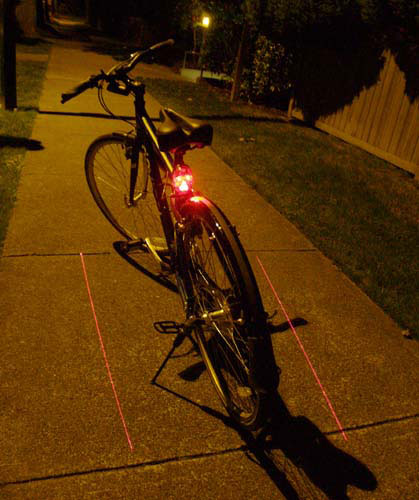
Bike light with laser cannon creates a glowing, personal bike-lane

ThinkGeek's $25 Blazing Skull Bicycle Tail Light has a pair of "laser cannon" that draw six-foot lines of red light on either side of your bike, creating "your own glowing bike lane."

Related Posts with Thumbnails

ShareThis