Sunday, March 09, 2014

The Fat Drug

IF you walk into a farm-supply store today, you’re likely to find a bag of antibiotic powder that claims to boost the growth of poultry and livestock. That’s because decades of agricultural research has shown that antibiotics seem to flip a switch in young animals’ bodies, helping them pack on pounds. Manufacturers brag about the miraculous effects of feeding antibiotics to chicks and nursing calves. Dusty agricultural journals attest to the ways in which the drugs can act like a kind of superfood to produce cheap meat.
But what if that meat is us? Recently, a group of medical investigators have begun to wonder whether antibiotics might cause the same growth promotion in humans.
Link

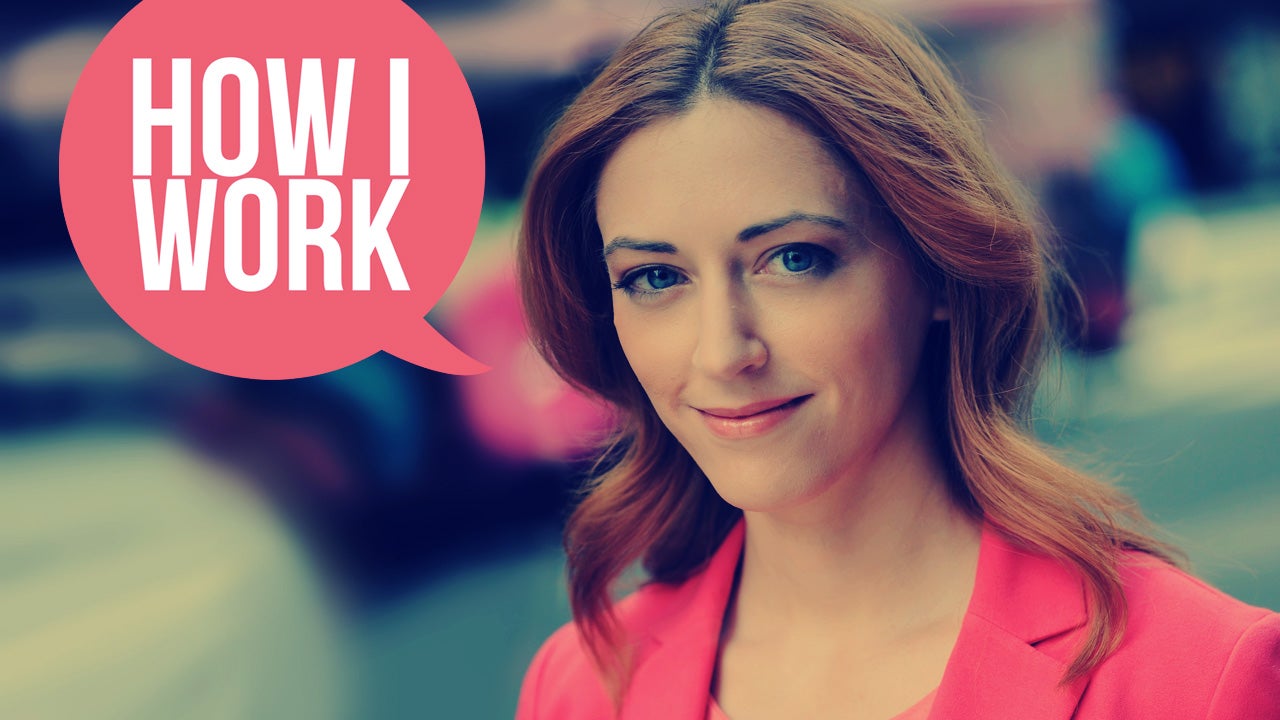
I'm Kelly McGonigal, and This Is How I Work

What do you know--One of my favorite researchers/authors  in the world of psychology has a similar work flow to myself :)
Uvealblues

We talk a lot about willpower here at Lifehacker—why it's important, the science behind it, and how to boost it. Kelly McGonigal's career is dedicated to researching these things. As a psychologist and lecturer at Stanford, her work (and most recent book, The Willpower Instinct) focuses on self-control, motivation, procrastination, and how to overcome challenges to create healthier habits. When Kelly's not in the classroom (or on stage at TED), she's a founding member of the Yoga Service Council and group fitness instructor. We stole a few minutes of Kelly's very busy schedule (she did this interview via email on a plane!) to find out her best time-saving tricks, favorite playlists, and most inspiring advice. 


Here is a link to her "Science of Willpower" interview: Link

Saturday, March 08, 2014

How to generate new neurons in brains, spinal cords of living adult mammals

No stem-cell transplants required
March 4, 2014
UT Southwestern Medical Center researchers have created new nerve cells in the brains and spinal cords of living mammals without the need for stem cell transplants to replenish lost cells.
In a comment to a KurzweilAI news article, “Brain signals from a primate directly move paralyzed limbs in another primate ‘avatar,’” “Cazbot” wondered if “a sort of ‘neural jumper’ could be used to bridge damaged sections of spinal chord.”
This new research indicates it may someday be possible to do just that — by regenerating neurons from the body’s own cells to repair traumatic brain injury or spinal cord damage, or to treat conditions such as Alzheimer’s disease.
..
Scientists in UT Southwestern’s Department of Molecular Biology first successfully turned astrocytes — the most common non-neuronal brain cells — into neurons that then formed networks in mice. They have now successfully turned scar-forming astrocytes in the spinal cords of adult mice into neurons. The latest findings are published today inNature Communications and follow previous findings published in Nature Cell Biology.
“Our earlier work was the first to clearly show in vivo (in a living animal) that mature astrocytes can be reprogrammed to become functional neurons without the need of cell transplantation. The current study did something similar in the spine, turning scar-forming astrocytes into progenitor cells called neuroblasts that regenerated into neurons,” saidChun-Li Zhang, assistant professor of molecular biology at UT Southwestern and senior author of both studies.

What Languages Sound Like To Foreigners

3D Printing Low-Cost Prosthetics Parts in Uganda

Researchers at the University of Toronto, in collaboration with Autodesk Research (Toronto, Ontario) and CBM Canada (Stouffville, Ontario) are employing 3D-printing techniques to produce cheap, fast, and easily customizable prosthetic sockets for use in the developing world. I was invited to check out the lab on behalf of Medgadget to get a better idea of what’s the latest in custom printed prosthetic devices.
..
Ryan Schmidt: We first create a 3D scan of the limb using an Xbox Kinect. We can bring that digital limb into Autodesk Meshmixer, smooth out the rough scan mesh, and use it directly to design the socket. We create a molded “bucket” around the limb’s contours, and can use Meshmixer to quickly push and pull parts of the design to modify its shape. In the end, the model is sent to a 3D printer, which prints the socket in a few hours using PLA (poly lactic acid), a thermoplastic that is easily modifiable with heat. This method can make a typical socket for under $10;;
Medgadget: What benefits does this 3D printing method have over the traditional method?
Matt Ratto: The traditional method involves wrapping an amputated limb with a plastic mold to first create a negative cast. Once that dries, plaster is poured into the negative cast to make a positive cast, which serves as a representation of the actual limb. Finally, a socket is molded around the positive cast, and can be used upon curing.
Ryan Schmidt: The traditional method is very time-consuming, especially if iteration needs to be done. It’s a destructive process, so any modifications destroy the original molds, and that information is lost. The method we use with 3D printing allows for a quick scan to digitize the limb, simplifying the process. It allows for quick and non-destructive modifications.
3D scanning has become increasingly widespread, and the capabilities of 3D printers have been steadily improving. The missing piece now, and the novelty of Meshmixer, is the ability to deal with the data and models and link the scanning and fabrication.

Link

Probably the best video giving practical advice to help you change the world [video]

Rarely have I come across such a well-produced, well-written video clip for a good cause. Even rarer are videos that give such clear and simple ways to do good.
"Guy Kawasaki"

10 Things Happy People Do Differently

Happiness is a mindset. And if you’re looking to improve your ability to find happiness, then check out these 10 things happy people do differently.
Link

Friday, March 07, 2014

The Great Deception

Interesting article by a Marriage Counselor on Brain Reconditioning that can apply to multiple areas of life...

Uvealblues

We’re Less in Control Than We Think

By Brent Atkinson

At the tail end of a sweltering, humid Chicago day in 1993, I took my family to the community pool for a dip. As the children splashed gleefully, I sat nearby reading Robert Ornstein’s new book, The Evolution of Consciousness, unaware that my life was about to change.
..
Libet’s findings ran contrary to the way most of us experience ourselves. Most of us think, “When I move, it’s because I decided that I was going to move.” But Libet’s studies showed that impulse and inclination preceded conscious intention. It was as though somebody else in the subject’s brain decided when he or she would flick his or her wrist. Initially, Libet’s study stirred a storm of controversy, but over the next few decades, his findings would be replicated time and time again, with more and more sophisticated technologies, leading to him winning a Nobel Prize for his contributions.
..
Gradually, I began to accept the concept that conscious understanding and effort weren’t the mighty forces that I’d assumed they were and that automatic urges and inclinations were much stronger than I’d ever imagined.
..

The evidence is clear—meditation conditions the brain to produce automatic inclinations that help people be more attentive and optimistic and less affected by stressful circumstances and anxiety. In other words, the nervous system changes promoted by mindfulness can serve as a stable platform that enables people to act more skillfully in all areas of their lives.
..
This process includes:
  1. Conscious pursuit of understanding and change. We need to use our conscious minds to understand our lives, develop ideas about what’s healthy and unhealthy, and pursue concrete changes that move us toward health and well-being.
  2. Stress reduction and rejuvenation. We need to develop nervous system inclinations that reduce stress, relax the mind, and rejuvenate the body.
  3. Distress tolerance and self-regulation. We need to develop nervous system inclinations that help us tolerate the inevitable stress that accompanies making difficult changes and self-regulate in emotionally charged situations.
  4. Emotional accessibility. We need to develop nervous system inclinations that produce feelings that connect us to others.
  5. ..
  6. Brent Atkinson, PhD, is director of postgraduate training at the Couples Research Institute in Geneva, Illinois, and Professor Emeritus at Northern Illinois University. He’s the author of Emotional Intelligence in Couples Therapy: Advances from Neurobiology and the Science of Intimate Relationships and Developing Habits for Relationship SuccessContact: atkinson.bja@gmail.com.

Thursday, March 06, 2014

How Fat May Hurt the Brain, and How Exercise May Help

Obesity may have harmful effects on the brain, and exercise may counteract many of those negative effects, according to sophisticated new neurological experiments with mice, even when the animals do not lose much weight. While it’s impossible to know if human brains respond in precisely the same way to fat and physical activity, the findings offer one more reason to get out and exercise.
(..)
Many thought the brain, though, should be insulated from those harmful effects. It contains no fat cells and sits behind the protective blood-brain barrier that usually blocks the entry of undesirable molecules.
However, recent disquieting studies in animals indicate that obesity weakens that barrier, leaving it leaky and permeable. In obese animals, substances released by fat cells can ooze past the barrier and into the brain.
(..)
As they grew rotund and accumulated more fat cells, the researchers found, their blood showed increasingly hefty doses of a substance called interleukin 1 that is created by fat cells and known to cause inflammation.
In these mice, as interleukin 1 migrated to the head, it passed the blood-brain barrier and entered areas such as the hippocampus, a part of the brain critical for learning and memory. There, it essentially gummed up the works, the researchers found when they examined tissue from the animals’ brains, which had high levels of interleukin 1 together with widespread markers of inflammation. 
(..)
The results suggested that, as the scientists write in the study, “treadmill training normalized hippocampal function,” even in animals born to be fat and that remained heavy.
Link

Sunday, March 02, 2014

16 Depressing Facts to Ruin Your Friend's Day

Perfect icebreakers to jumpstart a conversation are difficult to come by.
Fortunately, there's no shortage of depressing facts that are a surefire way to get people talking. Regale fellow party-goers with tales of the world's loneliest animal, or bring down the mood with some harrowing statistics regarding our favorite medical practice.
Become the Debbie Downer you've always hoped to be with these depressing facts that will seriously bum you out. Or at least get a conversation going.

You Are Not So Smart: A Field Guide to the Brain’s Guile by Maria Popova

The science of why 600 Facebook “friends” are an illusion, or why brand loyalty is a product of the ego.
Link

Friday, February 28, 2014

Newly developed chemical restores light perception in blind mice

Richard Kramer of the University of California, Berkeley and his colleagues have invented a “photoswitch” chemical named DENAQ that confers light sensitivity on normally light-insensitive retinal ganglion cells, restoring light perception in blind mice.*
Link

Thursday, February 27, 2014

Why I Prescribe the Love Drug

An important and great post by Dr. Wible
Check out her blog!

People die without love.
Link

Tuesday, February 25, 2014

Sriracha Chemistry: How Hot Sauces Perk Up Your Food And Your Mood

Anyone who has ever drizzled, doused or — heck — drenched their food with Sriracha knows the hot sauce can make almost any dish taste better.
But could these spicy condiments also make us a little happier?
(..)
To keep the tongue from getting burned, the brain triggers the sensation of pain. Something like, "Holy cow! Wash this Sriracha out of my mouth immediately!"
But your nervous system isn't going to just let you suffer with your mouth on fire. So it also launches a whole series of actions to help us deal with the pain. It releases endorphins — the morphine-like compounds that give you a natural high. And it makes the nerves on our tongue more tolerant to pain.
In other words, spicy peppers may hurt at first, but then they have an analgesic effect.

Tuesday, February 18, 2014

DO YOU HAVE THE "GOOD" KIND OF PERFECTIONISM?

THE RIGHT KIND OF PERFECTIONISM DRIVES YOU TOWARD SUCCESS; THE WRONG KIND SHACKLES YOU WITH SELF-DOUBT. HERE'S HOW TO SPOT THE DIFFERENCE.

Work Smarter, Not Harder: 21 Time Management Tips to Hack Productivity -

Working Smarter, Not Harder

The old adage, “work smarter, not harder” has become a staple in the way I go about work of any kind.
Instead of being robotic in how I approach tasks, I try to be thoughtful and always ask myself if something can be done more efficiently or eliminated altogether.
Managing my time isn’t about squeezing as many tasks into my day as possible. It’s about simplifying how I work, doing things faster, and relieving stress.
It’s about clearing away space in my life to make time for people, play, and rest.
I promise you — there really are enough hours in a day for everything you’d like to do, but it may take a bit of rearranging and re-imagining to find them.

21 Time Management Tips

I compiled this list of 21 tips to hopefully nudge you in the right direction.
Remember: There are innumerable hacks and tricks to manage your time effectively. These are some tips that I find helpful, but everyone is different.
Let this list be a catalyst to get you thinking regularly about how to refine your own practices.
- See more at: http://www.creativitypost.com/create/work_smarter_not_harder_21_time_management_tips_to_hack_productivity#sthash.JBDu2iJH.dpuf

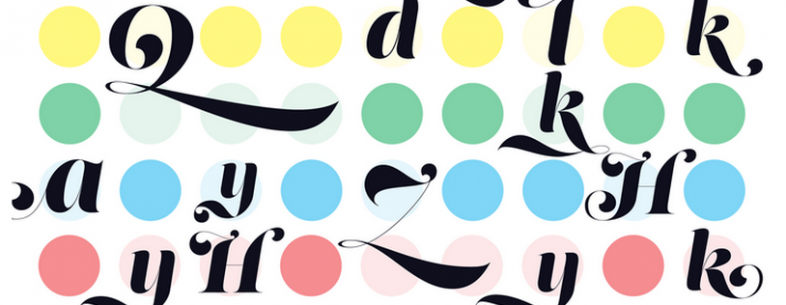
The science behind fonts (and how they make you feel)

Mikael Cho is the co-founder of ooomf, a network that connects short-term software projects with handpicked developers and designers. Mikael writes about psychology, startups, and product marketing over on the ooomf blog.

I’ve noticed how seemingly small things like font and the spacing between letters can impact how I feel when reading online.
The right font choice along with the absence of sidebars and popups makes everything feel easier and better to read.
Websites like MediumSignal vs. Noise, and Zen Habits are like yoga studios for content. Their presentation of content puts me at peace while reading, allowing me to fully focus on the stories without distraction.

Thursday, February 13, 2014

The Full-Fat Paradox: Whole Milk May Keep Us Lean

I have to admit, I melt at the creaminess of full-fat yogurt.
It's an indulgence that we're told to resist. And I try to abide. (Stealing a bite of my daughter's YoBaby doesn't count, does it?)
The reason we're told to limit dairy fat seems pretty straightforward. The extra calories packed into the fat are bad for our waistlines — that's the assumption.
But what if dairy fat isn't the dietary demon we've been led to believe it is? New research suggests we may want to look anew.
Consider the findings of two recent studies that conclude the consumption of whole-fat dairy is linked to reduced body fat.
In one paper, published by Swedish researchers in the Scandinavian Journal of Primary Health Care, middle-aged men who consumed high-fat milk, butter and cream were significantly less likely to become obese over a period of 12 years compared with men who never or rarely ate high-fat dairy.
Yep, that's right. The butter and whole-milk eaters did better at keeping the pounds off.
"I would say it's counterintuitive," says Greg Miller, executive vice president of the National Dairy Council.

A Grizzly Answer for Obesity

So maybe we’ve been on the wrong track. An alternative approach looks at whether nature, through millions of years of evolutionary experimentation, has already figured out how to appropriately cope with biological threats.

Many fascinating examples exist. A diminutive rodent, the grasshopper mouse, is resistant to the excruciating sting of the bark scorpion. For longevity, nothing can top the naked mole rat, which is naturally resistant to types of pain, cancer and, possibly, Alzheimer’s disease. After weeks of fasting, Burmese pythons are able to enlarge their hearts by as much as 40 percent within two to three days of eating in order to accommodate the increased metabolism — a degree of cardiac hypertrophy that would be a leading predictor of mortality in humans.
(..)
Hibernation by bears is an astonishing feat of evolution. After an epic period of late-summer gorging, during which, every day, a bear may consume more than 50,000 calories and gain up to 16 pounds, it will fast for up to seven months. Then it subsists solely on stored fat, without eating, drinking, urinating or defecating.
Bears also shut down their renal function during hibernation, resulting in badly scarred kidneys and high levels of blood toxins that would kill a human. What is truly remarkable is that the bears’ kidney failure is reversible: Upon awakening from hibernation, their kidney function is fully restored with no lasting damage.

Why Vitamins May Be Bad for Your Workout


Many people take vitamins as part of their daily fitness regimens, having heard that antioxidants aid physical recovery and amplify the impact of workouts. But in another example of science undercutting deeply held assumptions, several new experiments find that antioxidant supplements may actually reduce the benefits of training.
(..)
But their bodies had responded quite differently to the training. The runners who had swallowed the placebo pills showed robust increases of biochemical markers that are known to goose the creation of mitochondria, the tiny structures within cells that generate energy, in cells in their bloodstream and muscles. More mitochondria, especially in muscle cells, means more energy and, by and large, better health and fitness. The creation of new mitochondria is, in fact, generally held to be one of the most important effects of exercise.
But the volunteers who had consumed the antioxidants had significantly lower levels of the markers related to mitochondrial creation. The researchers didn’t actually count the specific populations of mitochondria within their volunteers’ muscles cells, but presumably, over time, those taking the antioxidants would see a smaller uptick in mitochondrial density than among those not taking them.
That finding echoes the results of another study of antioxidant supplementation and exercise, also published last year in The Journal of Physiology, in which half of a group of older men downed 250 milligrams daily of the supplement resveratrol, an antioxidant famously found in red wine, and the other half took a placebo. After two months of exercising, the men taking the placebo showed significant and favorable changes in their blood pressure, cholesterol profiles and arteries, with fewer evident arterial plaques.
The men taking the resveratrol were not as fortunate. They had exercised as much as the other men, but their blood pressures, cholesterol levels and arteries had remained stubbornly almost unchanged.

Phantom Melodies Yield Real Clues to Brain’s Workings

I wouldn't be surprised if these elegantly done experiements supporting the theory that "our brains are prediction-generating machines," also applies to those with visual hallucinations and eye disease...
Uvealblues

In 2011, a 66-year-old retired math teacher walked into a London neurological clinic hoping to get some answers. A few years earlier, she explained to the doctors, she had heard someone playing a piano outside her house. But then she realized there was no piano.
The phantom piano played longer and longer melodies, like passages from Rachmaninov’s Piano Concerto number 2 in C minor, her doctors recount in a recent study in the journal Cortex. By the time the woman — to whom the doctors refer only by her first name, Sylvia — came to the clinic, the music had become her nearly constant companion. Sylvia hoped the doctors could explain to her what was going on.
(..)

Dr. Kumar argues that these results support a theory developed by Karl Friston of the Wellcome Trust Center for Neuroimaging. (Dr. Friston is a co-author of the new study.) Dr. Friston has proposed that our brains are prediction-generating machines.
Our brains, Dr. Friston argues, generate predictions about what is going to happen next, using past experiences as a guide. When we hear a sound, for example — particularly music — our brains guess at what it is and predict what it will sound like in the next instant. If the prediction is wrong — if we mistook a teakettle for an opera singer — our brains quickly recognize that we are hearing something else and make a new prediction to minimize the error.

Scientists have long known that people with musical hallucinations often have at least some hearing loss. Sylvia, for example, needed hearing aids after getting a viral infection two decades ago.

Tuesday, February 11, 2014

Sam Cooke And The Song That 'Almost Scared Him'

Fifty years ago this week, Sam Cooke strolled into a recording studio, put on a pair of headphones, and laid down the tracks for one of the most important songs of the civil rights era.
Rolling Stone now calls "A Change Is Gonna Come" one of the greatest songs of all time, but in 1964 its political message was a risky maneuver. Cooke had worked hard to be accepted as a crossover artist after building a sizable following on the gospel circuit. And the first thing to know about the song, Cooke biographer Peter Guralnick says, is that it's unlike anything the singer had ever recorded.

Finally, a Way to Make a Selfie Statue

In this, the Age of the Selfie, it figurines: You can now get yourself made into a tiny statue, using a three-dimensional printer and a common household gaming device.
The product is called Shapify.me. It uses the motion sensors in aMicrosoft Kinect to scan a customer’s full body, by taking information from eight different angles. Once a person gets the 3D image they like, an on-demand printing company called Sculpteocranks out a statue about four inches high, which is shipped to the customer.
The company behind Shapify.me, a Russian firm called Artec Group, thinks this could me more than a home curiosity.
“This is exactly what people did in the early history of photography – they got dressed up and took pictures of themselves,” said Artem Yukhin, the company’s founder and chairman. “Now, people want to scan themselves, and make little statues of themselves.”
Link

Precise and easy ways to rewrite human genes could finally provide the tools that researchers need to understand and cure some of our most deadly genetic diseases.

Over the last decade, as DNA-sequencing technology has grown ever faster and cheaper, our understanding of the human genome has increased accordingly. Yet scientists have until recently remained largely ham-fisted when they’ve tried to directly modify genes in a living cell. Take sickle-cell anemia, for example. A debilitating and often deadly disease, it is caused by a mutation in just one of a patient’s three billion DNA base pairs. Even though this genetic error is simple and well studied, researchers are helpless to correct it and halt its devastating effects.
Now there is hope in the form of new genome-engineering tools, particularly one called CRISPR. This technology could allow researchers to perform microsurgery on genes, precisely and easily changing a DNA sequence at exact locations on a chromosome. Along with a technique called TALENs, invented several years ago, and a slightly older predecessor based on molecules called zinc finger nucleases, CRISPR could make gene therapies more broadly applicable, providing remedies for simple genetic disorders like sickle-cell anemia and eventually even leading to cures for more complex diseases involving multiple genes. Most conventional gene therapies crudely place new genetic material at a random location in the cell and can only add a gene. In contrast, CRISPR and the other new tools also give scientists a precise way to delete and edit specific bits of DNA—even by changing a single base pair. This means they can rewrite the human genome at will.

Saturday, February 08, 2014

Photographer Explores Beauty Through Facial Symmetry


Both Sides Of is a series by photographer Alex John Beck that explores the definition of physical beauty. Each image in the British-born, New York-based photographer's collection is a composite offering two sets of symmetrical faces. One image takes the left half of the subject's face and mirrors it into the beauty shot of a seemingly whole face, while the adjacent portrait offers a similarly symmetrical rendition of the right side of the face.
Beautiful faces, both in fashion and real life, are often described as symmetrical. As such, Beck decided to reproduce the faces of several people, as though each half of their face was a mirrored replica of the other. Neither of the portraits in each pair of images offers a realistic portrayal of the subject, but rather a greatly manipulated version. It reveals how unsymmetrical faces really are and how different one would look, were they to be completely equal on both sides. The series also forces one to think about the definition of beauty.

Thursday, February 06, 2014

Two Posts on Prosthetic Hands

Two great posts from Guy Kawasaki on prosthetic hands


New Bionic Hand Gives Amputee a Grip — And a Sense of Touch

Dennis Aabo Sørensen lost his left hand in a fireworks accident during a family holiday when he was in his mid-twenties. Last year, the 36-year-old Danish man got a chance to test out a new prosthetic hand that connected to his nervous system and allowed him to grip and manipulate objects. Even more remarkably, he actually felt what he was touching for the first time in the 9 years since his accident, according to a report published today in Science Translational Medicine.
Link

Kansas teen uses 3-D printer to make hand for boy

Mason Wilde has always had a passion for figuring out how things work.

Read more here: http://www.kansascity.com/2014/01/31/4790811/kansas-teen-uses-3-d-printer-to.html#storylink=cpy
When he was 4 years old, he took apart his mother’s dining room table and gliding ottoman.
Last year, he built a computer, pretty much from scratch.
But it’s what the 16-year-old Louisburg High School junior made about two months ago that has him most excited these days. Not because it was so challenging, but because it’s already changing the life of a family friend’s 9-year-old son who was born without fingers on one hand.
Using a 3-D printer at the Johnson County Library, Wilde made a prosthetic hand that opens and closes and can even hold a pencil.
Just ask young Matthew how he feels about Wilde.
“He’s awesome,” the boy said, thrusting his mechanical hand high above his head.
The third-grader was born with only a thumb and a few partial digits on his right hand. He can lift stuff with it, balance a book on it, even tie his own shoes. But, Matthew said, “I was bored with that. I wanted to do more.”

Read more here: http://www.kansascity.com/2014/01/31/4790811/kansas-teen-uses-3-d-printer-to.html#storylink=cpy 

Last year, he built a computer, pretty much from scratch.
But it’s what the 16-year-old Louisburg High School junior made about two months ago that has him most excited these days. Not because it was so challenging, but because it’s already changing the life of a family friend’s 9-year-old son who was born without fingers on one hand.
Using a 3-D printer at the Johnson County Library, Wilde made a prosthetic hand that opens and closes and can even hold a pencil.
Just ask young Matthew how he feels about Wilde.
“He’s awesome,” the boy said, thrusting his mechanical hand high above his head.
The third-grader was born with only a thumb and a few partial digits on his right hand. He can lift stuff with it, balance a book on it, even tie his own shoes. But, Matthew said, “I was bored with that. I wanted to do more.”

Read more here: http://www.kansascity.com/2014/01/31/4790811/kansas-teen-uses-3-d-printer-to.html#storylink=cpy

Dr. Wes is a thoughtful and insightful medical blogger---two recent articles of particular interest to me are  the following:

How should patients determine the quality of their doctor?  Link

Talking Heads: Link

Uvealblues

HEARING IMPROVES AFTER A WEEK OF BLINDNESS

Simulating blindness for as little as a week appears to improve hearing.
Mice kept in complete darkness for that period of time experienced a circuitry change in the primary auditory cortex of the brain. That area processes sound and allows conscious perception of pitch and loudness.

Wednesday, February 05, 2014

Cells from eyes of dead 'may give sight to blind'

Cells taken from the donated eyes of dead people may be able to give sight to the blind, researchers suggest.
Tests in rats, reported in Stem Cells Translational Medicine, showed the human cells could restore some vision to completely blind rats.
The team at University College London said similar results in humans would improve quality of life, but would not give enough vision to read.
Human trials should begin within three years.
Donated corneas are already used to improve some people's sight, but the team at the Institute for Ophthalmology, at UCL, extracted a special kind of cell from the back of the eye.
These Muller glia cells are a type of adult stem cell capable of transforming into the specialised cells in the back of the eye and may be useful for treating a wide range of sight disorders.

Start Quote

This interesting study shows that Muller glial cells are another viable avenue of exploration for cell therapy in retinal diseases”
Dr Paul Colville-NashMedical Research Council
In the laboratory, these cells were chemically charmed into becoming rod cells which detect light in the retina.
Injecting the rods into the backs of the eyes of completely blind rats partially restored their vision.

Monday, February 03, 2014

New Concern About Testosterone and Heart Risks

A large new study found that prescription testosterone raised the risk of heart attacks in older men and in middle-aged men with a history of heart disease, prompting some experts on Wednesday to call for more extensive warning labels on the drugs.
The new study is one of several in recent years that have highlighted cardiac problems as a potential side effect of testosterone gels, patches, pellets and injections. The hormone is approved for low testosterone levels and is widely marketed for symptoms of “low T,” including fatigue, low libido and loss of energy. Sales in the last decade have soared.
(..)
Testosterone increases the production of red blood cells, which can clump together or coagulate, essentially making blood thicker, said Mary Schooling, a professor of public health at Hunter College whopublished a large study linking testosterone use to cardiovascular events last year. That may be especially hazardous in men who have narrowed arteries because of aging and disease. “There is a potential for harm, and people should know about this,” she said.
Link

We Uncovered The Mystery Behind The Pyramid That's On The Back Of Every Dollar Bill Read more: http://www.businessinsider.com/history-dollar-bill-symbols-2014-2#ixzz2sJNdNrkb

Saturday, February 01, 2014

Secret Ingredient for Success

WHAT does self-awareness have to do with a restaurant empire? A tennis championship? Or a rock star’s dream?

David Chang’s experience is instructive.
Mr. Chang is an internationally renowned, award-winning Korean-American chef, restaurateur and owner of the Momofuku restaurant group with eight restaurants from Toronto to Sydney, and other thriving enterprises, including bakeries and bars, a PBS TV show, guest spots on HBO’s “Treme” and a foodie magazine, Lucky Peach. He says he worked himself to the bone to realize his dream — to own a humble noodle bar.
(..)
Mr. Chang could barely pay himself a salary. He had trouble keeping staff. And he was miserably stressed.
He recalls a low moment when he went with his staff on a night off to eat burgers at a restaurant that was everything his wasn’t — packed, critically acclaimed and financially successful. He could cook better than they did, he thought, so why was his restaurant failing? “I couldn’t figure out what the hell we were doing wrong,” he told us.
Mr. Chang could have blamed someone else for his troubles, or worked harder (though available evidence suggests that might not have been possible) or he could have made minor tweaks to the menu. Instead he looked inward and subjected himself to brutal self-assessment.
(..)
Mr. Chang changed course. Rather than worry about what a noodle bar should serve, he and his cooks stalked the produce at the greenmarket for inspiration. Then they went back to the kitchen and cooked as if it was their last meal, crowding the menu with wild combinations of dishes they’d want to eat — tripe and sweetbreads, headcheese and flavor-packed culinary mashups like a Korean-style burrito. What happened next Mr. Chang still considers “kind of ridiculous” — the crowds came, rave reviews piled up, awards followed and unimaginable opportunities presented themselves.
(..)

LESS common but vastly more effective is the cognitive approach that Professor Argyris called double-loop learning. In this mode we — like Mr. Chang — question every aspect of our approach, including our methodology, biases and deeply held assumptions. This more psychologically nuanced self-examination requires that we honestly challenge our beliefs and summon the courage to act on that information, which may lead to fresh ways of thinking about our lives and our goals.
In interviews we did with high achievers for a book, we expected to hear that talent, persistence, dedication and luck played crucial roles in their success. Surprisingly, however, self-awareness played an equally strong role.
Related Posts with Thumbnails

ShareThis