Wednesday, April 29, 2009


Tuesday, April 28, 2009
You're Gonna Poke Your Eye Out Kid

The Happy Hospitalist always finds the most interesting stories!
This is one on scleral tattooing--which I guess is the next step in the evolution of eye decoration (following eye jewelry)

Sunday, April 26, 2009
The waterfall illusion can be transferred between vision and touch
If you look at a waterfall for about 30 seconds, and then shift your gaze to a nearby stationary object, such as a rock or a tree, that object will seem to drift slowly upwards. This well known optical illusion demonstrates a phenomenon called the motion after-effect, which is thought to occur as a result of adaptation - the brain compensates for movement in one direction, causing us to momentarily perceive a stationary objects to be moving in the other.
Although illusory motion can also be induced in the sense of touch, the brain is thought to process visual and tactile motion separately. But now researchers from MIT have found that not only can moving visual stimuli induce a tactile motion after-effect, but also that moving tactile stimuli can induce a visual motion after-effect. The findings, which are published in Current Biology, show that the senses of vision and touch are closely linked, and that each can influence the other.
Although illusory motion can also be induced in the sense of touch, the brain is thought to process visual and tactile motion separately. But now researchers from MIT have found that not only can moving visual stimuli induce a tactile motion after-effect, but also that moving tactile stimuli can induce a visual motion after-effect. The findings, which are published in Current Biology, show that the senses of vision and touch are closely linked, and that each can influence the other.
Thursday, April 23, 2009
Wednesday, April 22, 2009
Poems and Tears for 'Silent Mentors' Spark a Surge of Cadavers in Taiwan
HUALIEN, Taiwan -- A young medical student stood in front of a corpse as sobbing filled the operating room.
The aspiring doctor, Hsu Jun-k'ai, worked up the nerve to glance at the relatives crying next to him. Tears trickled down his own cheeks. But the surgery wasn't a failure. It hadn't even begun.
Mr. Hsu was taking part in an elaborate farewell for eight people who had donated their bodies to Tzu Chi University's medical school for use in a surgery-simulation class. Medical schools around the world have ceremonies to honor donors, but Tzu Chi (pronounced Seh-Gee) is taking the practice to unusual levels.
By the time students here wield their scalpels, they will know the dead intimately, composing poems and slide shows to them, writing their biographies and sometimes lighting incense in their honor. When they are finished, the students will carry the donors' coffins to the crematory, mourning them as their "silent mentors" who taught them with their bodies.
The aspiring doctor, Hsu Jun-k'ai, worked up the nerve to glance at the relatives crying next to him. Tears trickled down his own cheeks. But the surgery wasn't a failure. It hadn't even begun.
Mr. Hsu was taking part in an elaborate farewell for eight people who had donated their bodies to Tzu Chi University's medical school for use in a surgery-simulation class. Medical schools around the world have ceremonies to honor donors, but Tzu Chi (pronounced Seh-Gee) is taking the practice to unusual levels.
By the time students here wield their scalpels, they will know the dead intimately, composing poems and slide shows to them, writing their biographies and sometimes lighting incense in their honor. When they are finished, the students will carry the donors' coffins to the crematory, mourning them as their "silent mentors" who taught them with their bodies.
Tuesday, April 21, 2009
What Are Friends for? A Longer Life
In the quest for better health, many people turn to doctors, self-help books or herbal supplements. But they overlook a powerful weapon that could help them fight illness and depression, speed recovery, slow aging and prolong life: their friends.
(..)
In 2006, a study of nearly 3,000 nurses with breast cancer found that women without close friends were four times as likely to die from the disease as women with 10 or more friends. And notably, proximity and the amount of contact with a friend wasn’t associated with survival. Just having friends was protective.
(..)
In 2006, a study of nearly 3,000 nurses with breast cancer found that women without close friends were four times as likely to die from the disease as women with 10 or more friends. And notably, proximity and the amount of contact with a friend wasn’t associated with survival. Just having friends was protective.
The silence of evidence
This blog entry from "Junkfood Science" is definitely worth reading...
Uvealblues
The reality of nationalized electronic medical records is recognized among most medical professionals, who know that the claims of saving money and lives are not supported by the preponderance of credible evidence and that improving health care isn’t about having everyone’s medical records in a federal database for governmental oversight. But the general public has largely been kept in the dark about the controversies surrounding electronic medical records.
One reason for this disconnect and why the full story isn't reaching consumers was explained in this week’s Journal of the American Medical Association
(..)
It turns out that electronic medical record vendors have negotiated contract deals that leave them free and clear of liability when their software is inferior and harms patients, and prohibits problems from being revealed to the public.
Uvealblues
The reality of nationalized electronic medical records is recognized among most medical professionals, who know that the claims of saving money and lives are not supported by the preponderance of credible evidence and that improving health care isn’t about having everyone’s medical records in a federal database for governmental oversight. But the general public has largely been kept in the dark about the controversies surrounding electronic medical records.
One reason for this disconnect and why the full story isn't reaching consumers was explained in this week’s Journal of the American Medical Association
(..)
It turns out that electronic medical record vendors have negotiated contract deals that leave them free and clear of liability when their software is inferior and harms patients, and prohibits problems from being revealed to the public.
Lizards Sunbathe for Better Health
Lizards and other cold-blooded critters bask in the sun to keep warm. But they also do it for the vitamin D, a new study finds.
(..)
"The chameleons were as effective as mathematically possible by our methods at regulating toward optimal UV exposure for their vitamin D profile," he said. "We thought they were probably pretty good at regulating their UV exposure; we just didn't think they'd be this good."
It's not clear, however, by what mechanism they are able to sense their internal vitamin D levels, but Karsten thinks there may be a brain receptor sensitive to the vitamin.
(..)
"The chameleons were as effective as mathematically possible by our methods at regulating toward optimal UV exposure for their vitamin D profile," he said. "We thought they were probably pretty good at regulating their UV exposure; we just didn't think they'd be this good."
It's not clear, however, by what mechanism they are able to sense their internal vitamin D levels, but Karsten thinks there may be a brain receptor sensitive to the vitamin.
Braille e-reader concept can't be far from reality

The technology's already here, we just need a venture capital firm and a determined entrepreneur to make it happen. A foursome of designers -- Seon-Keun Park, Byung-Min Woo, Sun-Hye Woo and Jin-Sun Park -- have banded together to create the above pictured concept, an e-reader for those with limited or no vision. Their Braille E-Book concept theoretically relies on electroactive polymers in order to change the surface's shape as pages are turned, and while we fully expect the battery life to suffer due to all the necessary commotion, it's definitely a start that needs to happen.
Monday, April 20, 2009
The diagnosis? Fir on the lung
The annals of medical anomalies bulge with stories from far-flung places where the idea of a reliable source is a chap sitting on a gate in a goatskin fleece who waves to passersby, even if there are none. And so to the Urals, where medics are reported to have removed a tiny fir tree from a man's lung, after he complained of chest pains. Before doctors opened him up, they were convinced he had lung cancer.
Now, they're convinced he inhaled a seed, which sprouted inside him.
via the Happy Hospitalist
Now, they're convinced he inhaled a seed, which sprouted inside him.
via the Happy Hospitalist
Saturday, April 18, 2009
National Geographic's New Infinite Photograph
Check out the video of this new Web app from National Geographic. It's called Infinite Photograph and is live today at www.ngm.com/infinite.
The browser-based program features stunning user-submitted photography from the natural world to create a massive As Seen on Earth photo mosaic that you can navigate by clicking on color patterns to create an infinite number of photograph mosaics.
Cool product: $20 artificial knee for patients in the developing world

(PhysOrg.com) -- Last year Joel Sadler and his classmates faced a daunting challenge in their Biomedical Device Design and Evaluation course: Create a low-cost, high-performance prosthetic knee joint for amputees in the developing world. Dubbed the JaipurKnee Project, the team aimed to help rectify lives ravaged by war and diseases such as diabetes.
via dvice.com
Friday, April 17, 2009
Don't look down: The incredible daredevil who balances on the edge of 1,000ft cliffs

It's the ultimate balancing act - travelling upside-down on a bicycle 1,000 metres above an icy Norwegian fjord, with just a weight dangling below him for stability.
This is the latest jaw-dropping trick from extreme artist Eskil Ronningsbakken, who enjoys nothing more than precariously perching on the edge of a clifftop or walking on a tightrope between two hot-air balloons.
The 29-year-old with a head for heights describes himself as an 'educated balancing performer', and has been honing his death-defying skills since the age of five, with circus troupes around the globe.
Aiding is Abetting
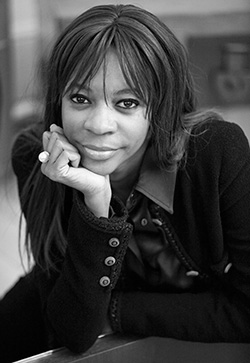
More from Dambisa Moyo...
An interview with Dambisa Moyo
African author and economist Dambisa Moyo on ending western aid to Africa now, what Bono and Geldoff don’t get, and the deadening of African independence and entrepreneurship.
Dambisa Moyo’s prescription for economic sustainability in Africa—which includes cutting off all aid within five years—might seem insane if the statistics weren’t so grim: despite one trillion dollars in western aid over the past sixty years, the economic lot of the average African has only gotten worse. Most Africans now live on one dollar per day, and sub-Saharan Africa remains the poorest region in the world. Despite a deluge of aid between the years of 1970 and 1998, poverty on the continent skyrocketed from 11 percent of the population to 66 percent, which means over six hundred million Africans are now impoverished. The average African can only expect to live to be about fifty, and half the continent’s citizens are under the age of fifteen. In addition to poverty, AIDS, corruption (half the continent is still under un-democratic rule), civil war, and genocide ravage the continent. Indeed, Africa seems constantly embroiled in a steady stream of horrors, the likes of which are not seen anywhere else on the planet. Why? Are Africans innately different from the rest of us? Nonsense, says Moyo. She blames aid.
Study Finds Pattern of Severe Droughts in Africa

For at least 3,000 years, a drumbeat of potent droughts, far longer and more severe than any experienced recently, have seared a belt of sub-Saharan Africa that is now home to tens of millions of the world’s poorest people, climate researchers report in a new study.
(..)
“Many of the 390 million people in Africa living on less than $1.25 a day are smallholder farmers that depend on two things: rain and land,” he said. “Even small climate blips such as a delay in rains, a modest shortening of the drought cycle, can have catastrophic effects.”
Given the sub-Saharan region’s persistent vulnerability, Mr. Watkins added, the new findings and the prospect of further global warming could be “early warning signs for an unprecedented and catastrophic reversal in human development.”
Subscribe to:
Posts (Atom)


 Posts
Posts


