Showing posts with label healthcare. Show all posts

Friday, January 02, 2015

Frustrated at the lack of interest by the medical establishment in reducing the costs of diagnostic testing, and seeing almost no chance of getting the necessary research grants, Kanav Kahol returned home to New Delhi in 2011. He was a member of Arizona State University’s department of biomedical informatics. Kahol had noted that despite the similarities between most medical devices in their computer displays and circuits, their packaging made them unduly complex and difficult for anyone but highly skilled practitioners to use. As well, they were incredibly expensive — costing tens of thousands of dollars each.
Kahol knew that the sensors in these devices were commonly available and inexpensive, usually costing only a few dollars. He believed that he could connect these to a common computer platform and use commercially available computer tablets to display diagnostic information, thereby dramatically reducing the cost of the medical equipment. He also wanted to repackage the sensor data to make them intelligible to technicians with just basic medical training — the frontline health workers who do the tasks of physicians in parts of the world where physicians are in short supply.
ahol and his Indian engineering team built a prototype of a device called the Swasthya Slate (which translates to “Health Tablet”) in less than three months, for a cost of $11,000. This used an off-the-shelf Android tablet and incorporated a four-lead ECG, medical thermometer, water-quality meter, and heart-rate monitor. They then enhanced this with a 12-lead ECG and sensors for blood pressure, blood sugar, heart rate, blood haemoglobin, and urine protein and glucose. In June 2012, they sent this device to 80 medical labs for testing, which reported that it was as accurate as the medical equipment they used — but more suitable for use in remote and rural areas, because it was built for the rugged conditions there.
By January 2013, Kahol’s team had incorporated 33 diagnostic tests, including for HIV, syphilis, pulse oximetry, and troponin (relating to heart attack) into the Swasthya Slate and reduced its cost to $800 per unit. They also built a variety of artificial-intelligence–based apps for frontline health workers and started testing these in different parts of India.

Sunday, June 22, 2014

India Has a New Health Care Plan That Will Make Americans Jealous

The news: Millions of Indians are about to get a lot healthier. Dr. Harsh Vardhan, the country's new health minister, is rolling out a new health care initiative that will provide Indians free access to 50 essential generic medicines.
"Fifty basic essential drugs address 75% of the health care needs of the majority, and we plan to make these available free to everyone, from birth to death," Vardhan told the Hindustan Times.
How this will work: India's public hospitals and dispensaries will offer free medicine to treat pain, infections, hypertension, diabetes and many other diseases. Vardhan explained that, "The program" which will be rolled out in phases, "will focus on efficient procurement, quality control and rational use – 50% medicines are wasted or overused, leading to complications and drug-resistance."

Saturday, December 14, 2013

Global Study Finds Majority Believe Traditional Hospitals Will Be Obsolete In The Near Future

A global study was released this morning by the Intel Corporationindicating that around the world people’s health care wants and needs are principally focused on technology and personalization. The “Intel Health Innovation Barometer” found a consistent theme: customized care. At the intersection of health, care and technology, communities around the world consistently said they wanted to see their biological makeup and individual behaviors used to make receiving care more effective and efficient. This unsurprisingly was described by people through means such as telehealth, mobile health and the sharing of health information in real time. However, surprising methods of care were also common themes throughout the world such as ingestible monitoring systems and care that involves no utilization of hospitals.
(..)
Surprising Findings:
-       Traditional hospitals, according to 57% of people, will be obsolete in the future
-       Majority of people (84%) would be willing to share their personal health information to advance and lower costs in the health care system
-       More than 70% of people are receptive to using toilet sensors, prescription bottle sensors and swallowed health monitors
-       72% of those surveyed would be willing to see a doctor via video conference for non-urgent appointments
-       66% of people say they would prefer a care regimen that is designed specifically for them based on their genetic profile or biology
-       More than half of people (53%) would trust a test they personally administered as much or more than if that same test was performed by a doctor
-       About 30% of people would trust themselves to perform their own ultrasound

Link

Thursday, September 19, 2013

When Smartphones Do a Doctor’s Job


A simple, cheap way to measure eyesight may face resistance.
The device, called the Netra-G, is based on some clever optics and software Pamplona came up with—a way to measure the refractive error of the eye using a smartphone screen and an inexpensive pair of plastic binoculars. The whole setup might cost a few dollars to make. It does the job of a $5,000 instrument called an autorefractor.

Tuesday, May 28, 2013

New Tools to Hunt New Viruses

Peter Daszak, a parasitologist and president of the EcoHealth Alliance, has even put a number on it: 5.3 new ones each year, based on a study using data from 1940 to 2004. He and his co-authors blamed population growth, deforestation, antibiotic overuse,factory farming, live animal markets, bush meat hunting, jet travel and other factors.
Some aspects of the new viruses are scary. The Arabian coronavirus — now officially named MERS, for Middle East respiratory syndrome — has killed about half of those it infects, while SARS killed less than a quarter; in the lab, it replicates faster than SARS, penetrates lung cells more readily and inhibits the formation of proteins that warn the body that it is under attack.

Tuesday, April 16, 2013

The Wikipedia of Biomarkers: Interview with Jean-Emmanuel Bibault and Charles Ferté, Co-Founders of CancerDriver


Every year nearly 13 million people in the world are diagnosed with cancer. 7.6 million die from it, making it the leading cause of death in developed countries and the second leading cause of death in the developing world.
While cures for cancer are hard to come by, there are promising avenues for diagnosis. Cancer biomarkers are one of them; they are molecular aberrations found in the tumors that predict the aggressiveness of a disease or the response to a treatment. Unfortunately, too few patients are tested for biomarkers and too many with identified biomarkers are not referred to the right drug or the right trial.
Enter CancerDriver, a free repository of cancer biomarkers intended to improve access to biomarker information for patients, physicians, researchers, and pharmaceutical companies. CancerDriver contains a database of all known biomarkers in oncology. It can be found on the web and soon on iOS and Android mobile platforms.
We had a chance to speak with Jean-Emmanuel Bibault and Charles Ferté, Co-Founders of CancerDriver, to discuss this revolutionary site.

Tuesday, December 04, 2012

Top 10 Diet and Fitness Discoveries

Time Magazine's Top ten lists:
Top ten diet list  Link
Top ten fitness list : link
Top ten medical breakthroughs: Link

Wednesday, March 07, 2012

If You Feel O.K., Maybe You Are O.K.

EARLY diagnosis has become one of the most fundamental precepts of modern medicine. It goes something like this: The best way to keep people healthy is to find out if they have (pick one) heart disease, autism, glaucoma, diabetes, vascular problems, osteoporosis or, of course, cancer — early. And the way to find these conditions early is through screening.


It is a precept that resonates with the intuition of the general public: obviously it’s better to catch and deal with problems as soon as possible. A study published with much fanfare in The New England Journal of Medicine last week contained what researchers called the best evidence yet that colonoscopies reduce deaths from colon cancer.
Recently, however, there have been rumblings within the medical profession that suggest that the enthusiasm for early diagnosis may be waning. 

Wednesday, October 12, 2011

In Some Chinese Hospitals, Violence Is Out of Control and It's Doctors Who Are at Risk


On a recent Monday afternoon, doctors at Beijing Tongren Hospital stopped working. Their hour-long protest aimed to raise awareness about what they say is a rising problem in Chinese hospitals: attacks on medical personnel. "Punish the attacker severely and give dignity back to doctors," read a digital sign set up by the staff, according to state media.
Days earlier, Xu Wen, a 43-year-old otolaryngologist at the hospital, had been brutally attacked by a dissatisfied patient.

Read more: http://www.time.com/time/world/article/0,8599,2096630,00.html#ixzz1aZozluEO

Friday, June 24, 2011

‘Co-pilots’ in ICU reduce death rates

NORTHWESTERN (US) — Mortality rates in the intensive care unit dropped 50 percent when the attending physician was assisted by someone prompting him to address items on a checklist.
Link

Friday, June 03, 2011

Surgeons Who Burn the Midnight Oil

This post highlights one of the key ingredients in any successful surgery in my opinion:
The reliability of the surgical team
Uvealblues
This week, The Journal of the American Medical Association published a third study on the topic. Unlike the other two studies, which examined the outcomes of abdominal transplants, this one focused on transplant operations performed in the chest. And rather than reviewing the results of a single institution, as the previous investigators did, this most recent study took into account all of the almost 30,000 heart and lung transplants performed in the United States over 10 years.
The results surprised the researchers. Patients fared essentially the same whether the transplants were performed during the day or at night. Contrary to conventional wisdom, patient outcomes had little to do with the time of the operation or the fatigue of the surgeon. Rather, they seemed to hinge on the reliability of the surgical team.
Link

Friday, May 20, 2011

Hospitals Misleading Patients About Benefits of Robotic Surgery, Study Suggests

ScienceDaily (May 19, 2011) — An estimated four in 10 hospital websites in the United States publicize the use of robotic surgery, with the lion's share touting its clinical superiority despite a lack of scientific evidence that robotic surgery is any better than conventional operations, a new Johns Hopkins study finds.
Link

Thursday, March 24, 2011

the graveyard

Another poignant piece of writing from the always insightful Bongi, a surgeon from South Africa, Mpumalanga province. All of us as physicians have our graveyards...as Bongi recounts in a painfully honest, personal post. The subsequent commentary is also worth reading....
uvealblues


this is a difficult story to tell but if i am to be true to the complete experience of a surgeon, i do need to tell it.


one of my seniors used to say that every surgeon has a graveyard hidden away somewhere in the dark recesses of his mind. he went on to say it was unfortunately normal, so long as you remember all the names engraved on the tombstones. at the time i thought he was being a bit melodramatic, especially seeing as though i could barely remember the names of any of my living patients. somewhat like one of our consultants i used to refer to them as the guy with the pancreatitis or the lady with the bleeding peptic ulcer. unfortunately i learned what he meant.

Sunday, March 06, 2011

A cheaper way to scan for cancer

A conversation in a hotel lobby led to a cancer detection breakthrough.

(..)
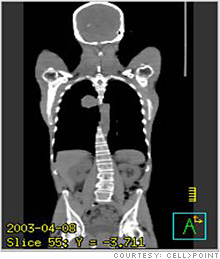
Doctors rely on positron-emission tomography (PET) scans to see tumors. But PET machines cost more than $2.5 million apiece and are usually found only in major medical centers. Bryant's employer, MD Anderson Cancer Center in Houston, had developed a chemical that could light up a tumor on a common SPECT (single photon emission computed tomography) camera. He wanted Colip, 62, a pharmaceutical industry veteran, to help turn it into a product.

Saturday, March 05, 2011

Smartphone apps can eventually save us billions in health care costs

Search Appolicious Advisor Advisor-bar Smartphone apps can eventually save us billions in health care costs Posted February 13, 2011 1:26pm by Kevin Maney Tags: Demascopes, healthcare, medical, stethoscopes Apps mentioned: * handyscope * iStethoscope Pro Buzz up! Apps just might be able to cure health care.
One major barrier to health care reform is the costly, age-old practice of making patients physically visit a doctor for everything from a hypertension screening to a follow-up visit to see if an injury is healing.
Smartphone apps could change that. The industry is seeing some of the first apps that point the way toward giving you a doc in your pocket. And we’re not just talking about apps that provide health information from the web. These new apps do some medical heavy lifting.
Nobody suggests apps are going to replace doctors. But if they can reduce in-person doctor visits by even a small percentage while at the same time catching problems like skin cancer a bit earlier, the nation would spend billions of dollars less on health care.

Saturday, July 31, 2010

Perspectives

Another great post  here from the South African surgical blog :Other Things Amanzi
via Suture for a Living blog

Monday, June 28, 2010

Robotic Lifeguard Uses Sonar to Sense Swimmers in Distress

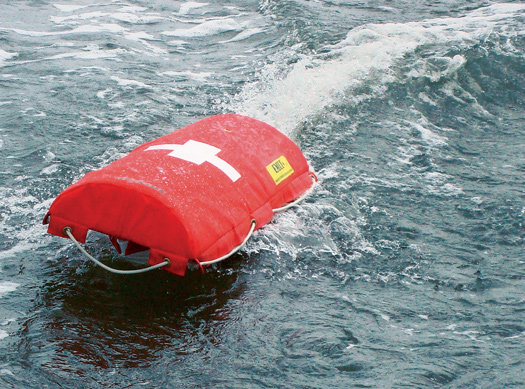
EMILY, which stands somewhat awkwardly for EMergency Integrated Lifesaving lanYard, is a new robotic lifeguard that could help save lives at our nation's beaches. It's a four-foot-long motorized buoy in appearance, but there's a lot more under the hood.

Wednesday, June 23, 2010

Africa and the Surgical Imbalance

The surgical imbalance that Kushner talks about may make it onto the G20 agenda and is the focus of a recent paper co-authored by Surgeons OverSeas, of which he is a co-founder, and the World Health Organization.
In it, researchers examined 132 health-care facilities in eight developing countries only to find that many of the operating room elements vital to safe surgery sometimes couldn't be found.
Four essential items — oxygen, water, electricity and an anesthesia machine — were "always available" in only 21, 50, 36 and 32 per cent of the facilities, respectively.
Indeed, in some places, some or all of these items were "never available," the study reported.

Related Posts with Thumbnails

ShareThis