Showing posts with label india. Show all posts

Friday, January 02, 2015

Frustrated at the lack of interest by the medical establishment in reducing the costs of diagnostic testing, and seeing almost no chance of getting the necessary research grants, Kanav Kahol returned home to New Delhi in 2011. He was a member of Arizona State University’s department of biomedical informatics. Kahol had noted that despite the similarities between most medical devices in their computer displays and circuits, their packaging made them unduly complex and difficult for anyone but highly skilled practitioners to use. As well, they were incredibly expensive — costing tens of thousands of dollars each.
Kahol knew that the sensors in these devices were commonly available and inexpensive, usually costing only a few dollars. He believed that he could connect these to a common computer platform and use commercially available computer tablets to display diagnostic information, thereby dramatically reducing the cost of the medical equipment. He also wanted to repackage the sensor data to make them intelligible to technicians with just basic medical training — the frontline health workers who do the tasks of physicians in parts of the world where physicians are in short supply.
ahol and his Indian engineering team built a prototype of a device called the Swasthya Slate (which translates to “Health Tablet”) in less than three months, for a cost of $11,000. This used an off-the-shelf Android tablet and incorporated a four-lead ECG, medical thermometer, water-quality meter, and heart-rate monitor. They then enhanced this with a 12-lead ECG and sensors for blood pressure, blood sugar, heart rate, blood haemoglobin, and urine protein and glucose. In June 2012, they sent this device to 80 medical labs for testing, which reported that it was as accurate as the medical equipment they used — but more suitable for use in remote and rural areas, because it was built for the rugged conditions there.
By January 2013, Kahol’s team had incorporated 33 diagnostic tests, including for HIV, syphilis, pulse oximetry, and troponin (relating to heart attack) into the Swasthya Slate and reduced its cost to $800 per unit. They also built a variety of artificial-intelligence–based apps for frontline health workers and started testing these in different parts of India.

Sunday, June 22, 2014

India Has a New Health Care Plan That Will Make Americans Jealous

The news: Millions of Indians are about to get a lot healthier. Dr. Harsh Vardhan, the country's new health minister, is rolling out a new health care initiative that will provide Indians free access to 50 essential generic medicines.
"Fifty basic essential drugs address 75% of the health care needs of the majority, and we plan to make these available free to everyone, from birth to death," Vardhan told the Hindustan Times.
How this will work: India's public hospitals and dispensaries will offer free medicine to treat pain, infections, hypertension, diabetes and many other diseases. Vardhan explained that, "The program" which will be rolled out in phases, "will focus on efficient procurement, quality control and rational use – 50% medicines are wasted or overused, leading to complications and drug-resistance."

Sunday, April 15, 2012

Starving in India: A Scribe Tries to Save a Life

Last fall, I conducted field research on starvation in India along with my colleague Ankita Aggarwal from the New Delhi-based Centre for Equity Studies, a think tank. As we traveled across several states, hearing tale after tale of families battling chronic hunger to stay alive, it became clear to us that the media play a critical role in holding public officials accountable. A powerful news report can generate a wave of public outrage over starvation – and can result in government action.
Link
Nobel Prize-winning economist Amartya Sen argued long ago that independent India had successfully managed to prevent famine because of its democratic political structures. He was referring not just to electoral processes, but also the independent media that shines a light on government wrongdoing and galvanizes the public’s attention when starvation deaths happen.
“The government cannot afford to fail to take prompt action when large-scale starvation threatens. Newspapers play an important part in this, in making the facts known and forcing the challenge to be faced,” Mr. Sen wrote in a 1984 article in the journal Food and Nutrition.
Indeed, the catalyst for the “right to food” public interest litigation the Supreme Court has been hearing since 2001 was evidence of starvation deaths reported by several media outlets.

Tuesday, August 30, 2011

Esther Duflo Bribes India's Poor To Health

An excellent article on the realities of effective development work in Fast Company
Uvealblues
Link

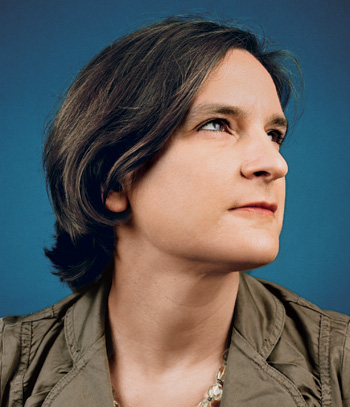
Rajasthan is India's desert state, an often inhospitable place where per capita income averages around $1.77 per day. Poverty like that--understanding it and imagining ways to fix it--is what Esther Duflo lives for. Since 2003, her Abdul Latif Jameel Poverty Action Lab (named for a wealthy Saudi donor), or J-PAL, has conducted 240 randomized, controlled trials of specific ways to help the poor. She tests poverty solutions the way medical researchers test new drugs, which can violate the pieties of the philanthropic community. But she has earned a lot of respect along the way: In 2009, the MIT economist won a MacArthur "genius award" for bringing the scientific method to development work.

In Rajasthan, Duflo has been exploring whether incentives might help get more young children vaccinated.
(..)
Bribing the poor is a notion that could offend just about anyone. We all like our philanthropy pure: Give the money, volunteer at the shelter, act with good intentions, and things will just get better. That's not a mode of thinking that allows the less fortunate to have human motivations, and it's certainly not a mode of thinking that encourages us to reflect on our own flaws. But be honest--you'd probably offer your own child a piece of candy as a reward for taking her shots. If we really want to make change, we have to discard what Duflo calls our "car­toon visions" of the poor. Doing good means engaging with what people really need and getting it to them by any means necessary

Tuesday, August 31, 2010

A Sikh Temple Where All May Eat, and Pitch In

Anyone making a trip to Northern India, should try to get to Amritsar, to visit the stunning Golden Temple.
Uvealblues

Sikhism, which emerged in the Punjab region of India in the 15th century, strongly rejects the notion of caste, which lies at the core of Hinduism.
The Golden Temple, a giant complex of marble and glittering gold that sits at the heart of this sprawling, hectic city near the border with Pakistan, seeks to embody this principle. Nowhere is it more evident than in the community kitchen, where everyone, no matter his religion, wealth or social status, is considered equal.
Guru Amar Das created the community kitchen during his time as the third Sikh guru in the 16th century. Its purpose, he said, was to place all of humanity on the same plane. At the temple’s museum, one painting shows the wife of one of the gurus serving common people, “working day and night in the kitchen like an ordinary worker,” the caption says.
Volunteerism and community support are other central tenets of Sikhism expressed in the langar. When the Mughal emperor Akbar tried to give Guru Amar Das a platter of gold coins to support the kitchen, he refused to accept them, saying the kitchen “is always run with the blessings of the Almighty.”

Sunday, November 23, 2008

India Calling

Which raises a heart-stirring question: If our parents left India and trudged westward for us, if they manufactured from scratch a new life there for us, if they slogged, saved, sacrificed to make our lives lighter than theirs, then what does it mean when we choose to migrate to the place they forsook?

If we are here, what are they doing there?

(..)
Pessimism crept into the sunniest nation. A vast majority saw America going astray. Books heralded a “Post-American World.” Even in the wake of a historic presidential election, culminating in a dramatic change in direction, it remained unclear whether the United States could be delivered from its woes any time soon.

“In the U.S., there’s a crisis of confidence,” said Nandan Nilekani, co-chairman of Infosys Technologies, the Indian software giant. “In India,” he added, “for the first time after decades or centuries, there is a sense of optimism about the future, a sense that our children’s futures can be better than ours if we try hard enough.”
(..)
Exact data on émigrés working in India or spending more time here are scarce. But this is one indicator: India unveiled an Overseas Citizen of India card in 2006, offering foreign citizens of Indian origin visa-free entry for life and making it easier to work in the country. By this July, more than 280,000 émigrés had signed up, according to The Economic Times, a business daily, including 120,000 from the United States.

Thursday, March 29, 2007

Young Sikh Men Cut Hair, Annoying Elders


Sikh spiritual leaders express dismay at the rapidity with which a new generation of young men are trimming their hair and abandoning the turban, the most conspicuous emblem of the Sikh faith. While there are no hard data, Jaswinder Singh, a lawyer and leader of a “turban pride” movement, estimates that half of India’s Sikh men now forgo the turban, compared with just 10 percent a couple of decades ago.
(..)
Since 1699, about two centuries after the founding of the religion, Sikh leaders have prohibited their members from cutting their hair, saying long hair is a symbol of Sikh pride. The turban was conceived to manage the long hair and intended to make Sikhs easily identifiable in a crowd.
(..)
In addition, since the Sept. 11, 2001, attacks, Sikhs traveling abroad have complained of being mistaken for turban-wearing Taliban and harassed by airport security guards.
Related Posts with Thumbnails

ShareThis