Showing posts with label international. Show all posts

Thursday, August 28, 2014

Burial Boys of Ebola

God Bless these courageous men and healthcare workers ...some of whom have contracted ebola and died: Link
Another link about these health workers: Link

Sunday, March 16, 2014

Photos that Bear Witness to Modern Slavery

Slavery has come back into our sphere of attention with "Twelve Years a Slave." Lisa Kristine poignantly (and painfully) brings attention to modern day slavery in this Ted Talk. It will take 30 minutes of your time to view and in my view will be very worthwhile.
UvealBlues

For the past two years, photographer Lisa Kristine has traveled the world, documenting the unbearably harsh realities of modern-day slavery. She shares hauntingly beautiful images — miners in the Congo, brick layers in Nepal — illuminating the plight of the 27 million souls enslaved worldwide. (Filmed at TEDxMaui)
Link

Sunday, January 19, 2014

Three Myths on the World's Poor

Three Myths on the World's Poor

by Bill and Melinda Gates

This is a must read.
Uvealblues...

MYTH ONE: Poor countries are doomed to stay poor.
(..)

MYTH TWO: Foreign aid is a big waste.
(..)

MYTH THREE: Saving lives leads to overpopulation.

Friday, December 14, 2012

10 facts on the state of global health


Collecting and comparing health data from across the globe is a way to describe health problems, identify trends and help decision-makers set priorities.
Studies describe the state of global health by measuring the burden of disease – the loss of health from all causes of illness and deaths worldwide. They detail the leading causes of deaths worldwide and in every region, and provide information on more than 130 diseases and injuries across the world

Monday, October 15, 2012

Looking for a Google


Can the spirit of enterprise be taught?

WORLD-BEATING companies that began in garages—think of Amazon, Apple or Google—are revered in the West. Developing countries can boast one or two examples of their own: India’s Tata and South Korea’s Samsung began life as small trading companies; Thailand’s Charoen Pokphand Group, an agri-business firm, started as a seed shop. But these are exceptions. Of the millions of small enterprises in poor countries, hardly any grow big and strong. The World Bank’s new World Development Report* looks at what can be done to help start-ups in poor countries become the next Google
(..)
The question is what can be done to improve matters. Obviously, good infrastructure and a welcoming investment climate matter. Governments have tried providing cheap loans or grants to pay the wages of an extra employee. This had no effect. Nor did giving special grants to female business owners, as happened in Ghana. But free management training did help. The trouble is that most enterprises see no point in it: asked whether lack of management expertise was a problem, only 3% of Brazilian small firms said yes.
Learning from abroad, though, makes a big difference. In 1979 Desh, a Bangladeshi garments firm, sent 130 of its staff for an eight-month course at a South Korean textile plant. At the time, Bangladesh had no textile exports and no modern industry. When the trainees got back, almost all of them set up their own firms. Today Bangladesh has 3.6m textile workers, 80% of them women, generating $13 billion of exports a year. Mr Yunus should be proud.

Friday, September 28, 2012

A Peace Corps For Doctors, Built By A Senator's Daughter


Fifty years ago President Kennedy started the Peace Corps with the promise that it would train doctors in faraway lands. But, you may be surprised to know, the Peace Corps has never actually recruited doctors and nurses as mentors and medical educators.
Dr. Vanessa Kerry wants to fulfill that promise.
The 35-year-old physician — a daughter of Sen. John Kerry — has created a partnership with the Peace Corps to send doctors and nurses abroad. In return a non-profit pays off part of school loans.
"It's a Peace Corps for doctors and nurses," Kerry tells Shots. The goal of the Global Health Service Partnership, as it is tentatively called, is to reduce the severe shortage of medical workers in developing countries.
(..)
The Global Health Service Partnership volunteers won't just provide on-the-spot medical care. Kerry says they'll be teachers and mentors to local doctors, augmenting faculties of medicine and nursing.
"We've been very clear that these people are there to provide faculty support and integrate with faculty in these institutions," Kerry says. This way, they can grow local health systems in a sustainable way.
She thinks that might eventually help reverse the medical brain drain that plagues many developing countries. "If we can build up opportunities and create a better academic environment, that can build up retention [of local doctors]," she says.
Health professionals often migrate not just because they can make more elsewhere but because they can't practice the kind of medicine they want to at home, she says. By raising the standard, they might stay.
"People want to stay in their country, they want to stay with their family," Kerry says. The opportunities just have to be built.

Thursday, September 27, 2012

In Obama’s Speech, Their Voices

When President Obama made a landmark speech against modern slavery on Tuesday, many of us in the news media shrugged. It didn’t fit into the political narrative. It wasn’t controversial, so — yawn — it wasn’t really news.

But women like Sina Vann noticed. She’s a friend of mine who was trafficked as a young girl from Vietnam into Cambodian brothels — where she was regularly punished by being locked inside coffins with scorpions and biting ants. Now an anti-trafficking activist with the Somaly Mam Foundation, she sent me an exuberant e-mail (in fractured English, her third language) with a message for Obama: “We are survivors here so proud of you, you are the big president in U.S. and you take action of trafficking. So you give victims from around the world have hope.”

Link

Sunday, September 23, 2012

The Case For Optimism

Bill Clinton's Global (Optimistic) Perspective

Our world is more interdependent than ever. Borders have become more like nets than walls, and while this means that wealth, ideas, information and talent can move freely around the globe, so can the negative forces shaping our shared fates. The financial crisis that started in the U.S. and swept the globe was further proof that--for better and for worse--we can't escape one another.
There are three big challenges with our interdependent world: inequality, instability and unsustainability. The fact that half the world's people live on less than $2 a day and a billion people on less than $1 a day is stark evidence of inequality, which is increasing in many places. We're feeling the effects of instability not only in the global economic slowdown but also in the violence, popular disruptions and political conflicts in the Middle East and elsewhere. And the way we produce and use energy is unsustainable, changing our climate in ways that cast a shadow over our children's future.
But I firmly believe that progress changes consciousness, and when you change people's consciousness, then their awareness of what is possible changes as well--a virtuous circle. So it's important that the word gets out, that people realize what's working. That where there's been creative cooperation coupled with a communitarian view of our future, we're seeing real success. That's the reason I try to bring people together every year for the Clinton Global Initiative (CGI). Here are five areas in which there has been concrete, measurable and reproducible progress.


Read more: http://www.time.com/time/magazine/article/0,9171,2125031,00.html#ixzz27KavxTyP

Thursday, July 12, 2012

Where is Matt 2012

What a a great idea Matt has...and has been living...
Uvealblues

Friday, June 22, 2012

Melinda Gates On The Importance Of The Girl Effect


Melinda Gates has been a consistent voice for women around the world who are dealing with the wrenching circumstances of poverty. In an April 2012 TEDxChange talk, Gates called upon governments to establish universal access to birth control for women. The foundation plans to organize a world summit in London this summer to bring leaders together and raise $4 billion, the estimate of what it will cost to provide birth control to 120 million women in the developing world by 2020. “You simply cannot talk to real women about their lives and not hear the issue of family planning come up,” she says.
In a recent conversation, Fast Company discovered that Gates is a friend to, and supporter of, many of the other members of the League of Extraordinary Women.

Wednesday, June 20, 2012

India in Race to Contain Untreatable Tuberculosis

MUMBAI—India's slow response to years of medical warnings now threatens to turn the country into an incubator for a mutant strain of tuberculosis that is proving resistant to all known treatments, raising alarms of a new global health hazard.
"We finally have ended up with a virtually untreatable strain" of tuberculosis in India, said Dr. Zarir Udwadia, one of the country's leading TB authorities.
In December, Dr. Udwadia reported in a medical journal that he had four tuberculosis patients resistant to all treatment. By January, he had a dozen cases, then 15.
(..)
 Spread of the strain could return tuberculosis to the fatal plague that killed two-thirds of people afflicted, before modern treatments were developed in the 1940s, said Dr. Mario Raviglione, director of the Stop TB Department of the World Health Organization. The WHO is now assisting India to combat the strain.
(..)
India has the largest number of the world's cases—2.3 million of the nearly nine million people afflicted annually—and it is the country's most fatal infectious illness. Government authorities estimated about 100,000 of India's patients have drug-resistant strains, which researchers say can mutate into forms increasingly immune to more and more medicines
Link

Sunday, May 06, 2012

The Unknown Inventor Whose Work Is Saving The Developing World

Ashok Gadgil is a professor at UC Berkeley. But in his spare time, he’s come up with solutions for water, cooking, and energy quandaries, improving lives from the Sudan to India. How does he do it? He just likes a good puzzle.
Link

Thursday, March 08, 2012

Invisible Children Responds To The Kony 2012 Viral Video Controversy

After a huge success comes the inevitable backlash. You probably watched the Joseph Kony movie yesterday. Now some critics are saying it’s not as good as it appears to be, but Invisible Children is fighting back.
Link

Tuesday, February 28, 2012

For bringing medical care to the masses

Narayana Hrudayalaya is Walmart meets Mother Teresa.

The organization, a complex of health centers based in southern India (narayana hrudayalaya means "God’s compassionate home" in Sanskrit), offers low-cost, high-quality specialty care in a largely impoverished country of 1.2 billion people. By thinking differently about everything from the unusually high number of patients it treats to the millions for whom it provides insurance--and by thinking a lot like the world’s largest retailer--the hospital group is able to continually wring out costs. Narayana Hrudayalaya’s operations, for instance, include the world’s largest and most prolific cardiac hospital, where the average open-heart surgery runs less than $2,000, a third or less what it costs elsewhere in India and a fraction of what it costs in the U.S.
(..)
 "This hospital is for poor people, but we also treat some rich people. So we’re mentally geared for people who are shabbily dressed and have trouble paying. We don’t look at them as outsiders. We look at them as customers." Narayana Hrudayalaya’s flagship hospital has 3,000 beds, more than 20 times as many as the average American hospital. The company (mostly family owned, with JPMorgan among a handful of investors) negotiates for better prices and buys directly from manufacturers, cutting out distributors.
(..)
The company targets even routine inefficiencies. A beefed-up support staff handles the onerous paperwork for surgeons, freeing Shetty and his colleagues to perform more operations than a typical cardiac surgeon would, about a dozen a week.
(..)
 Patients who pay discounted rates are in effect compensated by those who pay full price or opt for extra perks. Typically, the latter group includes foreigners for whom a $7,000 heart operation, access to an experienced specialist, and a deluxe private room is a relative bargain. The balance of patients is, in fact, crucial. Every day, Narayana Hrudayalaya’s surgeons receive a P&L statement of the previous day that describes their operations and the various levels of reimbursement.
(..)
 Before becoming one of India’s best-known health-care entrepreneurs, Shetty was its best-known heart surgeon. He was interrupted in surgery one day during the 1990s by a request to make a house call. "I said, 'I don’t make home visits,' " Shetty says, "and the caller said, 'If you see this patient, the experience may transform your life.' " Which is exactly what happened. The request was from Mother Teresa. 
Link

Thursday, January 26, 2012

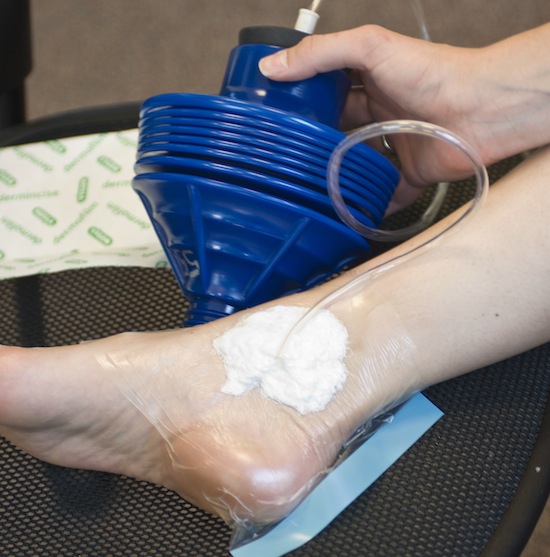
MIT Student Develops $3 Cutting-Edge Healing Device, Field Tested in Haiti

The new device could radically improve healing times for tens of millions, at a cost of $3.
Link
No one really knows why, but for an open wound, simply applying suction dramatically speeds healing times. (The theory is that the negative pressure draws bacteria out, and encourages circulation.) But for almost everyone, that treatment is out of reach--simply because the systems are expensive--rentals cost at least $100 a day and need to be recharged every six hours.
No more. Danielle Zurovcik, a doctoral student at MIT, has created a hand-powered suction-healing system that costs about $3.

Tuesday, January 17, 2012

For Intrigue, Malaria Drug Gets the Prize

Fascinating article on the history of one of the, if not the, strongest anti Malarials available. Who would have known that Mao Zedong, in a bid to help dying North Vietnamese, commissioned top researchers and herbal healers to find a cure for malaria! 


(Ironically.... Even now in Africa, in almost every country I have been the average person still uses the generally ineffective anti-malarial, Chloroquine..)
Uvealblues

The Chinese drug artemisinin has been hailed as one of the greatest advances in fighting malaria, the scourge of the tropics, since the discovery of quinine centuries ago.

Artemisinin’s discovery is being talked about as a candidate for a Nobel Prize in Medicine. Millions of American taxpayer dollars are spent on it for Africa every year.
But few people realize that in one of the paradoxes of history, the drug was discovered thanks to Mao Zedong, who was acting to help the North Vietnamese in their jungle war against the Americans. Or that it languished for 30 years thanks to China’s isolation and the indifference of Western donors, health agencies and drug companies.

Link

Wednesday, October 12, 2011

In Some Chinese Hospitals, Violence Is Out of Control and It's Doctors Who Are at Risk


On a recent Monday afternoon, doctors at Beijing Tongren Hospital stopped working. Their hour-long protest aimed to raise awareness about what they say is a rising problem in Chinese hospitals: attacks on medical personnel. "Punish the attacker severely and give dignity back to doctors," read a digital sign set up by the staff, according to state media.
Days earlier, Xu Wen, a 43-year-old otolaryngologist at the hospital, had been brutally attacked by a dissatisfied patient.

Read more: http://www.time.com/time/world/article/0,8599,2096630,00.html#ixzz1aZozluEO

Sunday, August 14, 2011

How to Beat Roaming Fees While Traveling Abroad By

LAST week’s column suggested ways to save when calling home from abroad. This week I’ll tackle data roaming fees, which wireless providers charge when customers use their phones outside their service area. With travelers using smartphones and other wireless devices abroad in the same way as they do back home (to check e-mail, to update Facebook and Twitter and to pull up online maps), the skyrocketing fees are taking many by surprise.
Link

Thursday, December 23, 2010

Breakthrough in TB Diagnostics

A rapid genetic test for tuberculosis could have a huge impact on global health.
The test directly detects genetic sequences associated with TB and drug-resistant TB. Although researchers have known about these sequences since the mid-1990s, incorporating the molecular technologies needed to detect them into tests for the developing world has been impractical until recently, says David Persing, the chief medical and technology officer at Cepheid, the California-based company that manufactures the test. 

Thursday, December 02, 2010

Haiti, Nearly a Year Later

An emergency cholera hospital is the grimmest kind of medical center, and it’s a symbol of the succession of horrors that have battered Haiti over the last year.
(..)
Already, more than 1,700 people have died of cholera in less than a month, and the Pan American Health Organization estimates that 400,000 Haitians may get cholera over the next year.
The earthquake in January caused some 250,000 deaths. The death toll was a result not only of seismic activity but also of poverty: shoddy construction and slow rescue efforts meant many more deaths than if the same quake had occurred in, say, California. Then came cholera, which is a disease of poverty — abysmal sanitation and lack of potable water can create an epidemic.
(..)
Ultimately what Haiti most needs isn’t so much aid, but trade. Aid accounts for half of Haiti’s economy, and remittances for another quarter — and that’s a path to nowhere.
The United States has approved trade preferences that have already created 6,000 jobs in the garment sector in Haiti, and several big South Korean companies are now planning to open their own factories, creating perhaps another 130,000 jobs.
“Sweatshops,” Americans may be thinking. “Jobs,” Haitians are thinking, and nothing would be more transformative for the country.
Let’s send in doctors to save people from cholera. Let’s send in aid workers to build sustainable sanitation and water systems to help people help themselves. Let’s help educate Haitian children and improve the port so that it can become an exporter. But, above all, let’s send in business investors to create jobs.
Related Posts with Thumbnails

ShareThis