Thursday, January 02, 2014

US Military Scientists Solve the Fundamental Problem of Viral Marketing

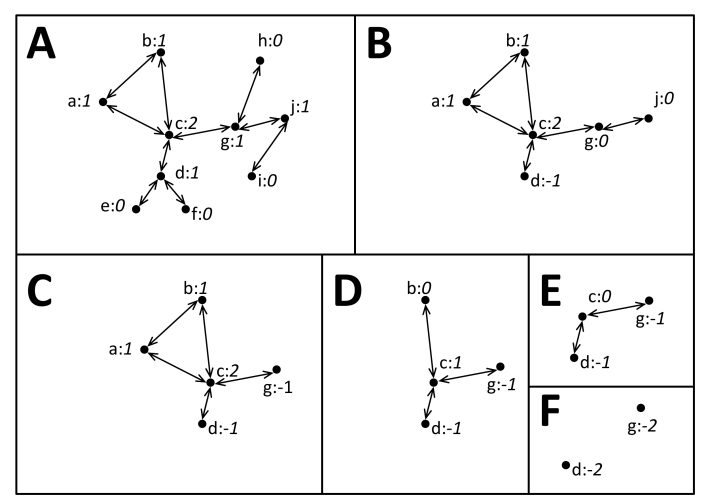
Network theorists working for the US military have worked out how to identify the small “seed” group of people who can spread a message across an entire network
Link

Civilian Photography, Now Rising to New Level

Five years ago, the DJI Phantom 2 Vision would have seemed like a science fiction film prop or a piece of surveillance hardware flown only by the sexiest of superspies. But it is the first camera-carrying drone you may want to own — and you could do that without spending thousands of dollars.
Link

Wednesday, January 01, 2014

Four Simple Ways to Have a Better Shot at Keeing Your New Year's Resolutions

Herei s a link to National Geographic's photo of the year: Link
Here is a Link to an incredible photo documentary of the Serengeti Lion: Link
(Make sure you have some time when you go to this link ;)
Uvealblues

Tuesday, December 31, 2013

VAPOR ‘NANOBUBBLES’ DETECT MALARIA THROUGH SKIN

A noninvasive technology can accurately detect even low levels of malaria infection through the skin in seconds with a laser scanner that requires no dyes, diagnostic chemicals, or needles.
As reported in a preclinical study published this week in the Proceedings of the National Academy of Sciencesthe technology detected a single malaria-infected cell among a million normal cells with zero false-positive readings.
The technology uses a low-powered laser that creates tiny vapor “nanobubbles” inside malaria-infected cells. The bursting bubbles have a unique acoustic signature that allows for an extremely sensitive diagnosis
Link.

Sunday, December 29, 2013

A New Approach to Gift Giving

Unstuff Gifts: Link

Super Short, Intense Workouts Won't Help You Lose Weight

Super short workouts sound fantastic. Who wouldn't want to pack 60 minutes worth of exercise into 20—or sometimes even less? We've discussed quite a few, but not a lot about what you can expect while doing them. Amby Burfoot, writing for Runner's World, decided to take a look at the numbers.
Link

National Geographic 2013 in Review

This a pretty visually stunning timeline
Uvealblues
Link

Why We Are So Materialistic Even If It Doesn't Make Us Happy

No matter who you are, it's easy to get a little caught up in the idea of getting new stuff. Here's a look at why your brain is so materialistic and what you can do to keep it from overwhelming you.

Smart Glasses Reveal What It's Like to Have Superpowers

Atheer's video suggested the potential in a future of wearable technology and 3D smart glasses. Watch it above; we dare you not to get excited.
"The experiences shown in the video from the user’s point of view can be available in 1-2 years," Atheer CEO Soulaiman Itani told Mashable. "Every functionality shown has been prototyped in a minimalistic way, but more with the core technology. Minimizing the hardware to be as small as in the video will probably take closer to eight years."

Saturday, December 28, 2013

The top 50 viral moments of 2013!

In 2013, we saw videos, posts and photos that made us laugh, touched our hearts and got us all sharing! On New Year's Eve, HLN counts down 50 of the most popular stories that made 2013 a 'What did you share?' year
Link

Thursday, December 26, 2013

BIOFILM BACTERIA LINGER ON TOYS, BOOKS, CRIBS

Numerous scientific studies have concluded that two common bacteria that cause colds, ear infections, strep throat, and more serious infections cannot live for long outside the human body. So conventional wisdom has long held that these bacteria won’t linger on inanimate objects like furniture, dishes, or toys.
But new research in Infection and Immunity shows that Streptococcus pneumoniae andStreptococcus pyogenes do persist on surfaces for far longer than has been appreciated. The findings suggest that additional precautions may be necessary to prevent infections, especially in settings such as schools, daycare centers, and hospital.

Are Cranberries a Better Way to Long Life?

Berries' Antioxidant Properties May Increase Longevity at Any Stage of Life

For Fitness, Intensity Matters

This year, exercise science expanded and fine-tuned our understanding of how physical activity affects our brainsjoints,hearts, and even genes, beginning before birth and continuing throughout our lifespans, which can be lengthened, it seems, by exercise, especially if we pick up the pace.
(..)
But the lesson that seemed to emerge most persistently from the fitness-related studies published this year was that intensity matters, especially if you wish to complete your workout quickly. The most popular column that I wrote this year, by a wide margin, detailed “The Scientific 7-Minute Workout,” a concept that appealed, I have no doubt, because the time commitment was so slight. But the vigor required was considerable; to gain health benefits from those seven minutes, you needed to maintain a thumping heart rate and spray sweat droplets around the room.
Almost halving the time spent exercising was also effective, a later and likewise popular column showed. In that study, out-of-shape volunteers who ran on a treadmill for a mere four minutes three times a week for 10 weeks raised their maximal oxygen uptake, or endurance capacity, by about 10 percent and significantly improved their blood sugar control and blood pressure profiles.

Wednesday, December 25, 2013

The 50 Most Popular All That Is Interesting Pictures

For over three years, we’ve published our favorite photographs and pictures from around the world on a daily basis. We crunched the numbers to determine the most-viewed pictures and the results were fascinating given their breadth and depth in subjects. From the frightening to the humorous to the bizarre and enlightening, we present the most popular All That Is Interesting pictures:
Read more at http://all-that-is-interesting.com/popular-interesting-pictures#zkfr5BqJcCoGKzLB.99

Tuesday, December 24, 2013

Here's Why You Should Stop Setting Goals

And for most of us, the path to those things starts by setting a specific and actionable goal. At least, this is how I approached my life until recently. I would set goals for classes I took, for weights that I wanted to lift in the gym, and for clients I wanted in my business.
What I’m starting to realize, however, is that when it comes to actually getting things done and making progress in the areas that are important to you, there is a much better way to do things.
It all comes down to the difference between goals and systems.
Let me explain.


Read more: http://jamesclear.com/goals-systems#ixzz2oRDa6BhI

Sweeping Photos Span an Entire Day in a Single Frame

Stephen Wilkes is the first to admit the huge photos in his Day to Night series take an absurd amount of time and effort to produce. And he knows you might wonder why he’d spend 15 hours shooting an image and weeks editing it. But in an era when anyone with a phone can snap a pic and edit it in less time than it takes to say “OMG,” his fanatical approach is his way of cutting through the visual noise and make an impression on people.
Wilkes says he is “maniacal” in his attention to detail when making these his information-dense, hyper-curated and highly polished accounts of a single day in some of the world’s most iconic locations. Every inch of his photos, some as big as 10 feet wide, are meant to tell a story. He says telling that story is an all-consuming process.

Raising Children With an Attitude of Gratitude

Research Finds Real Benefits for Kids Who Say 'Thank You'

Giving thanks is no longer just holiday fare. A field of research on gratitude in kids is emerging, and early findings indicate parents' instincts to elevate the topic are spot-on. Concrete benefits come to kids who literally count their blessings.
Gratitude works like a muscle. Take time to recognize good fortune, and feelings of appreciation can increase. Even more, those who are less grateful gain the most from a concerted effort. "Gratitude treatments are most effective in those least grateful," says Eastern Washington University psychology professor Philip Watkins.
(..)
The old adage that virtues are caught, not taught, applies here," says University of California, Davis psychology professor Robert Emmons. Parents need to model this behavior to build their children's gratitude muscle. "It's not what parents want to hear, but you cannot give your kids something that you yourselves do not have," Dr. Emmons says.
This may seems obvious, but it eludes many parents, Dr. Watkins says. "I think the most important thing for us adults to realize is we're not very grateful either," he says.
(..)
Another study examined 1,035 high-school students outside New York City. The study, published in 2010 in the Journal of Happiness Studies, found that those who showed high levels of gratitude, for instance thankfulness for the beauty of nature and strong appreciation of other people, reported having stronger GPAs, less depression and envy and a more positive outlook than less grateful teens.
Further, teens who strongly connected buying and owning things with success and happiness reported having lower GPAs, more depression and a more negative outlook. "Materialism had just the opposite effect as gratitude—almost like a mirror," says study co-author Jeffrey Froh, associate professor of psychology at Hofstra University.

Alabaman Becomes Ray of Hope to Desperate Family in India

BIRMINGHAM, Ala.—Real-estate developer Chip Moore left his four-bedroom home here one morning in his GMC Yukon SUV, drove through his community's gate, past the golf course to a Publix supermarket.
There, he wired $1,000 to Rahima Sheikh, a gravely ill woman in a 240-square-foot home in India. He considered it a one-time thing.
"I thought I'd sling some money at the problem," he says, "and make it go away."
Instead, 10 months later, Mr. Moore was in northern India, sitting cross-legged on the roof of Mrs. Sheikh's tiny brick house on an August night, eating goat curry and talking with her husband about the business Mr. Moore had helped the family start as a way to escape poverty.
(..)
The Sheikhs' struggle is common in India, where two-thirds live below the international poverty level of $2 a day. Medical-care costs and other unforeseen expenses can plunge a family into destitution. The Sheikhs and most people in their district lack toilets and don't have electricity much of the day.
(..)
One family's helping another directly is "not a suitable model" to fight global poverty, says Cambridge University's Mr. Munshi. But, he says, Mr. Moore's and Mr. Srivastava's efforts will probably help the Sheikhs because the two avoided the pitfalls of many development efforts by tailoring their assistance to the situation. "One thing that never works is trying to provide generalizable solutions to all the problems that people face."
The Sheikhs' business has been thriving the past few months, with more orders than they can meet. Still, they were back with another request in November, for $3,000 to buy an adjacent lot to build a bathroom. Mr. Moore declined, saying he wanted them focused on their business and on curing Mrs. Sheikh. She used $180 in tailoring profits and borrowed $500 from a friend to buy a sliver of the land, anyway. "I hate that they borrowed," Mr. Moore says.
Related Posts with Thumbnails

ShareThis