Sunday, July 18, 2010

Stimulation prevents stroke by a whisker


Strokes are the No. 3 cause of death in the United States, after heart disease and cancer, striking about 795,000 Americans each year—more than 137,000 fatally, according to the American Heart Association.
So should we be tickling our own whiskers? And what about women, who are less likely to have facial hair?
While it’s too soon to tell if the findings will translate to humans, researchers say it’s possible, and stubble is not required.
People have sensitive body parts wired to the same area of the brain as rodents’ fine-tuned whiskers.
“Stimulating the fingers, lips or face in general could all have a similar effect,” says Melissa Davis, University of California at Irvine graduate student and co-author of the study, which appears in the June issue of PLoS One.

Bruce Lee Playing Ping Pong With Nunchaku

Thursday, July 15, 2010

Are Designer Sunglasses Worth the Price?

Maybe not, writes Brett Arends. For starters, most shades are made by the same company. Here's what you need to know before buying.

How Microbes Defend and Define Us

This is a fascinating description of a bacterial "transplant."
Here is a quote from the article: We continue to be colonized every day of our lives. “Surrounding us and infusing us is this cloud of microbes,” said Jeffrey Gordon of Washington University.
Uvealblues

In 2008, Dr. Khoruts, a gastroenterologist at the University of Minnesota, took on a patient suffering from a vicious gut infection of Clostridium difficile. She was crippled by constant diarrhea, which had left her in a wheelchair wearing diapers. Dr. Khoruts treated her with an assortment of antibiotics, but nothing could stop the bacteria. His patient was wasting away, losing 60 pounds over the course of eight months. “She was just dwindling down the drain, and she probably would have died,” Dr. Khoruts said.

Dr. Khoruts decided his patient needed a transplant. But he didn’t give her a piece of someone else’s intestines, or a stomach, or any other organ. Instead, he gave her some of her husband’s bacteria.
Dr. Khoruts mixed a small sample of her husband’s stool with saline solution and delivered it into her colon. Writing in the Journal of Clinical Gastroenterology last month, Dr. Khoruts and his colleagues reported that her diarrhea vanished in a day. Her Clostridium difficile infection disappeared as well and has not returned since.
Link

Saturday, July 10, 2010

Phys Ed: Your Brain on Exercise

What goes on inside your brain when you exercise? That question has preoccupied a growing number of scientists in recent years, as well as many of us who exercise.


 In the late 1990s, Dr. Fred Gage and his colleagues at the Laboratory of Genetics at the Salk Institute in San Diego elegantly proved that human and animal brains produce new brain cells (a process called neurogenesis) and that exercise increases neurogenesis. The brains of mice and rats that were allowed to run on wheels pulsed with vigorous, newly born neurons, and those animals then breezed through mazes and other tests of rodent I.Q., showing that neurogenesis improves thinking.
Phys Ed
But how, exactly, exercise affects the staggeringly intricate workings of the brain at a cellular level has remained largely mysterious. A number of new studies, though, including work published this month by Mr. Gage and his colleagues, have begun to tease out the specific mechanisms...

Friday, July 09, 2010

Advance in Quest for HIV Vaccine

HIV research is undergoing a renaissance that could lead to new ways to develop vaccines against the AIDS virus and other viral diseases.
In the latest development, U.S. government scientists say they have discovered three powerful antibodies, the strongest of which neutralizes 91% of HIV strains, more than any AIDS antibody yet discovered. They are now deploying the technique used to find those antibodies to identify antibodies to influenza viruses.
The HIV antibodies were discovered in the cells of a 60-year-old African-American gay man, known in the scientific literature as Donor 45, whose body made the antibodies naturally. The trick for scientists now is to develop a vaccine or other methods to make anyone's body produce them as well.

Wednesday, July 07, 2010

FDA Approves VisionCare's Implantable Miniature Telescope


Saratoga, CA based VisionCare Ophthalmic Technologies, Inc. has announced FDA approval of company's Implantable Miniature Telescope, which we have been following since 2005. The device is designed to treat end-stage age-related macular degeneration (AMD) as part of the CentraSight treatment program, in which one of a patient's eyes is implanted with the telescope. The implant will then enlarge images, causing them to be projected onto more healthy areas of the patient's retina. This reduces the negative effect of the AMD blind spot in the patient's vision.

Scientists to present car for blind drivers next year

US Scientists and the National Federation of the Blind are developing a car for the blind and will present a prototype next year.

The vehicle will be fitted with technology that allows a blind person to drive independently, the NFB and Virginia Tech University said.
Non-visual aids include sensors indicating turns in the road via vibrating gloves.
Puffs of compressed air on the face will alert the driver to obstacles.
Other aids to be fitted include a vibrating vest to give feedback on speed and a steering wheel with audio cues and spoken commands indicating the car's direction.

America's Deadliest Sweetener Betrays Millions, Then Hoodwinks You With Name Change

Aspartame is the most controversial food additive in history, and its approval for use in food was the most contested in FDA history. In the end, the artificial sweetener was approved, not on scientific grounds, but rather because of strong political and financial pressure.
After all, aspartame was previously listed by the Pentagon as a biochemical warfare agent!
Link

Tuesday, July 06, 2010

Pay attention, kids: Unplug to tune in

IOWA STATE (US)—Parents looking to get their kid’s attention—or keep them focused at home and in the classroom—should try to limit their television viewing and video game play.
Elementary school-age and college-age participants who exceed two hours per day of screen time are as much as twice as likely to be above average in attention problems.

Sunday, July 04, 2010

A Cold Man's Warm Words

The tenderest words in American political history were cut from the document they were to have graced.
It was July 1, 2 ,3 and 4, 1776, in the State House in Philadelphia. America was being born. The Continental Congress was reviewing and editing the language of the proposed Declaration of Independence and Thomas Jefferson, its primary author, was suffering the death of a thousand cuts.
The tensions over slavery had been wrenching, terrible, and were resolved by brute calculation: to damn or outlaw it now would break fragile consensus, halt all momentum, and stop the creation of the United States. References to the slave trade were omitted, but the founders were not stupid men, and surely they knew their young nation would have its date with destiny; surely they heard in their silence the guns of Fort Sumter.
Still, in the end, the Congress would not produce only an act of the most enormous human and political significance, the creation of America, it would provide history with one of the few instances in which a work of true literary genius was produced, in essence, by committee. (The writing of the King James Bible is another.)
noonan0703
Barbara Kelley

Steven Jobs2005 Stanford Commencement address

This is a repost that in my opinion is worth viewing again and again...
Uvealblues

The best vacation ever

I agree that frequent, short vacation are best for me and that often the anticipation is greater than the time--off itself; unless  I am doing mission work. When I am doing mission work with like-minded people, the feeling is ecstatically intense. This especially applies to my work with Orbis.
Uvealblues

(..)They found that in all three cases, the respondents were least happy about the vacation while they were taking it. Beforehand, they looked forward to it with eager anticipation, and within a few days of returning, they remembered it fondly. But while on it, they found themselves bogged down by the disappointments and logistical headaches of actually going somewhere and doing something, and the pressure they felt to be enjoying themselves.
A recent Dutch study had a more striking finding. Looking not at vacation memories, but measuring general happiness level through a simple three-question questionnaire, the researchers found that going on vacation gave a notable boost to pre-vacation mood but had hardly any effect on post-vacation feelings. Anticipation, it seems, can be a more powerful force than memory.

Genes that regulate the beginning and end of life

Beginning of life:

Gene Regulating Human Brain Development Identified

 End of life:

Scientists Discover Keys to Long Life


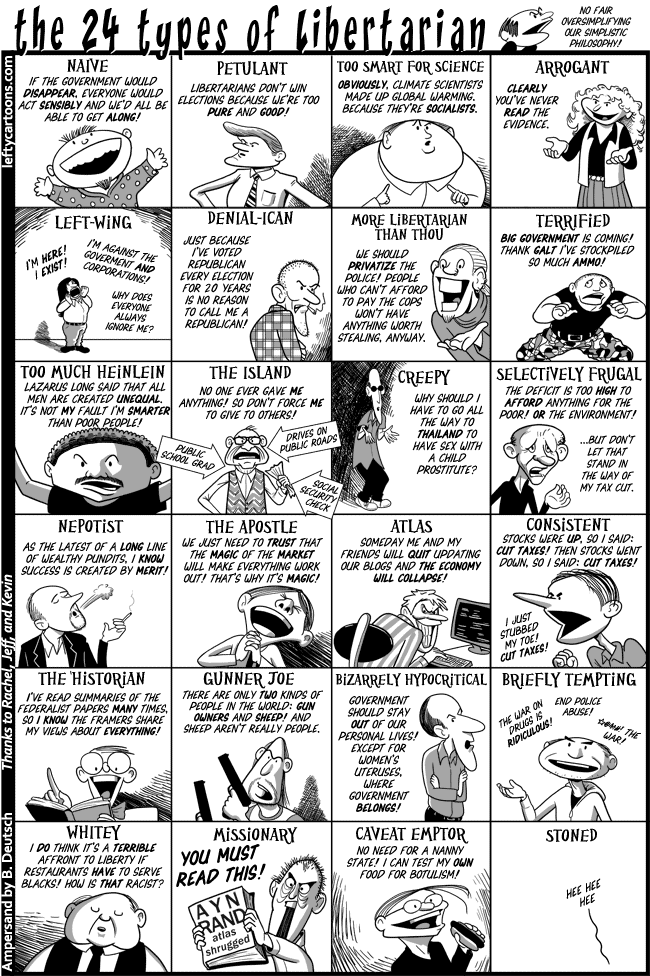
Liberterian Descriptions from The Big Picture Blog

Fat or Carbs: Which Is Worse?

(..)But the Grill's essential, in-your-face concept is that the saturated fat in beef clogs arteries, and hamburger meat is consequently among the most heart-damaging foods a human being can consume. As the Grill literature puts it, "The menu names imply coronary bypass surgery, and refer to the danger of developing atherosclerosis from the food's high proportion of saturated fat..." Aimed at a certain crowd, this is clever, edgy marketing. Some people enjoy flirting with death.
The problem? It's not true. The saturated fat lauded in this menu won't kill you. It may even be the safest element of the meal.

A Very Scary Light Show: Exploding H-Bombs In Space

This is an incredible story..If the video does not show up when you click on the NPR player link below, you should view it here
Uvealblues

Since we're coming up on the Fourth of July, and towns everywhere are preparing their better-than-ever fireworks spectaculars, we would like to offer this humbling bit of history. Back in the summer of 1962, the U.S. blew up a hydrogen bomb in outer space, some 250 miles above the Pacific Ocean. It was a weapons test, but one that created a man-made light show that has never been equaled — and hopefully never will. Here it is:


Today these radiation belts are called Van Allen belts. Now comes the surprise: While looking through the Van Allen papers at the University of Iowa to prepare a Van Allen biography, Fleming discovered "that [the] very same day after the press conference, [Van Allen] agreed with the military to get involved with a project to set off atomic bombs in the magnetosphere to see if they could disrupt it."
Discover It, Then Blow It Up
The plan was to send rockets hundreds of miles up, higher than the Earth's atmosphere, and then detonate nuclear weapons to see: a) If a bomb's radiation would make it harder to see what was up there (like incoming Russian missiles!); b) If an explosion would do any damage to objects nearby; c) If the Van Allen belts would move a blast down the bands to an earthly target (Moscow! for example); and — most peculiar — d) if a man-made explosion might "alter" the natural shape of the belts.

Thursday, July 01, 2010

Baby Boomers Less Likely to Have AMD Than Previous Generations

May 6, 2010 (Fort Lauderdale, Florida) — Today's aging baby boomers might be less likely to have age-related macular degeneration (AMD) than their forebears, according to a new study presented here at the Association for Research in Vision and Ophthalmology 2010 Annual Meeting.

"This rapid decline in age-related macular degeneration, which was 68% lower for each generation, suggests that modifiable factors play important roles in the etiology of AMD," said Karen J. Cruickshanks, MD, professor of epidemiology at the University of Wisconsin School of Medicine and Public Health in Madison. "Childhood exposure to environment contaminants — for instance, growing up in houses that used wood, coal, or kerosene for cooking — may contribute to the risk of AMD."

Phys Ed: What Exercise Science Doesn’t Know About Women


(..)Scientists know, of course, that women are not men. But they often rely on male subjects exclusively, particularly in the exercise-science realm, where, numerically, fewer female athletes exist to be studied. But when sports scientists recreate classic men-only experiments with distaff subjects, the women often react quite differently. In a famous series of studies of carbo-loading (the practice of eating a high-carbohydrate diet before a race), researchers found that women did not pack carbohydrates into their muscles as men did. Even when the women upped their total calories as well as the percentage of their diet devoted to carbohydrates, they loaded only about half as much extra fuel into their muscles as the men did.
Why women respond differently seems obvious. Women are, after all, awash in the hormone estrogen, which, some new science suggests, has greater effects on metabolism and muscle health than was once imagined. Some studies have found that postmenopausal women who take estrogen replacement have healthier muscles than postmenopausal women who do not. Even more striking, in several experiments, researchers from McMaster University in Canada gave estrogen to male athletes and then had them complete strenuous bicycling sessions. The men seemed to have developed entirely new metabolisms. They burned more fat and a smaller percentage of protein or carbohydrates to fuel their exertions, just as women do.

Scientists Discover Keys to Long Life

By analyzing the DNA of the world's oldest people, Boston University scientists said Thursday they have discovered a genetic signature of longevity. They expect soon to offer a test that could let people learn whether they have the constitution to live to a very old age.

The researchers, who studied more than 1,000 people over the age of 100, identified a set of 150 unique genetic markers that, taken together, are linked to extreme longevity. They acknowledged they didn't know all the genes involved, nor their exact function in extending old age.
"This is an extremely complex trait that involves many processes," said lead researcher Paola Sebastiani, a biostatistician at BU's School of Public Health. Even so, "we can compute your specific predisposition to exceptional longevity."
The researchers said they had no plans to patent the technique nor profit from it. Instead, they expect to make a free test kit available on the Internet later this month to foster longevity research.
(..)
No one knows the complete prescription for a healthy long life. But genes that help control cellular responses to famine, drought and other survival stresses may play a key role in staving off the diseases and chronic ailments of aging, research suggests.
While a healthy lifestyle is paramount, such genetic factors appear to become more important the longer we live. Indeed, a variation in a single key gene called FOX03A can triple the chances a person may live past 100, researchers at the Pacific Health Research Institute in Hawaii recently reported.

NIH-Supported ACCORD Eye Study Finds Two Therapies Slow Diabetic Eye Disease Progression


Intensive blood sugar control reduced the progression of diabetic retinopathy compared with standard blood sugar control, and combination lipid therapy with a fibrate and statin also reduced disease progression compared with statin therapy alone. However, intensive blood pressure control provided no additional benefit to patients compared with standard blood pressure control.

Tuesday, June 29, 2010

The Many Voices Of Lauryn Hill


This is great. An interview about and with one of the most soulful rapper/R & B artists of our time, Lauryn Hill.
UvealBlues
It doesn't take much for a group of 30-somethings to get nostalgic about Hill. Put her solo album, The Miseducation of Lauryn Hill, on at a bar, and it takes the crowd right back to college days or high-school summers. I met Daryl Lutz while he was hanging out with a group of friends on the deck of Marvin's Bar in downtown Washington, D.C.
(..)
The Miseducation of Lauryn Hill came out in 1998. It was like LeBron James' rookie year in the NBA. You knew he had the potential to be great after seeing him in high school — and then, right out of the gate, he's one of the best ball players in the league.
Jayson Jackson, part of Hill's management team, described the recording process this way: "The record was already inside her. She would go into the studio, and it would just pour out of her."
(..)
This closes the interview. I thank her. She says, "You're welcome," and my editor and I leave the car. We sit on the stairs for a few minutes to catch our breath. We spent all weekend chasing Lauryn Hill, hoping to have this conversation about her voice. I compared it to a video game with infinite levels you didn't even know existed, like when you beat a level and you think you won, but then you go through a door and there's a whole other world you have to conquer. Getting to Lauryn Hill was like that. 
Sara Sarasohn, my editor, compared the chase to the Israelites rising up and following the cloud over the Tent of Meeting. In the Torah, when the Israelites are wandering in the desert, there was a cloud over the Tent of Meeting, where the Ark of the Covenant was kept. Moses would go to the Tent of Meeting to communicate with God. At night, the cloud looked like fire. When the cloud lifted and moved, the Israelites would see it and know that it was time for them to move as well in their journey through the desert. It was like the presence of Hill was this cloud that we could see in the distance, and we were trying to follow it, and finally, we got to the Tent of Meeting.
Sitting on the stairs together, Sara and I couldn't help but cry, just a little. We talked to Lauryn Hill. And she's doing fine.

Monday, June 28, 2010

suzanne sundfor...haunting

Cat Gets Intraosseous Transcutaneous Prosthetic Limbs

A Jersey cat, who had his back paws sliced off in an accident with a combine harvester, has received a pair of innovative prosthetic legs. Noel Fitzpatrick, a veterinary surgeon from Surrey, used a technique called intraosseous transcutaneous amputation prostheses (Itaps) to get the cat back on his feet. These prostheses grow through the skin in a way similar to the way deer antler bone does. This in contrast to the way most prosthetic limbs are attached by a "stump socket", which often causes problems through rubbing and pressure sores. The new technology is currently being tested for application in humans. A documentary about the procedure called "The Bionic Vet" will be aired on BBC 1 this Wednesday.

Shifty Science: Programmable Matter Takes Shape with Self-Folding Origami Sheets


A prototype sheet that folds itself into two different shapes may lead to objects that can assume any number of forms on command.

(..)
The system, described in a paper published online this week in Proceedings of the National Academy of Sciences, consists of a thin sheet of resin–fiberglass composite, just a few centimeters across, segmented into 32 triangular panels separated by flexible silicone joints. Some of the joints have heat-sensitive actuators that bend 180 degrees when warmed by an electric current, folding the sheet over at that joint. Depending on the program used, the sheet will conduct a series of folds to yield the boat or airplane shape in about 15 seconds. The folding-sheet approach is an extension of the field of computational origami, the mathematical study of how flat objects can be folded into complex, three-dimensional structures.

Robotic Lifeguard Uses Sonar to Sense Swimmers in Distress

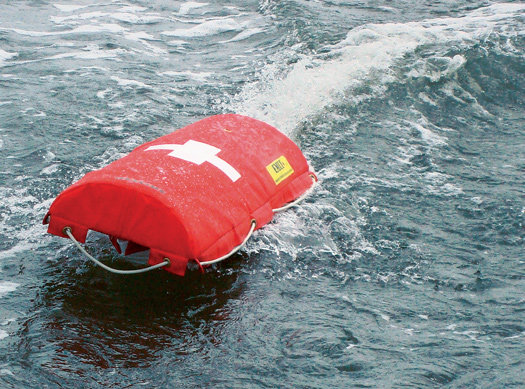
EMILY, which stands somewhat awkwardly for EMergency Integrated Lifesaving lanYard, is a new robotic lifeguard that could help save lives at our nation's beaches. It's a four-foot-long motorized buoy in appearance, but there's a lot more under the hood.

Building a Substitute Pancreas for Diabetics

A startup hopes implanted insulin-producing cells will free diabetics from insulin injections.

Three studies on Diabetes to be presented at the annual Endocrine Society meeting

Vitamin D deficiency is highly prevalent in patients with Type 2 diabetes and may be associated with poor blood sugar control, according to a new study.


Fructose, the sugar widely used as high-fructose corn syrup in soft drinks and processed foods, often gets some of the blame for the widespread rise in obesity. Now a laboratory study has found that when fructose is present as children's fat cells mature, it makes more of these cells mature into fat cells in belly fat and less able to respond to insulin in both belly fat and fat located below the skin.


------------------------------------------------------------------------------------------------------------------------
A diet rich in natural antioxidants improves insulin sensitivity in insulin-resistant obese adults and enhances the effect of the insulin-sensitizing drug metformin, a preliminary study from Italy finds.

via esciencse news

Saturday, June 26, 2010

Sense of Touch Shapes Snap Judgment

Sitting in a hard chair can literally turn someone into a hardass. Holding a heavy clipboard leads to weighty decisions. Rubbing rough surfaces makes us prickly. So found researchers studying the interaction between physical touch and social cognition.

The experiments included would-be car buyers who, when seated in a cushy chair, were less likely to drive a stiff bargain. The findings don’t just suggest tricks for salesman, but may illuminate how our brains develop.
(..)

Other research shows that the brain doesn’t always have different structures for different functions, but often uses the same systems in a variety of ways. And given the importance of touch, it’s easy for developing brains to use tactile associations — heaviness requires effort, roughness leads to friction, hard objects are inflexible — in understanding social situations.

“Those connections that people have, between physical experience and mental understanding, don’t ever disappear,” said Ackerman.


Read More http://www.wired.com/wiredscience/2010/06/touching-cognition/?utm_source=feedburner&utm_medium=feed&utm_campaign=Feed%3A+wiredscience+%28Blog+-+Wired+Science%29#ixzz0rxMKhXka

Friday, June 25, 2010

Cell Transplants for Macular Degeneration

Interesting that the neural stem cells create a new layer in between the photoreceptor cell layer and RPE cell layer, as described in this article. I am sure that this was unanticipated. Fascinating that some how positive visual results are obtained. 
A second company mentioned later in the article has apparently patented the process of developing human stem cells into RPE cells, the latter of which is the cell type of concern in a number of retinal diseases. 
Uvealblues

A stem-cell startup aims to test neural stem cells for treating two leading causes of blindness.

(..)

The implanted cells don't actually develop into new photoreceptors; in fact, they appear to maintain their undifferentiated state. So it's not clear how they protect against blindness. "The neuroprotective effect in the rats is interesting, but the mechanism is still pretty obscure," says Thomas Reh, a neuroscientist at the University of Washington, in Seattle, who was not involved in the study.
Raymond Lund, a scientist at the Casey Eye Institute at Oregon Health Sciences University who collaborated on the study, says the cells "seem to somehow bypass the defect without actually correcting it." This may be because the cells make growth factors known to keep damaged cells alive, says Lund, who has also tested the cells in a different animal model of blindness. Another hypothesis is that the cells help clear cellular debris that builds up in the retinas of these rats and harms the photoreceptors

Thursday, June 24, 2010

Colbert: Rand Paul Inspired Me To Exercise My Right To Call Myself An Ophthalmologist

This is a hilarious skit in which Stephen  Colbert takes on Rand Paul here and self-certifies as an ophthalmologist
I love his improvised glaucoma test :) and his ocular motility exam.
Uvealblues


The Colbert ReportMon - Thurs 11:30pm / 10:30c
USA Board of Ophthalmological Freedom
www.colbertnation.com
Colbert Report Full EpisodesPolitical HumorFox News

Wednesday, June 23, 2010

Africa and the Surgical Imbalance

The surgical imbalance that Kushner talks about may make it onto the G20 agenda and is the focus of a recent paper co-authored by Surgeons OverSeas, of which he is a co-founder, and the World Health Organization.
In it, researchers examined 132 health-care facilities in eight developing countries only to find that many of the operating room elements vital to safe surgery sometimes couldn't be found.
Four essential items — oxygen, water, electricity and an anesthesia machine — were "always available" in only 21, 50, 36 and 32 per cent of the facilities, respectively.
Indeed, in some places, some or all of these items were "never available," the study reported.

Believing is Seeing

Langer et al. do experiments showing that vision can be improved by manipulating our mind-set:

via SimoleonSense

Learn how to do a colonoscopy and have fun at the same time


As Techcrunch states: “[Gyromaniac] is both disgusting and awesome.”

via imedicalapps

Father's Day and Mortality

Two articles from the New York Times really resonated for me last week, in light of the fact that my Dad suffered a stroke (thankfully a minor one) last week.
The first article deals with end of life issues in our current healthcare milieu: What Broke My Father's Heart
and the other is from Nicholas Kristof,--My Father's Gift to Me--whose father recently died.
He describes the toughness of the immigrant mentality, which resonated for me, as my father also suffered a number of trials, including losing his father at a young age, and a number of difficulties in  coming out of a small Indian village without electicity or plumbing to America, and eventually getting a prestigious job at the National Institutes of Health.

Tuesday, June 22, 2010

When Food and Pills Clash

I appreciate articles like this from the mainstream media, which often tend to oversimplify instead of pointing out complexity in healthcare (as well as many other subjects).  To be fair, it is difficult to express complexity given limitations of space, number of words etc..In any case, this article getis it right.
Uvealblues

Fresh Concerns on How Diet and Medicines Interact, From Pepper to Pomegranate..
(..)
Grapefruit is one of the most extensively studied foods for its impact on medication. Compounds in the fruit can increase the potency of statins and other medications to potentially dangerous levels by inhibiting cytochrome P450, a family of enzymes that break down the drug. Research indicates that drinking just one eight-ounce cup of grapefruit juice a day increases the strength of the drug.

Recently, animal and laboratory studies have suggested that other fruits, including pomegranates, oranges (especially those from Seville), cranberries, grapes and black mulberries, could have a similar, although less robust, effect on statins in the body. Pomegranates and cranberries are frequently touted as healthy foods because of their high quantities of antioxidants, which supposedly remove free radicals from the body and slow the onset of disease and aging.

In the lab, some scientists' work raises similar concern about olive oil and some statins. The oil, a principal part of the Mediterranean diet and believed to lower the risk of heart disease, also appears to contain compounds that inhibit the drug's breakdown, according to researchers in Spain. The effects of olive oil likely aren't as strong as that of grapefruit, but more studies are needed to figure out what quantities might actually impact humans, say experts.

Bill Gates and Warren Buffet Aim for $600 Billion Pledge for Charity

In the world's biggest demonstration of philanthropy, Warren Buffet and Bill Gates are asking the world's billionaires to contribute at least 50 percent of their weath to charity: a total of $600 billion.

Retina Implant AG Presents New Insights into Artificial Vision for the Blind at the Association for Research in Vision and Ophthalmology Annual Meeting

REUTLINGEN, Germany--(BUSINESS WIRE)--Retina Implant, AG, a leading developer of subretinal implants for the visually impaired, today announced the presentation of findings from their first clinical trial in which blind patients were able to view and , which is the case for other implants in which a camera is mounted to the patient’s head. The presentation delivered by lead author, Professor Eberhart Zrenner, M.D., director and chairman of the Institute for Ophthalmic Research at the Center for Ophthalmology of the University of Tuebingen, Germany, is one of twelve Retina Implant-related presentations being presented at the 2010 Association for Research in Vision and Ophthalmology (ARVO) annual meeting convening May 2-6 in Fort Lauderdale, Fla.

Wednesday, June 16, 2010

The Future of Our Illusions


Sometimes, the reason you don't discuss the gorilla in the room is that you never notice it's there. That, literally, is what cognitive neuroscientists Christopher Chabris and Daniel Simons discovered at Harvard a decade ago, using an ingeniously simple approach.
First, they created a short film of students passing a basketball to one another. The clip was largely unremarkable except for the fact that, about halfway though, an actor in a gorilla suit sauntered through the group of basketball-tossers, pounded his chest and then continued walking. Total screen time: nine seconds.
The mini-movie was then shown to experiment-subjects, who were told to keep track of the total number of passes that they observed during the minute-long film. Distracted by their task, about half the viewers reported never seeing the gorilla. They were shocked to learn of its existence.
In "The Invisible Gorilla," Messrs. Chabris and Simons argue that the illusion of attention (as they categorize the gorilla demonstration) is but one of many"everyday illusions" that obscure our perceptions and cause us to place.

Impaired insulin signaling links food to mood

VANDERBILT (US)—Defects in insulin action—which occur in diabetes and obesity—could directly contribute to psychiatric disorders like schizophrenia.

Scientists have found a molecular link between impaired insulin signaling in the brain and schizophrenia-like behaviors in mice.

Florence Nightingale, A Nurse Who Cared


Florence Nightingale spent most of her life trying to boost hospital care.
In the process, she created the modern profession of nursing.
She did it despite spending so many years as an invalid.
"The scope of that work, relentlessly pursued, with manifold projects always being tackled simultaneously, is one of the most remarkable aspects ... of Florence Nightingale's life, made all the more extraordinary by the fact that such a workload would have defeated most able-bodied individuals, let alone ... someone suffering from a chronic and debilitating illness," Mark Bostridge wrote in the most recent biography, "Florence Nightingale."
At 16, Nightingale felt inspired to devote her life to helping humanity.
"God called me in the morning and asked me would I do good for him

You Know You're a Doctor When...

Medical (Ophthalmology) humor from Dr. Wes here...

Tuesday, June 15, 2010

Brazil Prepares for Match With North Korea

JOHANNESBURG — Soccer in Brazil resembles figure skating in that artistry is no less important than performance. 
(..)
In Brazil, the public frets that the national team’s once dazzling samba style has assumed a more martial beat. Dunga has been widely criticized for relying more on the imposing, muscular defense of a player like Lúcio, galloping counterattacks by right back Maicon, and the set-piece artistry of Dani Alves than the beautiful game of the days of Pelé.
Brazil, along with Spain, is favored to win the tournament. But many Brazilians lament that victory would be achieved with insufficient elegance and flamboyance. Socrates, a star on the country’s 1982 World Cup team, recently said that Dunga’s style was "an affront to our culture."

Monday, June 14, 2010

Michael Shermer: The pattern behind self-deception

Interesting talk with a somewhat disturbing ending..
Uvealblues

Safety of Sunscreens

Here is a nice review of  everything you need to know about sunscreen from the Suture for a Living blog.

Sunday, June 13, 2010

Want To Get Faster, Smarter? Sleep 10 Hours

As someone who used to limit myself to 3 hours of sleep/night and who now gets  7 hours a night , I can personally attest to numerous benefits of more zzzz's.

World Cup Calendar

Nice way to keep track of the game schedule via a sundial image here.

Saturday, June 12, 2010

Michelangelo's secret message in the Sistine Chapel: A juxtaposition of God and the human brain


At the age of 17 he began dissecting corpses from the church graveyard. Between the years 1508 and 1512 he painted the ceiling of the Sistine Chapel in Rome. Michelangelo Buonarroti—known by his first name the world over as the singular artistic genius, sculptor and architect—was also an anatomist, a secret he concealed by destroying almost all of his anatomical sketches and notes. Now, 500 years after he drew them, his hidden anatomical illustrations have been found—painted on the ceiling of the Sistine Chapel, cleverly concealed from the eyes of Pope Julius II and countless religious worshipers, historians, and art lovers for centuries—inside the body of God.

Regaining the Rainbow: A Gene Therapy Approach to Color Blindness


Interesting article here from Scientific American on genetically engineering a cure for color blindness and the interplay between retinal photoreceptors and brain plasticity(affects 8% of men and less than 1% of woman as it as an X linked trait).
Uvealblues
(..)
Color Correction
Unlike humans, most mammals possess just two kinds of retinal cones. Thus, mice, cats and dogs see the world much the way a red-green color-blind person does, making them ideal experimental subjects. A few years ago scientists at the Johns Hopkins School of Medicine inserted the gene for the human L-type photopigment into mice. After several generations of breeding, the mice responded to the extra hue information. They had changed from dichromats to trichromats—a remarkable feat of bioengineering. The experiment also showed that mouse brains are flexible enough to receive and make use of the additional wavelength information.
An even more ambitious experiment, extending over a decade, came recently to fruition.

Why Patients Aren’t Getting the Shingles Vaccine

I have long wondered what are the obstacles to shingles vaccinations in adults, having seen the potentially devastating effects in a number of patients. This article addresses this issues....
Uvealblues

(..)

Although only one dose is required, the vaccination costs $160 to $195 per dose, 10 times more than other commonly prescribed adult vaccines; and insurance carriers vary in the amount they will cover. Thus, while the overwhelming majority of doctors in the study did not hesitate to strongly recommend immunizations against influenza and pneumonia, they could not do the same with the shingles vaccine.
“It’s just a shot, not a pap smear or a colonoscopy,” said Dr. Laura P. Hurley, lead author and assistant professor of medicine at the University of Colorado in Denver. “But the fact is that it is an expensive burden for all patients, even those with private insurance and Medicare because it is not always fully reimbursed.”

New surgical route to brain: The eyes have it


Surgeons can now safely and effectively operate inside the human brain through a small incision in the natural creases of an eyelid.

Friday, June 11, 2010

How many megapixels are your eyes?

“The eye is not a single frame snapshot camera. It is more like a video stream. The eye moves rapidly in small angular amounts and continually updates the image in one’s brain to “paint” the detail. [There is also the issue of saccades and what happens during those] We also have two eyes, and our brains combine the signals to increase the resolution further. We also typically move our eyes around the scene to gather more information. Because of these factors, the eye plus brain assembles a higher resolution image than possible with the number of photoreceptors in the retina.”
The following calculation shows the equivalent megapixel number of the human eye viewing a scene.

Jazz Vocalist Cassandra Wilson

Cassandra Wilson--a beautiful person and an incredible jazz vocalist loves some of my favorite French wines--shouldn't be surprised I suppose!
Uvealblues
Mississippi-born singer stocks her recording sessions with quality wine.
 
Grammy award-winning jazz vocalist Cassandra Wilson is the smoky-voiced songwriter known for indelible opuses such as "Blue Light Til Dawn," "Traveling Miles," "New Moon Daughter" and "Loverly." Wilson, 54, is also a passionate wine lover who stocks her recording sessions with her favorite bottles to the point that the studio time almost becomes, in her words, "a food-and-wine tasting." The Mississippi native spoke with Wine Spectator about what wines she likes to have on tour, the role wine has played in her music, and her desire to develop her own wine label.
Wine Spectator: What types of wine do you like?
Cassandra Wilson: I love French white wines. When I’m shopping, I may get something from the Loire Valley—Sancerre and Vouvray, for example. Or I may get a Viognier. I like Château de Puligny-Montrachet Clos du Château. But I also like Robert Mondavi Coastal Private Selection Chardonnay.

Gulf Oil Spill Pictures: Birds, Fish, Crabs Coated


Shouldering the weight of heavy oil spewed from the Gulf of Mexico's Deepwater Horizon oil spill, a brown pelican struggles in sludgy surf on East Grand Terre Island, Louisiana, Friday.
Nearly 800 dead birds, sea turtles, dolphins, and other animals have been found in the Gulf and on its shores, according to federal authorities cited by the Associated Press.
But the real story may be the rate at which animals are being affected by oil, which appears to have accelerated drastically in recent days.

The Goldilocks Principle of Obesity

Both low dopamine and high dopamine states associated with overeating.
Uveal Blues
How pleasurable and desirable does this image of chocolate cake appear to you? 


Research has shown that the more tempting this cake looks to you, the greater the chances you’ll take a bite of real cake, followed by another bite, and another. Before you know it, you may eventually find yourself like 34% of U.S. adults -- obese. But what if I told you that viewing this picture as not rewarding enough might also lead you down the path too obesity? Interesting article discusses latest research in this regard here.


Thursday, June 10, 2010

Creative Logos

Click here for some creative, amazing logos such as the one below...

Milk from grass-fed cows may be better

If milk does the heart good, it might do even more if it comes from dairy cows grazed on grass instead of on feedlots, according to a US study.
Earlier studies have shown that cows on a diet of fresh grass produce milk with five times as much of an unsaturated fat called conjugated linoleic acid (CLA) than cows fed processed grains.
Studies in animals have suggested that CLAs can protect the heart, and help in weight loss.

Wednesday, June 09, 2010

iPhone 4's 'Retina Display' claims exaggerated...

But what a great name!
Uvealbues


Display expert Raymond Soneira has a bone to pick with Steve Jobs. You know that little comparison Steve made between the human retina and the resolution of his "Retina Display" featured on the upcoming iPhone 4? It's wrong, he says.

Clotted capillaries spit to survive

I wonder if a similar process might be at work in the pathogenesis of age related macular degeneration..
Uvealblues
NORTHWESTERN (US)—Capillaries have a unique method of expelling debris, such as blood clots, cholesterol or calcium plaque, that blocks the flow of essential nutrients to brain cells.
They spit out the blockage by growing a membrane that envelopes the obstruction and then shoves it out of the blood vessel.
“The slowdown may be a factor in age-related cognitive decline and may also explain why elderly patients who get strokes do not recover as well as younger patients,” explains Jaime Grutzendler, assistant professor of neurology and of physiology atNorthwestern University. “Their recovery is much slower.”

Make Your Own 3D Glasses in 10 Seconds


Create 3-D Glasses at Home!

The basic 3D glasses are available for around 99¢ on eBay but if you want them right now, you can build your own using a spare CD jewel case and some permanent marker pens.

Findings May Alter Care for Early Breast Cancer

CHICAGO — For many women with early-stage breast cancer, treatment may become considerably less arduous, researchers say.
A new study found that certain women getting a lumpectomy may not need an operation to remove underarm lymph nodes, a procedure that can leave them with painfully swollen arms. Compared with not removing the nodes, the surgery did not prolong survival or prevent recurrence of the cancer.
And a second study found that a single dose of radiation, delivered directly to the site of the tumor right after a woman has a lumpectomy, was as effective as the six or so weeks of daily radiation treatments that most women now endure.

The Vanishing Oath


Ribates has a quick review of what seems to be an interesting documentary on physician burnout in the U.S., entitled "The Vanishing Oath," here.
Dr. Wes has a review here.

My take on this? Many physicians in the U.S. are discontent and disillusioned--not necessarily because of disease complexity--but because of the issues of liability, paperwork, and dealing with insurance companies and the games they play.
 In the Third World, disease complexity is much higher, potential outcomes of greater significance to the individual, e.g. many patients may only have a chance of vision with one eye and their livelihoods and even survival may depend on a successful medical/surgical outcome, and payment is often in the form of gratitude (which can be tremendously uplifting).
It continues to be very refreshing even now for me to continue doing international trips with organizations such as Orbis.
Uvealblues

Doctors and Hospitals Say Goals on Computerized Records Are Unrealistic

I love technology as much as anyone I know, however this article points out the flaws with the current guidelines for electronic health records (EHR). It also does not point out the very important point that when legislation was written for EHR, it was written such that the software companies have no liability for the glitches in their product. Instead this issue gets added as yet another layer of liability to physicians and hospitals.
Uvealblues

WASHINGTON — In February 2009, as part of legislation to revive the economy, Congress provided tens of billions of dollars to help doctors and hospitals buy equipment to computerize patients’ medical records.
But the eligibility criteria proposed by the Obama administration are so strict and so ambitious that hardly any doctors or hospitals can meet them, not even the most technologically advanced providers likeKaiser Permanente and Intermountain Healthcare.
Doctors and hospital executives, who have expressed their frustration in meetings with White House and Medicare officials, said the issue offered a cautionary tale of what could happen when good intentions meet the reality of America’s fragmented health care system.
(..)
In meetings at the White House, doctors and hospital executives have conveyed the same message: the president’s all-or-nothing approach could discourage efforts to adopt electronic health records because some of the proposed standards are impossibly high and the risk of failure is great. They pleaded with the administration to take a more gradual approach and reward incremental progress.
Related Posts with Thumbnails

ShareThis