Wednesday, February 15, 2012

In a Squeaky-Clean World, a Worm Might Help Fight Disease


Some bugs are good for our health, and a pig parasite called the whipworm appears to be one of them.
Whipworm eggs have been found in human studies to reduce symptoms in a host of diseases that affect the immune system. Researchers at several universities have shown promising results in small numbers of patients with multiple sclerosis, Crohn's disease and ulcerative colitis. Biotechnology companies are conducting large clinical trials of the treatment. Other studies targeting rheumatoid arthritis, autism and some allergies are expected to begin this year.
(..)
The introduction of the whipworm appears to spur the body to produce more of a different type of helpful immune cell—T2 helper cytokines—as a defense against the worms. This separate immune response appears to help counter the inflammatory response from diseases, say researchers
(..)

Dr. Summers and his colleagues demonstrated encouraging findings in two studies published in 2005. One examined 29 patients with Crohn's disease and found that after six months, 21 were considered remitted. (There wasn't a control group for comparison.) The other was study of 54 patients with ulcerative colitis. Patients who received TSO treatment improved significantly more than those who got placebo.
Another area of interest for TSO researchers is in multiple sclerosis, with two small studies published last year. One of these, published in the Multiple Sclerosis Journal, showed brain lesions decreased in four of five patients three months into treatment, and rebounded two months after it ended.
Some researchers say the therapy could hold promise for autism as well.


Monday, February 13, 2012

Anatomy of a Tear-Jerker

Why does Adele's 'Someone Like You' make everyone cry? Science has found the formula

What I found fascinating is that even at the Grammy's last night, when she sang this ang, it stood on its own as very powerful, without the need for visual hype, dancers etc...It was just Adele's voice with her excellent backing band that again creates moments of transcendence...

uvealblues


 What explains the magic of Adele's song? Though personal experience and culture play into individual reactions, researchers have found that certain features of music are consistently associated with producing strong emotions in listeners. Combined with heartfelt lyrics and a powerhouse voice, these structures can send reward signals to our brains that rival any other pleasure.

Link

Thursday, January 26, 2012

A Scientific Look at the Dangers of High Heels

How shoes affect human gait is a controversial topic these days. The popularity of barefoot running, for instance, has grown in large part because of the belief, still unproven, that wearing modern, well-cushioned running shoes decreases foot strength and proprioception, the sense of how the body is positioned in space, and contributes to running-related injuries.
Whether high heels might likewise affect the wearer’s biomechanics and injury risk has received scant scientific attention, however, even though millions of women wear heels almost every day. So, in one of the first studies of its kind, the Australian scientists recruited nine young women who had worn high heels for at least 40 hours a week for a minimum of two years. The scientists also recruited 10 young women who rarely, if ever, wore heels to serve as controls. The women were in their late teens, 20s or early 30s.
Link

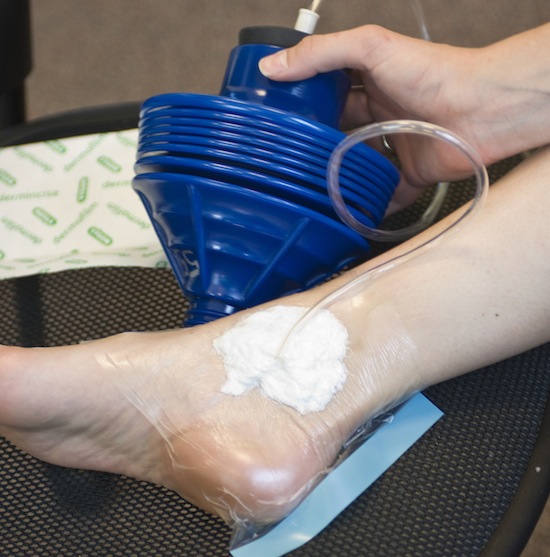
MIT Student Develops $3 Cutting-Edge Healing Device, Field Tested in Haiti

The new device could radically improve healing times for tens of millions, at a cost of $3.
Link
No one really knows why, but for an open wound, simply applying suction dramatically speeds healing times. (The theory is that the negative pressure draws bacteria out, and encourages circulation.) But for almost everyone, that treatment is out of reach--simply because the systems are expensive--rentals cost at least $100 a day and need to be recharged every six hours.
No more. Danielle Zurovcik, a doctoral student at MIT, has created a hand-powered suction-healing system that costs about $3.

NASA’s New Satellite Captures Amazing Hi-Res Image of Earth

You’ve seen Earth, but you’ve never seen it like this.
Suomi NPP, NASA’s newest Earth-watching satellite, has taken a high resolution image of Earth, one of the most beautiful such images ever created. It’s available in 8000×8000 pixel resolution, and it takes a while to download, but it’s definitely worth it.
Link

Tuesday, January 24, 2012

Advanced Cell Technology: Stem cell retinal implants safe

Early results from the world's first human trial using embryonic stem cells to treat diseases of the eye suggest the method is safe, say researchers.
Link
US firm Advanced Cell Technology told The Lancet how two patients who had received the retinal implants were doing well, four months on.
Trials of the same technique have now started at London's Moorfields Eye Hospital.
But experts say it will be years before these treatments are proven.
The aim of these first human studies is to establish that the treatment is safe to use.

Friday, January 20, 2012

Bob Davids and Sea Smoke

Bob Davids is a great guy and he makes my favorite  Pinot on the planet..
Uvealblues
Link

Tuesday, January 17, 2012

For Intrigue, Malaria Drug Gets the Prize

Fascinating article on the history of one of the, if not the, strongest anti Malarials available. Who would have known that Mao Zedong, in a bid to help dying North Vietnamese, commissioned top researchers and herbal healers to find a cure for malaria! 


(Ironically.... Even now in Africa, in almost every country I have been the average person still uses the generally ineffective anti-malarial, Chloroquine..)
Uvealblues

The Chinese drug artemisinin has been hailed as one of the greatest advances in fighting malaria, the scourge of the tropics, since the discovery of quinine centuries ago.

Artemisinin’s discovery is being talked about as a candidate for a Nobel Prize in Medicine. Millions of American taxpayer dollars are spent on it for Africa every year.
But few people realize that in one of the paradoxes of history, the drug was discovered thanks to Mao Zedong, who was acting to help the North Vietnamese in their jungle war against the Americans. Or that it languished for 30 years thanks to China’s isolation and the indifference of Western donors, health agencies and drug companies.

Link

Friday, January 13, 2012

The Richard Feynman Trilogy: The Physicist Captured in Three Films

This is a great find for all fans of Richard Feynman!
Uvealblues


It’s another case of the whole being greater better than the sum of the parts. Between 1981 and 1993, documentary producer Christopher Sykes shot three films and one TV series dedicated to the charismatic, Nobel Prize-winning physicist Richard Feynman (1918-1988). We have presented these documentaries here individually before (some several years ago), but never brought them together. So, prompted by a post on Metafilter, we’re doing just that today.
Link

Wednesday, January 11, 2012

How much Vitamin D is tToo Much?

Too much Vitamin D is associated with lower levels of a marker for cardiovascular inflammation:
C-Reactive Protein
Link

Sunday, January 08, 2012

The Fat Trap


For 15 years, Joseph Proietto has been helping people lose weight. When these obese patients arrive at his weight-loss clinic in Australia, they are determined to slim down. And most of the time, he says, they do just that, sticking to the clinic’s program and dropping excess pounds. But then, almost without exception, the weight begins to creep back. In a matter of months or years, the entire effort has come undone, and the patient is fat again. “It has always seemed strange to me,” says Proietto, who is a physician at the University of Melbourne. “These are people who are very motivated to lose weight, who achieve weight loss most of the time without too much trouble and yet, inevitably, gradually, they regain the weight.”
Anyone who has ever dieted knows that lost pounds often return, and most of us assume the reason is a lack of discipline or a failure of willpower. But Proietto suspected that there was more to it, and he decided to take a closer look at the biological state of the body after weight loss.

Friday, December 16, 2011

Angela Jolie's Directorial Debut

I am looking forward to seeing this!

http://www.vanityfair.com/video/2011/12/1326198072001

Thursday, December 15, 2011

How Coffee Can Galvanize Your Workout

Can a cup of coffee motivate you to relish your trips to the gym this winter? That question is at the heart of a notable study of caffeine and exercise, one of several new experiments suggesting that, whatever your sport, caffeine may allow you to perform better and enjoy yourself more.
Link

Wednesday, December 14, 2011

A short biography of Ron Paul

GREENVILLE, N.C. -- Long before he discovered Friedrich Hayek and other free-market economists, Ron Paul got a lesson in sound money from his oldest brother, Bill.
It was the height of World War II, and the Paul boys were laying aside quarters from their Pittsburgh Press routes and pooling pennies earned from pulling dirty milk bottles off the line at the family dairy to buy war bonds. One day, Ronnie suggested what was, in retrospect, a rather Keynesian solution: "Why doesn't the government just PRINT this money?"
"Well," Bill responded, "then the money wouldn't have any value."
Link

Tuesday, December 13, 2011

Losing 'Virginity': Olive Oil's 'Scandalous' Fraud

Extra-virgin olive oil is a ubiquitous ingredient in Italian recipes, religious rituals and beauty products. But many of the bottles labeled "extra-virgin olive oil" on supermarket shelves have been adulterated and shouldn't be classified as extra-virgin, says New Yorker contributor Tom Mueller.
Mueller's new book, Extra Virginity: The Sublime and Scandalous World of Olive Oil, chronicles how resellers have added lower-priced, lower-grade oils and artificial coloring to extra-virgin olive oil, before passing the new adulterated substance along the supply chain. (One olive oil producer told Mueller that 50 percent of the olive oil sold in the United States is, in some ways, adulterated.)
Link

MIT builds camera that can capture at the speed of light (video)

A team from the MIT media lab has created a camera with a "shutter speed" of one trillion
exposures per second -- enabling it to record light itself traveling from one point to another. Using a heavily modified Streak Tube (which is normally used to intensify photons into electron streams), the team could snap a single image of a laser as it passed through a soda bottle.
Link

Monday, December 12, 2011

Monday, December 05, 2011

Vascular condition and MS share risk factors

People with a specific vascular condition, but no known neurological disease, display many of the same risk factors as people with multiple sclerosis, a new study shows.
Link
The study, published in PLoS One, is the first to investigate risk factors for chronic cerebrospinal venous insufficiency (CCSVI ) in which blood flow from the central nervous system to the periphery is impaired. It has been hypothesized that this narrowing of veins restricts blood flow from the brain, altering brain drainage and possibly contributing to brain tissue injury that is associated with MS.
(..)

Common risk factors
The study found that CCSVI risk factors occurred more frequently in 1) those with a history of mononucleosis, i.e. infected with Epstein-Barr virus; 2) those with irritable bowel syndrome; 3) those who smoke or have a history of smoking.
“All three are confirmed risk factors for MS,” says second author Bianca Weinstock-Guttman, professor of neurology. According to the results, individuals with CCSVI were 2.7 times more likely than individuals without CCSVI to have infectious mononucleosis, 3.9 times more likely to have irritable bowel syndrome and 1.98 times more likely to have a history of smoking.
“Our finding that a risk factor that is highly significant for MS—Epstein-Barr virus, indicated by a history of infectious mononucleosis—is strongly associated with CCSVI, is important,” says Zivadinov. “This is the first time a connection has been found between Epstein-Barr virus and CCSVI.

Sunday, December 04, 2011

The Life Reports II

From David Brooks of the NY TIMES:
A few weeks ago, I asked people over 70 to send me “Life Reports” — essays about their own lives and what they’d done poorly and well. They make for fascinating and addictive reading, and I’ve tried to extract a few general life lessons: Link

Gifts That Say You Care

GIVE Grandma a bit of credit! These holidays, would she rather receive a silly reindeer sweater or help a schoolchild acquire glasses to see the blackboard clearly for the first time?


Choosing the perfect holiday gift is one of life’s greater challenges, modestly more difficult than earning a Ph.D. in astrophysics. So it is time for my annual gift guide.
For starters, the Web sites of the major humanitarian organizations offer alluring holiday gifts. Through the International Rescue Committee, $30 buys a flock of chickens for a needy family. At CARE, $29 gets a girl a school uniform. Through Heifer International, you can stock a fish pond for $300. With Mercy Corps, $69 can start a female entrepreneur in the sewing business.
Beyond those organizations, here are some lesser-known charities that may help put a grin on Grandma — and on someone else.
Helen Keller International

fights blindness and malnutrition around the world with simple and cost-effective programs. One of the best ways to improve children’s health is to focus on micronutrients, like iodine, vitamin A and zinc — and in some cases to fortify foods with nutrients at a negligible cost. Helen Keller International, at hki.org, is a leader in that effort, and gets more bang for the buck than almost any group I can think of.
And those glasses I mentioned for a schoolchild? That’s a Helen Keller International program, ChildSight, which operates in the United States as well as in Indonesia and Vietnam. Schoolchildren are screened for vision problems, and those who need glasses get them. Providing glasses costs just $25 per child — which is a much better value than a sweater that will sit in a drawer for eternity.

12 Things You Didn’t Know Facebook Could Do

As the number of features grows, though, so does a corresponding problem: Most of Facebook’s 750 million users don’t know these features exist. Some don’t know how to find them, some don’t go hunting for them in Facebook’s ever-growing interface of controls and many don’t even think of them in the first place. A few minutes of exploration can uncover functions that make Facebook not just an addiction but a pleasure to use.
Link

Tuesday, November 29, 2011

New Hope of a Cure for H.I.V.

Medical researchers are again in pursuit of a goal they had all but abandoned: curing AIDS.
Link

Until recently, the possibility seemed little more than wishful thinking. But the experiences of two patients now suggest to many scientists that it may be achievable.
One man, the so-called Berlin patient, apparently has cleared his H.I.V. infection, albeit by arduous bone marrow transplants.
More recently, a 50-year-old man in Trenton underwent a far less difficult gene therapy procedure. While he was not cured, his body was able to briefly control the virus after he stopped taking the usual antiviral drugs, something that is highly unusual.
“It’s hard to understate how the scientific community has swung in its thinking about the possibility that we can do this,” said Kevin Frost, chief executive of the Foundation for Aids Research, a nonprofit group. “Cure, in the context of H.I.V., had become almost a four-letter word.”

Wednesday, November 16, 2011

Apple’s AssistiveTouch Helps the Disabled Use a Smartphone

If you’re blind, you can literally turn the screen off and operate everything — do your e-mail, surf the Web, adjust settings, run apps — by tapping and letting the phone speak what you’re touching. You can also magnify the screen or reverse black for white (for better-contrast reading).
Link
(..)
One new feature, called AssistiveTouch, is Apple’s accessibility team at its most creative. When you turn on this feature in Settings->General->Accessibility, a new, white circle appears at the bottom of the screen. It stays there all the time.
When you tap it, you get a floating on-screen palette. Its buttons trigger motions and gestures on the iPhone screen without requiring hand or multiple-finger movement. All you have to be able to do is tap with a single finger — even a stylus you’re holding in your teeth or fist.

A Mind-Blowing Video Of The Micro World All Around You

Tuesday, November 15, 2011

Students Hack Microsoft’s Kinect to Assist the Visually Impaired


Two computer science students from the University of Pennsylvania, Eric Berdinis and Jeff Kiske, 3ybn0xws Students Hack Microsofts Kinect to Assist the Visually Impaired have hacked together a very impressive tactile feedback system for the visually impaired using a Microsoft Kinect device and a number of vibration actuators. The Kinecthesia is a belt worn camera system that detects the location and depth of objects in front of the wearer using depth information detected by the Kinect sensor. This information is processed on a BeagleBoard open computer platform and then used to drive six vibration motors located to the left, center and right of the user. The video below shows a demo of the system in use and gives a quick explanation of its operation.

Thursday, November 10, 2011

Study Finds Signs of Awareness in 3 ‘Vegetative’ Patients

Three severely brain-injured people thought to be in an irreversible “vegetative” state showed signs of full consciousness when tested with a relatively inexpensive and commonly used method of measuring brain waves, doctors reported Wednesday. Experts said the findings, if replicated, would change standards in treating such patients.
Link

Thursday, November 03, 2011

Cell Study Finds a Way to Slow Ravages of Age

Having spent two years in a laboratory studying the mechanism of age related macular degneration, I have long suspected that the accumulation of toxins from senescent cells may be responsible for some of the devastating effects on vision which can happen in this condition. This study gives further credence to this idea...
Uvealblues
Link

Scientists may have found a way to put off some conditions of aging, according to a study in which they postponed or even prevented such afflictions as cataracts and wrinkle-inducing fat loss in mice by removing cells that had stopped dividing.
(..)
Researchers at the Mayo Clinic in Rochester, Minn., found for the first time that by using a drug to target and kill senescent cells, they could essentially freeze some aspects of the aging process.
Though the research, published Wednesday in the journal Nature, is in its very early stages, it suggests that senescent-cell clearance could be one path to staying healthy while aging.
(..)
When cells become senescent, they produce harmful compounds such as those that cause inflammation. Chronic tissue inflammation with aging is thought to underlie dementia, atherosclerosis and diabetes, among other ills, according to James Kirkland, head of Mayo's Center on Aging, who was also an author of the study.
(..)
In the study reported on Wednesday, the team used mice designed to age faster than normal and treated them with a drug that identifies cells that have stopped dividing. The drug then initiates the natural process that leads to cell death by puncturing the membranes of those cells alone.
The researchers treated some mice over the course of their lifetimes and found a "quite dramatic delay" in the development of cataracts and age-related changes to muscle and fat, Dr. van Deursen said.

Wednesday, November 02, 2011

David Hoffman--Congratulations!

David Hoffman, a Sageridge graduate, has just been named by Bloomberg Media one of the top 25 young entrepreneurs in America!!! He and his two co-founders have created a social media tool for upcoming bands...
Link

Monday, October 31, 2011

What Happens After a Python Gorges May Help Human Hearts


BOULDER, Colo. — Pythons are known for their enormous appetites. In a single meal they can devour animals at least as big as they are — deer, alligators pigs and house pets, for example.
Equally remarkable is what happens inside the python as it digests its prey. Within a day, its heart and other organs can double in size. The metabolic rate and production of insulin and lipids soar.
Then, like an accordion, the python’s organs return to normal size in just a few days. Metabolism slows. Then the snake can fast for months, even a year, without losing muscle mass or showing any ill effects, ready to ambush new prey.
How this process happens so rapidly is a biological mystery with important implications for human health, particularly when it comes to heart failure. Now scientists at the University of Colorado here are reporting that they have partly solved it.
(..)
Understanding such exaggerated variations, the researchers say, could help them develop novel ways to delay, prevent, treat or even reverse various hereditary and acquired human diseases.
Pharmaceutical companies have scientifically manipulated substances from other reptiles to develop marketed drugs. For example, Byetta, a diabetes drug, is derived from a hormone found in Gila monster saliva.

Thursday, October 27, 2011

Can Romance Be Reduced to Pronouns?

In the speed-dating study, Pennebaker and his colleague Molly Ireland found that couples who used similar levels of personal pronouns, prepositions and even articles were three times as likely to want to date each other compared with those whose language styles didn’t match.() The metric, called language style matching (L.S.M.), was also better at predicting who didn’t make a love connection than the individuals themselves, several of whom showed interest in a partner who did not reciprocate.() “It does better than humans themselves who are in the interaction,” said Pennebaker, author of the new book “The Secret Life of Pronouns.” “Some of the most revealing words we use are the shortest and most forgettable.”
Link

Thursday, October 20, 2011

The Doctor’s Remedy: Turmeric for Joint Pain

Yet another reason to go eat some more curry!
Uvealblues

What the Science Shows: A study published in The Journal of Alternative and Complementary Medicine in 2009 compared the active ingredient in turmeric, curcumin, with ibuprofen for pain relief in 107 people with knee osteoarthritis. The curcumin eased pain and improved function about as well as the ibuprofen. Another study, by researchers at Baylor University Medical Center in 2008, reported that taking curcumin daily in moderate doses for up to three months was safe.
The Caveats
Because the active compound in turmeric can sometimes slow blood clotting, avoid taking it at least two weeks before any scheduled surgery, and do not mix with blood thinners like warfarin and Plavix. It may also worsen gallbladder problems, so avoid it if you have gallstones. Check with your doctor before trying it.
Link

Wednesday, October 19, 2011

First Results of Phase 3 Trial of RTS,S/AS01 Malaria Vaccine in African Children

Exciting news in the latest journal of New England Journal of Medicine regarding a vaccine for Malaria:
Uvealblues!
Link
As the accompanying editorial notes this could be available in some African countries in 2015!

Link
..
What does this vaccine mean for the future of the control and elimination of malaria? The considerable increase in global funding is paying dividends. In places where effective interventions (insecticide-treated bed nets, insecticides, and artemisinin-combination treatments) are being intensively deployed, malaria morbidity and mortality are falling. Several new, simple, affordable interventions, such as seasonal chemoprevention among young children in areas of seasonally high malaria transmission and the use of artesunate in patients with severe malaria, can also provide substantial reductions in mortality. The very low rate of death from malaria in this large trial (only 10 deaths directly attributed to malaria) testifies to the benefits of providing early diagnosis and effective antimalarial treatment. But there are real dangers ahead. How will the necessary funding be sustained in the face of a global economic downturn, along with a reduction in political pressure associated with declining mortality from malaria? In addition, artemisinin resistance in malaria parasites and pyrethroid resistance in anopheline mosquito vectors pose very serious threats.

Sunday, October 16, 2011

The only Task is to Love

This is a profound essay on what it is like to raise a child with a terminal illness...

Uvealblues

Notes From a Dragon Mom: Link

Senegal Curbs a Bloody Rite for Girls and Women


Across the continent, an estimated 92 million girls and women have undergone it. But like more than 5,000 other Senegalese villages, Sare Harouna has joined a growing movement to end the practice.
(..)
In my many discussions with people in Africa, I learned that female genital cutting is such a long standing natural tradition which makes it hard to gain ground. However, the strategy outlined in this piece from Ms. Dugger at the New York Times shows that succss is indeed achievable!
Uvealblues

The movement to end genital cutting is spreading in Senegal at a quickening pace through the very ties of family and ethnicity that used to entrench it. And a practice once seen as an immutable part of a girl’s life in many ethnic groups and African nations is ebbing, though rarely at the pace or with the organized drive found in Senegal.
The change is happening without the billions of dollars that have poured into other global health priorities throughout the developing world in recent years. Even after campaigning against genital cutting for years, the United Nations has raised less than half the $44 million it set as the goal.
But here in Senegal, Tostan, a group whose name means “breakthrough” in Wolof, Senegal’s dominant language, has had a major impact with an education program that seeks to build consensus, African-style, on the dangers of the practice, while being careful not to denounce it as barbaric as Western activists have been prone to do.
Link to article: here
Link to accompanying video here:

Friday, October 14, 2011

Sprinter, 100, sets record and aims for marathon

Fauja Singh, a 100-year-old British man, has run his way to eight sprinting world records and is aiming to set another, when he takes part in the Toronto Marathon.
Mr Singh broke the records for 100-year-old men in all eight sprinting distances on Thursday. The Guinness Book of World Records will be on hand on Sunday to document his attempt at completing a full marathon distance.
Link

Wednesday, October 12, 2011

In Some Chinese Hospitals, Violence Is Out of Control and It's Doctors Who Are at Risk


On a recent Monday afternoon, doctors at Beijing Tongren Hospital stopped working. Their hour-long protest aimed to raise awareness about what they say is a rising problem in Chinese hospitals: attacks on medical personnel. "Punish the attacker severely and give dignity back to doctors," read a digital sign set up by the staff, according to state media.
Days earlier, Xu Wen, a 43-year-old otolaryngologist at the hospital, had been brutally attacked by a dissatisfied patient.

Read more: http://www.time.com/time/world/article/0,8599,2096630,00.html#ixzz1aZozluEO

Uncovering the business of child sacrifice in Uganda

A BBC investigation has discovered that many cases of child sacrifice in Uganda are not being followed up by the police and little is being done to protect potential victims.
According to a major report released by the charity Jubilee Campaign, around 900 Ugandan children have fallen victim to the practice.
The ritual, which some believe brings wealth and good health, was almost unheard of in the country until around three years ago, but it has re-emerged, seemingly alongside a boom in the country's economy.
Link (to a disturbing video)

Friday, October 07, 2011

Apple logo commemorating Steve Jobs a cyber hit

HONG KONG - A Hong Kong design student's poignant tribute to Apple founder Steve Jobs became an internet hit today with its minimalist, touching symbolism and brought a job offer and a flood of commemorative merchandise using his design.
Link

Friday, September 30, 2011

The Limits of Empathy

David Brooks has had a series of excellent editorials on empathy and social justice. This is the latest. 
But if you subscribe to the New York Times it is worth reviewing his past month or two of columns on this subject.
Uvealblues


The problem comes when we try to turn feeling into action. Empathy makes you more aware of other people’s suffering, but it’s not clear it actually motivates you to take moral action or prevents you from taking immoral action.


n the early days of the Holocaust, Nazi prison guards sometimes wept as they mowed down Jewish women and children, but they still did it. Subjects in the famous Milgram experiments felt anguish as they appeared to administer electric shocks to other research subjects, but they pressed on because some guy in a lab coat told them to.
Empathy orients you toward moral action, but it doesn’t seem to help much when that action comes at a personal cost. You may feel a pang for the homeless guy on the other side of the street, but the odds are that you are not going to cross the street to give him a dollar.
(..)
Moreover, Prinz argues, empathy often leads people astray. It influences people to care more about cute victims than ugly victims. It leads to nepotism. It subverts justice; juries give lighter sentences to defendants that show sadness. It leads us to react to shocking incidents, like a hurricane, but not longstanding conditions, like global hunger or preventable diseases.
Nobody is against empathy. Nonetheless, it’s insufficient. These days empathy has become a shortcut. It has become a way to experience delicious moral emotions without confronting the weaknesses in our nature that prevent us from actually acting upon them.
(..)
People who actually perform pro-social action don’t only feel for those who are suffering, they feel compelled to act by a sense of duty. Their lives are structured by sacred codes.

Twitter Study Tracks When We Are :)


Drawing on messages posted by more than two million people in 84 countries, researchers discovered that the emotional tone of people’s messages followed a similar pattern not only through the day but also through the week and the changing seasons. The new analysis suggests that our moods are driven in part by a shared underlying biological rhythm that transcends culture and environment.
(..)
The pair found that about 7 percent of the users qualified as “night owls,” showing peaks in upbeat-sounding messages around midnight and beyond, and about 16 percent were morning people, who showed such peaks very early in the day.
After accounting for these differences, the researchers determined that for the average user in each country, positive posts crested around breakfast time, from 6 a.m. to 9 a.m.; they fell off gradually until hitting a trough between 3 p.m. and 4 p.m., then drifted upward, rising more sharply after dinner.
To no one’s surprise, people’s overall moods were lowest at the beginning of the workweek, and rose later, peaking on the weekend. (The pattern of peak moods on days off held for countries where Saturday and Sunday are not the weekend.)
The pattern on weekend days was shifted about two hours later — the morning peak closer to 9 a.m. and the evening one past 9 p.m., most likely because people sleep in and stay up later — but the shape of the curve was the same.

Making Change Happen, on a Deadline


I like the concept of a 100 days goal!
Uvealblues
Like many companies in AIDS-wracked Ethiopia, PreFabricated had an AIDS policy, which included extra pay for its H.I.V. positive workers so they could buy more food.  In March, 2008, the company decided to do more.  It set a goal of persuading 70 percent of its employees — 700 people — to get tested for H.I.V. in 100 days.
This was a startling idea.  “Employees do not like to get tested at work because of privacy concerns,” said Seife Mergia, the company’s head of planning and information.  Most of the employees did not work at headquarters, but were scattered around various construction sites.  They were mostly contract day laborers — a workforce few companies invest in.  Yet by day 40 the company had built a clinic. It set up a lab and hired a technician.  It gave people credible evidence that their H.I.V. status would be confidential.  At the 120-day mark, 900 people had been tested for H.I.V.
PreFabricated surpassed its goal using a strategy called Rapid Results, in which a group of people choose a project and carry it out in 100 days.  Companies in Addis that used Rapid Results got their H.I.V. testing rates up to about 75 percent — triple the norm.   The same method has been used in Nicaragua to help pig farmers raise fatter pigs and to improve dairy farms’ milk quality.
(..)
Rapid Results is an eccentric idea.  Nadim Matta, a management consultant who is president of the Rapid Results Institute in Stamford, Conn., likes to say that what’s missing to turn poor places into rich places isn’t more information, money, technology, workshops, programs, evaluation or any of the other things that development organizations normally provide.  What’s missing are motivation and confidence.
At first glance, this seems crazy —  can we cheerlead our way into the middle class?
What Matta means is that usually the obstacle to development is not that we don’t have the tools, but that we don’t use the tools we have. People drag their feet. The next step is someone else’s problem.  
(..)
The deadline creates an ethos of doing whatever it takes.  

Monday, September 26, 2011

Malaria: Epidemic On the Run

Emer also wants me to understand that contracting malaria is often just the beginning of one's troubles. Malaria might kill you. But if it doesn't, it may be the start of an endless cycle of illness and poverty. "Because kids get malaria, there is a lot of absence from school," he says. "So our kids don't do well. So they don't get good jobs, and they don't earn money. Then they have children, who also get sick, and the parents have to spend their little money on them instead of spending it on schools or other things — and they have to stay home to look after them, so they lose more money. Malaria keeps us poor."

Dalai Lama Will Name Succesor at 90 (he is 76)

All will be clear when the Dalai Lama is around 90 years old. That was the message from the exiled Tibetan spiritual leader over the weekend, as he convened a conference of various Tibetan Buddhist sects in the Indian hill station of Dharamsala. Although the Nobel Peace Prize laureate, 76, is in good health, the issue of what will happen to the Tibetan struggle once he dies looms in many minds. Tibetans believe that he will be reincarnated; after all, the current Dalai Lama is considered the 14th incarnation of the Tibetan god of compassion. But how—and if—this will happen will only be revealed in “clear written instructions” that the Tibetan leader promises to release when he reaches his ninth decade.

Saudi Women Get the Vote but Real Power is Elusive

On Sunday, Saudi Arabia's King Abdullah granted women the right to vote and run in the next set of municipal elections, scheduled for 2015. That's good news. But not as good as you might think.

Monday, September 19, 2011

Researchers Announce a Breakthrough on HIV/AIDS Treatment

A technique that alters T cells has been shown to reduce the amount of virus in infected people.

Sangamo's approach is based on the observation that some people have a naturally occurring mutation in the CCR5 gene that protects them against HIV. Ordinarily, humans have two copies of every gene. It turns out that individuals with a mutation in both copies of the CCR5 gene cannot be infected by the most common HIV strains. In people with the so-called Delta-32 mutation in just one copy of the gene, infection rarely progresses to AIDS. In the U.S., about 1 percent of the population is thought to carry the helpful mutation, which some researchers believe arose as protection against the Black Death.
Previous evidence existed showing that CCR5-negative cells could help AIDS patients. In 2007, an American man with AIDS and lymphoma received, as treatment for the cancer, a bone-marrow transplant from a person with the CCR5 mutation. The marrow recipient has been free of both AIDS and cancer since then. Sangamo's method treats a patient's own cells, with less risk than a marrow transplant.

Sunday, September 18, 2011

For The Dying, A Chance To Rewrite Life

The idea that we all tell ourselves about ourselves and our lives is a concept that has resonated. I ...the idea of using narrative as a way to create a denoument to one's life at the end seems to be a good one..
uvealblues
NPR explores this here.

Saturday, September 17, 2011

Reno Air Races

Reno is still recovering from the devastating crash of the 51 Mustang airplane into the crowd at the Reno Air Races yesterday...
Reno Gazette Journal link here.
New York Times link here.
I would like to commend REMSA,my fellow ophthalmologists, trauma surgeons and ER physicians, as well as ancilliary personnel who responded professionally and are continuing to care for the many patients.

My heart goes out to those who died and were injured along with their families.

Tuesday, September 13, 2011

Good News About Malaria

Good News About Malaria via Doc Gurley


A report by the RBM (Roll Back Malaria) agency in Geneva, Switzerland says that globally deaths from malaria have fallen by 20% in the past decade, from 984,000 in the year 2000 to 781,000 in 2009. In addition, three countries have been added to the list of those certified as malaria-free; Morocco, United Arab Emirates and Turkmenistan. The agency credits the steep ride in funding for the fight against malaria, particularly from the Bill and Melinda Gates Foundation and the Global Fund to fight AIDS, Tuberculosis and Malaria. Funding to fight malaria has increased by 15 times since 2003 and is credited with the progress that has been made.
The increase in funding has led to a huge increase in the distribution of insecticide treated malaria nets in dub-Saharan Africa where 80% of global malaria cases arise.

Personalizing Your Hotel Search

SEARCHING for a hotel online has long been limited to plugging in your travel dates and destination and then sifting through star ratings and prices. But there are other factors involved. Is the hotel in a convenient location? Is it child friendly? Will the room have a view of a brick wall or the sea?


Now, a number of Web sites are attempting to answer these questions with tools including photo-based searches and maps that show where a town’s hot spots are.
Link

Monday, September 12, 2011

iExaminer for iPhone 4 Liberates Fundus Exams


Ophthalmoscopes are widely used to help diagnose a variety of conditions, but much like traditional microscopes they can only be used by one person at a time and sharing what one sees requires, as the old saying goes, a thousand words.
The iExaminer from Intuitive Medical Technologies in Shreveport, Louisiana is a simple iPhone 4 attachment for the popular Welch Allyn PanOptic ophthalmoscope that lets you do fundus exams and share videos and images right from the iPhone.

Low-Hassle Ways To Cloud-ify Your Work

Want your files accessible online, but don't like the idea of not keeping a local copy? These tools let you sync and collaborate, but also give you offline copies and peace of mind.
Link

Friday, September 09, 2011

Cost Savings of Genentech's Avastin Gets Closer Look

The irony here is that while the President and members of Congress bemoan physician fees, they did not recognize how much money retina specialists saved the U.S. government.
 Ironically,  the fee for injection of Avastin was halved last year. 


I would argue that there should have been incentives to retina physicians who, based on fairly good evidence, knew that avastin was equivalent to Lucentis in terms of efficacy, and who were saving the government a phenomenal amount of money by using Avastin. Not only did the government save money, so did patients. To make it more interesting retina doctors who used Lucentis were actually more profitable in this regards, than those who exclusively used Avastin.
Uvealblues


WASHINGTON—Medicare could have saved more than $1 billion and Medicare patients $275 million over two years if doctors treated a serious eye disease with Genentech's Avastin instead of the company's similar but more expensive drug Lucentis, according to a new government audit.
Link

Thursday, September 08, 2011

End Malaria Project

For those of you who contributed to Seth Godin's End Malaria Project as outlined in the post below, you already received an email from Seth Godin, noting that the book "End Malaria"became an instant worldwide bestseller.
Congratulations!
Uvealblues

Wednesday, September 07, 2011

That buzzing in my ear didn't mean I was about to die

Seth Godin gets it...Today is End Malaria Day and he is making an impassioned plea for us all to do something to help saving lives (in many cases children's lives). It's as simple as buying a bed net. For anyone who has spent any amount of time in Africa, South East Asia or any other malaria infested areas, you know how crucial bed nets are, not only for a good night's sleep, but also for disease prevention from mosquitoes!
Uvealblues
Link

Six weeks ago, at midnight, I found myself awake but wiped out from jet lag. I was in a lumpy bed, in the dark, in an obscure, $20 a night, John-Waters'-esque former country club. I was in Kitale, Kenya, near the Ugandan border.
A mosquito was buzzing in my ear. (Why do they buzz in your ear?). I had meds, of course, but what if I didn't? What if, like so many who live here, I had kids and no money for medicine?
Try to imagine that for a second before you click onto the next thing you've got on your agenda for today.
Today is End Malaria Day.
Right this minute, right now, please do three things:
  1. Buy two copies of End Malaria, an astonishing new book by more thansixty of your favorite authors. In a minute, I will explain why this might be the most important book you buy this year (not the best book, of course, just the most important one). You should buy one in paperbacktoo so you can evangelize a copy to a colleague.
  2. Tweet or like this post, or email it to ten friends (It only takes a second.)
  3. And, visit the End Malaria Day website and share it as well.
What would happen if you did that? What would happen if you stepped up and spent a few dollars?
Here's what would happen: someone wouldn't die.

Adjusting, More M.D.’s Add M.B.A.

Under heavy pressure from government regulators and insurance companies, more and more physicians across the country are learning to think like entrepreneur.
Link

Sandy Huffaker for The New York Times
Dr. James Kuo is nonexecutive chairman of a company headed by his wife, Dr. Geraldine Kuo.

Tuesday, September 06, 2011

2011's Top Do-Good Design: Yves Béhar's Glasses For The Poor

I thought the one Laptop per Child XO computer was a great concept and participated in it along with many family and friends...I always wondered where the green color came from...a nd now I now--Mr. Behar. His latest effort is similarly awe inspiring!
Uvealblues
LINK
For the second time, San Francisco industrial designer Yves Béhar has won the INDEX Award, a 100,000 Euro prize given to five life-improving design projects by a Danish nonprofit. This year, Béhar's program "See Better to Learn Better," a system for delivering attractive, affordable eyeglasses to school-age children, has been presented with one of the awards. Béhar previously won for the One Laptop Per Child XO computer in 2007.
(..)
With the winnings, Béhar plans to expand See Better to Learn Better to other locations, including a pilot program in Indonesia with the Sumba Foundation and another project that will take place in San Francisco in partnership with the nonprofit Tipping Point. Béhar cautions that providing proper eye care to young people is not an issue relegated to impoverished nations. "The need is everywhere, in both developing countries and the developed ones," Béhar tells Co.Design. "Getting over the stigma that kids feel when having to wear glasses is something that design, participation, and choice can do."
(..)
In fact, Béhar sees correcting vision as a vital global issue that could radically improve the state of the planet, akin to eradicating a disease. "500,000 new kids entering school every year in Mexico need eyeglasses. Now let’s multiply this number by every country, and the numbers are staggering," he says. "That such a minute investment can change the education level of a population is a no-brainer to governments everywhere. For less than $10 -- the cost of the eye exam, custom lenses, frames, and shipping -- a child’s education level can change radically." In fact, according to a study by the University of Aguascalientes, a child that receives lenses immediately improves their reading and comprehension by 100%.

Monday, September 05, 2011

Somalia famine: UN warns of 750,000 deaths

As many as 750,000 people could die as Somalia's drought worsens in the coming months, the UN has warned, declaring a famine in a new area.
Link

BuckEye Surgeon

Some of the most compelling medical blogging on the internet comes from Jeffrey Parks, aka" Buckeye Surgeon"

Here is an example of his poignant, thought provoking writing:  Irrational Death.

Kevin Md

Kevin MD is a good source for medical blog posts---Here are a couple of the most recent:


Your 10 minute office visit needs 8 people and 45 minutes of work


How malpractice hurts doctors and their future patients


Related Posts with Thumbnails

ShareThis