Tuesday, October 22, 2013

The Real Dirt on Face Washing

With new facial cleansers promising mild formulas that won't dry out the skin, experts say don't overscrub, overcleanse

Washing your face seems pretty simple, yet dermatologists and beauty companies think there's room for improvement.
Easy does it is the message experts have for consumers, as a new generation of facial cleansers promises mild formulas that won't dry out the skin. New devices offer deep-clean claims but with a lighter touch. Some doctors even say that people with good skin should wash their face just once a day—at night.
It's a tough sell for consumers familiar with strong formulas that can make skin feel tight and squeaky clean. Many people take that feeling as a sign of effectiveness, when actually it is a signal of overdrying or damage.
(..)
Face washing at night is most important, dermatologists say. It removes dirt, grime and pollutants that have gathered on the skin during the day, as well as makeup. Some doctors say people without a serious skin-care issue, such as acne, can skip the soap and just rinse in the morning.
"Your skin has just slept on a pillow, it is clean, it doesn't necessarily need to be washed," said Gervaise Gerstner, a Manhattan dermatologist and consultant for L'Oréal Paris. Dry skin from overcleansing is a problem for people as they age, she says.
For men, the biggest face washing issue is which product they use—or lack thereof. About half of men wash their face solely with water, says Rob Candelino, vice president of marketing for skin care at Unilever, maker of a Dove Men+Care brand. Of men who do use a cleanser, many use a bar of regular body soap, shampoo or whatever else they can find in the shower. Making matters worse, men generally don't moisturize or wear sunscreen every day and so tend to be more susceptible to drying and sun damage, Mr. Candelino says. Alcohol-based products like after-shave can also cause irritation, he says.

Thursday, October 17, 2013

How the Precious Orchid Got So Cheap


Taiwan's Efficient Growers, Who Copied Tech Industry, Bemoan Days When a Flower Fetched $100,000

Same Gene Mutations Tied to 12 Cancers


Researchers estimate that essentially all cancers are fueled by between 200 and 400 mutations, many of which are in genes that regulate molecular pathways responsible for cell growth. The mutations can cause normal cellular process to go awry, causing cancer.
Dr. Ding said that with the new study, combined with plans by an international consortium to study even more cancers, "I'm confident we are getting close to a complete list of cancer genes."

Monday, October 14, 2013

Scott Adams' Secret of Success: Failure

If you're already as successful as you want to be, both personally and professionally, congratulations! Here's the not-so-good news: All you are likely to get from this article is a semientertaining tale about a guy who failed his way to success. But you might also notice some familiar patterns in my story that will give you confirmation (or confirmation bias) that your own success wasn't entirely luck.

If you're just starting your journey toward success—however you define it—or you're wondering what you've been doing wrong until now, you might find some novel ideas here. Maybe the combination of what you know plus what I think I know will be enough to keep you out of the wood chipper.
Link

Is Music the Key to Success?


Multiple studies link music study to academic achievement. But what is it about serious music training that seems to correlate with outsize success in other fields?
The connection isn’t a coincidence. I know because I asked. I put the question to top-flight professionals in industries from tech to finance to media, all of whom had serious (if often little-known) past lives as musicians. Almost all made a connection between their music training and their professional achievements.


They are a mystery to researchers: people who are significantly overweight and yet show none of the usual metabolic red flags. Despite their obesity, they have normal cholesterol levels, healthy blood pressure levels and no apparent signs of impending diabetes.
Researchers call them the metabolically healthy obese, and by some estimates they represent as many as a third of all obese adults. Scientists have known very little about them, but new research may shed some light on the cause of their unusual metabolic profile.
A study in the journal Diabetologia has found that compared with their healthier counterparts, people who are obese but metabolically unhealthy have impaired mitochondria, the cellular powerhouses that harvest energy from food, as well as a reduced ability to generate new fat cells.

Tuesday, October 08, 2013

How Intense Study May Harm Our Workouts

Tire your brain and your body may follow, a remarkable new study of mental fatigue finds. Strenuous mental exertion may lessen endurance and lead to shortened workouts, even if, in strict physiological terms, your body still has plenty of energy reserves.
(..)
In simpler terms, exercise simply feels harder when your brain is tired, so you quit earlier, although objectively, your muscles are still somewhat fresh.
Link

A Tiny Pronoun Says a Lot About You

Surprising new research from the University of Texas suggests that people who often say "I" are less powerful and less sure of themselves than those who limit their use of the word. Frequent "I" users subconsciously believe they are subordinate to the person to whom they are talking.
(..)
"There is a misconception that people who are confident, have power, have high-status tend to use 'I' more than people who are low status," says Dr. Pennebaker, author of "The Secret Life of Pronouns." "That is completely wrong. The high-status person is looking out at the world and the low-status person is looking at himself."
(..)
The fifth study was the most unusual. Researchers looked at email communication that the U.S. government had collected (and translated) from the Iraqi military, made public for a period of time as the Iraqi Perspectives Project. They randomly selected 40 correspondences. In each case, the person with higher military rank used "I" less.
People curb their use of "I" subconsciously, Dr. Pennebaker says. "If I am the high-status person, I am thinking of what you need to do. If I am the low-status person, I am more humble and am thinking, 'I should be doing this.' "

Building a Better Trifocal Alternative

Optical Confusion: Progressive Lens Makers Try to Fine Tune Products

Sunday, October 06, 2013

Success In Life: How Do You Measure It?

Remember the Game of Life? It’s one of the most popular board games ever. You won if you ended the game with the most money.
Here’s the interesting thing you probably don’t know: The game wasn’t always about money.
The original version was about vice, virtue and happiness. But when it was re-released in 1960 it was about cash.
When Milton Bradley (the man) first created it, he saw the game as a tool to teach children about ethics.
(..)
From my interview with Michael Norton:
Some things are hard to measure. So, “Am I a better dad than I was last year?” Well, there’s no objective scale where I can look back and someone says, “Last year you were a 71 dad. This year, you’re a 74 dad.” Or spouse or whatever it might be, it’s very, very hard to know.
The things that we can know are things we can count, and one thing that is really, really easy to count is money. So, if I want to know if I’m better off this year than last year, one of the first things I can do is say, “Do I have more money?” I think that alone makes it very, very motivating


Read more: http://www.bakadesuyo.com/2013/10/success-in-life-how-do-you-measure-it/#ixzz2gzwKgoCE

For Better Social Skills, Scientists Recommend a Little Chekhov

Say you are getting ready for a blind date or a job interview. What should you do? Besides shower and shave, of course, it turns out you should read — but not just anything. Something by Chekhov or Alice Munro will help you navigate new social territory better than a potboiler by Danielle Steel.
That is the conclusion of a studypublished Thursday in the journal Science. It found that after reading literary fiction, as opposed to popular fiction or serious nonfiction, people performed better on tests measuring empathy, social perception and emotional intelligence — skills that come in especially handy when you are trying to read someone’s body language or gauge what they might be thinking.

Thursday, October 03, 2013

Disruptions: Visually Impaired Turn to Smartphones to See Their World


Luis Perez loves taking photographs. He shoots mostly on an iPhone, snapping gorgeous pictures of sunsets, vintage cars, old buildings and cute puppies. But when he arrives at a photo shoot, people are often startled when he pulls out a long white cane.
In addition to being a professional photographer, Mr. Perez is almost blind.
“With the iPhone I am able to use the same technology as everyone else, and having a product that doesn’t have a stigma that other technologies do has been really important to me,” said Mr. Perez, who is also an advocate for blind people and speaks regularly at conferences about the benefits of technology for people who cannot see. “Now, even if you’re blind, you can still take a photo.”
Smartphones and tablets, with their flat glass touch screens and nary a texture anywhere, may not seem like the best technological innovation for people who cannot see. But advocates for the blind say the devices could be the biggest assistive aid to come along since Braille was invented in the 1820s.

Intensive-Care Units Pose Long-Term Brain Risk, Study Finds


Critically ill patients who survive a stay in an intensive-care unit, where they are often heavily sedated and ventilated, can find themselves mentally impaired long after release. A new study says the problem is far more common and lasting than previously believed.
Nearly 80% of patients with prolonged ICU stays showed cognitive problems a year or more later, and more than half exhibited effects similar to Alzheimer's disease and traumatic brain injury, according to a report Wednesday in the New England Journal of Medicine.

Wednesday, October 02, 2013

The End of Poverty, Soon


oday, more and more people are dreaming of a world free of poverty.
In April, the Development Committee of the World Bank set the goal of ending extreme poverty by the year 2030. More recently, the United Nations General Assembly working group on global goals concluded that “eradicating poverty in a generation is an ambitious but feasible goal.” As one who wrote in 2005 that ours was the generation that could end extreme poverty, I am pleased to see this idea take hold at the highest levels.
Are these errant dreams as the world barrels toward more confusion, conflict and climate change, or is there something substantial in the recent wave of high-level interest in the idea? The evidence is on the side of the optimists. And the evidence also supports both those who favor more markets and those who favor more public-private strategies. It’s all a matter of context.
The global picture will surprise doomsayers. According to the World Bank’s scorecard, the proportion of households in developing countries below the extreme-poverty line (now measured as $1.25 per person per day at international prices) has declined sharply, from 52 percent in 1980, to 43 percent in 1990, 34 percent in 1999, and 21 percent in 2010. Even sub-Saharan Africa, the region with the most recalcitrant poverty, is finally experiencing a notable decline, from 58 percent in 1999 to 49 percent in 2010.
The gains are more marked in health. According to the latest Unicef study this month, the mortality rate of children under 5 in Africa declined from 177 deaths per 1,000 births in 1990, to 155 per 1,000 births in 2000, to 98 per 1,000 in 2012. This is still too high, but the rate of progress is rapid and accelerating.

Researchers Say Hormone Therapy Good for Short-Term Use


In their most detailed analysis yet, researchers from the embattled Women's Health Initiative reiterated their conclusion that hormone therapy is a reasonable option for short-term relief of menopausal symptoms for women in their 50s but shouldn't be used to prevent chronic disease.
The study, in the Journal of the American Medical Association this week, is the latest salvo in a long-running debate over hormone therapy in the U.S.
(..)
The new JAMA study provides the most detailed breakdown yet of how the risks and benefits vary by age and type of hormone therapy, based on 13 years of study and follow-up.
For example, the risk of invasive breast cancer was 24% higher among women taking estrogen plus progestin compared with placebo, but 21% lower among women taking estrogen alone, regardless of age.
(..)
Overall, the authors said the risks of combined therapy outweighed the benefits, noting that for every 10,000 women taking the drugs, there were six more coronary events, nine more strokes, nine more pulmonary emboli and nine more cases of breast cancer, but also six fewer cases of colorectal cancer, one fewer case of endometrial cancer, six fewer hip fractures and one fewer death.

Exercise as Good as Drugs at Preventing Repeat Heart Attack, Study Finds


Exercise is as effective as drugs at preventing diabetes and repeat heart attacks, and it is potentially better than medication for averting additional strokes, according to an analysis published Tuesday.
Though the benefits of exercise are well documented, there have been few trials that directly pit exercise against medication, a "blind spot" in research, according to Huseyin Naci, one of the study authors and a fellow in pharmaceutical-policy research at Harvard Medical School.
(..)
The relatively small number of exercise trials compared with drug trials is due to a combination of factors, including better funding from drug companies and the complexity of carrying out exercise studies, according to Dr. Mead.
Exercise has also been shown to be helpful in the short term in a number of other conditions, including depression, cognition, blood pressure and cancer treatment. Dr. Naci and his colleagues plan to study some of these other diseases in future work.
He cautioned that patients with existing health conditions should talk to their doctor before stopping medication or engaging in exercise programs.

Monday, September 30, 2013

Growing Up in a Kenyan Slum Taught Me the Real Value of Stuff

It was only after experiencing the abundance of stuff in the United States that Simon Okelo learned to value life with less, the way he grew up.
Link


(..)

Instead of being attracted by anything that is on sale, I find myself thinking how fortunate I am to be in a place where there are so many options. I also feel lucky that I am likely the only person from Manyatta in any Costco store in the world at that moment. Such reminders make me appreciate my purchases and use them sparingly, because I find joy in simplifying my lifestyle. I don’t aim to match the living standards in Manyatta or to live up to the expectations of society in Seattle—I actively practice being conscious about my choices.
Memories of my childhood help—like my neighbors enjoying a cup of water after a long wait, taking each sip as if it were the most delicious and expensive drink in the world. Like them, we could savor our possessions, share what we don’t need, and take pleasure from others’ enjoyment. Consuming just enough.

Steve Jobs Left a Legacy on Personalized Medicine

A type of DNA test the Apple CEO hoped might save his life is becoming widely available.

If you need proof of how information technology is influencing biotech, take a look at Foundation Medicine, the Boston-area diagnostics company that went public on Wednesday.
Its stock price quickly doubled after the IPO. And one reason is surely its links to stratospheric tech names from the West Coast. The company is backed by both Google and Bill Gates, and the core idea behind its technology was once tried out on Apple founder Steve Jobs.
Foundation sells a $5,800 test that looks in detail at the DNA of a person with cancer. The concept is that a comprehensive catalogue of genetic mutations in a person’s tumor will show exactly what’s driving the cancer and help doctors choose what drug will work best (see “Foundation Medicine: Personalizing Cancer Drugs.”)

When Will Gene Therapy Come to the U.S.?

Several gene therapies are or will soon be in late-stage human trials. One of them could be the first to get FDA approval for sale in the U.S.
(..)
There are several groups that could be the first to develop a U.S.-approved gene therapy (see table). High’s team is one; they are enrolling patients in a late-stage trial of a treatment for a disorder that causes blindness at an early age. The patients in this trial have previously been given the gene therapy in one eye, and now the other will be tested.
Link

Thursday, September 19, 2013

WHY ‘BUBBLE MARKET’ INVESTORS SHOULD KNOW BETTER

Brain activity shows that some people who invest during financial bubbles are not reckless. They actually think a great deal before jumping in.
Link
(..)
The finding is contrary to what some economists have suggested—that financial bubbles are driven by confusion or denial on the part of investors and traders.
“What we find is that the people who are most susceptible to bubbles are not just reckless traders getting caught up in a frenzy,” says Colin Camerer, a professor of behavioral economics at Caltech. “Instead, when there are unusual patterns in trading activity, these people are actually thinking a lot about what it means, and they’re deciding to jump in.”

When Smartphones Do a Doctor’s Job


A simple, cheap way to measure eyesight may face resistance.
The device, called the Netra-G, is based on some clever optics and software Pamplona came up with—a way to measure the refractive error of the eye using a smartphone screen and an inexpensive pair of plastic binoculars. The whole setup might cost a few dollars to make. It does the job of a $5,000 instrument called an autorefractor.

Tuesday, September 17, 2013

DNA Double Take

But scientists are discovering that — to a surprising degree — we contain genetic multitudes. Not long ago, researchers had thought it was rare for the cells in a single healthy person to differ genetically in a significant way. But scientists are finding that it’s quite common for an individual to have multiple genomes. Some people, for example, have groups of cells with mutations that are not found in the rest of the body. Some have genomes that came from other people.
(..)
One woman discovered she was a chimera as late as age 52. In need of a kidney transplant, she was tested so that she might find a match. The results indicated that she was not the mother of two of her three biological children. It turned out that she had originated from two genomes. One genome gave rise to her blood and some of her eggs; other eggs carried a separate genome.
Women can also gain genomes from their children. After a baby is born, it may leave some fetal cells behind in its mother’s body, where they can travel to different organs and be absorbed into those tissues. “It’s pretty likely that any woman who has been pregnant is a chimera,” Dr. Randolph said.
(..)
For genetic counselors helping clients make sense of DNA tests, our many genomes pose more serious challenges. A DNA test that uses blood cells may miss disease-causing mutations in the cells of other organs. “We can’t tell you what else is going on,” said Nancy B. Spinner, a geneticist at the University of Pennsylvania, who published a review about the implications of mosaicism for genetic counseling in the May issue of Nature Reviews Genetics.

Sunday, September 15, 2013

Can Emotional Intelligence Be Taught?

(..)
Wade’s approach — used schoolwide at Garfield Elementary, in Oakland, Calif. — is part of a strategy known as social-emotional learning, which is based on the idea that emotional skills are crucial to academic performance.
“Something we now know, from doing dozens of studies, is that emotions can either enhance or hinder your ability to learn,” Marc Brackett, a senior research scientist in psychology at Yale University, told a crowd of educators at a conference last June. “They affect our attention and our memory. If you’re very anxious about something, or agitated, how well can you focus on what’s being taught?”
Once a small corner of education theory, S.E.L. has gained traction in recent years, driven in part by concerns over school violence, bullying and teen suicide. But while prevention programs tend to focus on a single problem, the goal of social-emotional learning is grander: to instill a deep psychological intelligence that will help children regulate their emotions.
(..)
In the years since, a number of studies have supported this view. So-called noncognitive skills — attributes like self-restraint, persistence and self-awareness — might actually be better predictors of a person’s life trajectory than standard academic measures.

Saturday, September 14, 2013

HOW TO DELAY GRATIFICATION WHEN YOU’RE TRYING TO LOSE WEIGHT

A new study contradicts previous research that suggests overweight people have a harder time delaying gratification compared to people who are more lean.
(..)
Published in the journal Appetite, the findings show that behavioral interventions designed to improve delay of gratification can work just as well with overweight and obese women as with lean women.
(..)
In a study published earlier this year, Epstein and his colleagues demonstrated that overweight and obese women ate less when they were imagining themselves in enjoyable future scenarios and reduced their inclination to engage in delay discounting.
“In the current study, we show that episodic future thinking works equally well in overweight and obese women in comparison to lean women,” says Epstein. “That’s important since several studies have shown that overweight/obese women are more impulsive.
“The fact that projecting oneself into the future and imagining future scenarios works equally well for lean and overweight/obese women is important for designing interventions to reduce impulsive decision making in women who need to lose weight.”

Timing Your Teeth Brushing

Timing Your Teeth Brushing
When It May Be Better to Rinse and Wait
Link

Sunday, September 08, 2013

The Value of Suffering

A reflection on suffering by Pico Iyer..Link
(..)
And the tear I’d witnessed made me think that you could be strong enough to witness suffering, and yet human enough not to pretend to be master of it. Sometimes it’s those things we least understand that deserve our deepest trust. Isn’t that what love and wonder tell us, too?

The New Science of Mind

In fact, recent newspaper articles have argued that psychiatry is a “semi-science” whose practitioners cannot base their treatment of mental disorders on the same empirical evidence as physicians who treat disorders of the body can. The problem for many people is that we cannot point to the underlying biological bases of most psychiatric disorders. In fact, we are nowhere near understanding them as well as we understand disorders of the liver or the heart.
But this is starting to change.
(..)
These results show us four very important things about the biology of mental disorders. First, the neural circuits disturbed by psychiatric disorders are likely to be very complex.
Second, we can identify specific, measurable markers of a mental disorder, and those biomarkers can predict the outcome of two different treatments: psychotherapy and medication.
Third, psychotherapy is a biological treatment, a brain therapy. It produces lasting, detectable physical changes in our brain, much as learning does.
And fourth, the effects of psychotherapy can be studied empirically.
(..)
Matthew State, at the University of California, San Francisco, has discovered a remarkable copy number variation involving chromosome 7. An extra copy of a particular segment of this chromosome greatly increases the risk of autism, which is characterized by social isolation. Yet the loss of that same segment results in Williams syndrome, a disorder characterized by intense sociability.

Saturday, August 31, 2013

You Are Your Bacteria: How the Gut Microbiome Influences Health

The bacteria in our gut already plays an important role in digestion. But new studies indicate that our bacteria could play a major role in whether or not we become obese

Read more: http://science.time.com/2013/08/29/you-are-your-bacteria-how-the-gut-microbiome-influences-health/#ixzz2daq5s400

Thursday, August 29, 2013

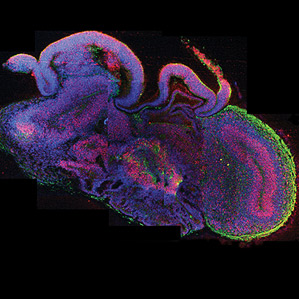
Researchers Grow 3-D Human Brain Tissues

Researchers have grown brain tissue that contains distinct regions that mimic different functional structures of the developing brain.
(..)
The Austrian researchers coaxed cultured neurons to take on a three-dimensional organization using cell-friendly scaffolding materials in the cultures. The team also let the neuron progenitors control their own fate. “Stem cells have an amazing ability to self-organize,” said study first author Madeline Lancaster at a press briefing on Tuesday. Others groups have also recently seen success in allowing progenitor cells to self-organize, leading to reports of primitive eye structures, liver buds, and more (see “Growing Eyeballs” and “A Rudimentary Liver Is Grown from Stem Cells”).
The brain tissue formed discrete regions found in the early developing human brain, including regions that resemble parts of the cortex, the retina, and structures that produce cerebrospinal fluid. At the press briefing, senior author Juergen Knoblich said that while there have been numerous attempts to model human brain tissue in a culture using human cells, the complex human organ has proved difficult to replicate. Knoblich says the proto-brain resembles the developmental stage of a nine-week-old fetus’s brain.
Link

Wednesday, August 28, 2013

FIRST ‘MIND MELD’ TO LINK HUMAN BRAINS

A scientist sent a brain signal over the internet to control a colleague’s hand—and made his finger move on the keyboard to play a simple video game.
“The Internet was a way to connect computers, and now it can be a way to connect brains,” says Andrea Stocco, a research assistant professor in psychology at the University of Washington’s Institute for Learning & Brain Sciences

Sunday, August 25, 2013

How this camera mimics the human eye


Developed by Swiss engineers, the Dynamic Vision Sensor captures motion by operating like the neurons in our eyes..

The retina is an enormously powerful tool. It sorts through massive amounts of data while operating on only a fraction of the power that a conventional digital camera and computer would require to do the same task.
Now, engineers at a company called iniLabs in Switzerland are applying lessons from biology in an effort to build a more efficient digital camera inspired by the human retina.
Like the individual neurons in our eyes, the new camera—named the Dynamic Vision Sensor (DVS)—responds only to changes in a given scene. This approach eliminates large swaths of redundant data and could be useful for many fields, including surveillance, robotics, and microscopy.
 Link

An Eye Exam in a Pocket!

This is aweome!!
Uvealblues
Cataracts cloud Mirriam Waithara's world and leave her almost blind.
She lives in a poor and remote part of Kenya where there are no opticians to pick up the problem and she is far from the only one.
The World Health Organization says 285 million people are blind or visually impaired.
The reason is often simple and easy to treat. A pair of glasses or cataract surgery can transform someone's eyesight.
It is thought that four out of every five cases can be prevented or cured.
Even in the poorest parts of the world there are often eye doctors in the major towns and cities.
However, says Dr Andrew Bastawrous of the London School of Hygiene and Tropical Medicine, finding patients is often the problem.
(..)
He is trialling a smartphone app called Peek (Portable Eye Examination Kit) on 5,000 people in Kenya.
It uses the camera to scan the lens of the eye for cataracts.
A shrinking letter which appears on screen is used as a basic vision test.
And it can uses the camera's flash light to illuminate the back of the eye, the retina, to check for disease.

'Why This Compulsion To Run Long Distances?' A Runner's Beautiful Confession

There is a pretty imaginative cartoon  at this link that reminds me of one of my friends who is a devoted cyclist--He notes that "The Great Thing about Pain is that it Brings You into the Moment--nothing else matters...
Uvealblues

Runners often ask themselves, "Why am I doing this? Why do I want to make myself hurt so? What's this compulsion to run?"
The Bushman is telegraphing the most obvious answer: You beat your demons. You overcome yourself; that feels good.
Here's another answer, to my mind just as beautiful, and less than obvious. It comes from artist/cartoonist/essayist Matt Inman who writes a strip called The Oatmeal. This is the final chapter of his newest essay, one that he calls "The terrible and wonderful reasons why I run long distances."
You should scroll through the previous five sections if you like, but as this part begins, Matt (a former fatty who's convinced his fat's coming back) has been running for hours on a horribly hot day inJapan. Close to exhaustion, trailed by ferocious hornets, he happens upon a vending machine, sucks down a purple sugary drink, is magically revivified, and now is about to finish his run ...

Facebook Makes us Sadder

Facebook's mission "to make the world more open and connected" is a familiar refrain among company leaders. But the latest research shows connecting 1.1 billion users around the world may come at a psychological cost.
A new University of Michigan study on college-aged adults finds that the more they used Facebook, the worse they felt. The study, published in the journalPLOS One, found Facebook use led to declines in moment-to-moment happiness and overall life satisfaction.

Saturday, August 24, 2013

The Lurker: How A Virus Hid In Our Genome For Six Million Years

In the mid-2000s, David Markovitz, a scientist at the University of Michigan, and his colleagues took a look at the blood of people infected with HIV. Human immunodeficiency viruses kill their hosts by exhausting the immune system, allowing all sorts of pathogens to sweep into their host’s body. So it wasn’t a huge surprise for Markovitz and his colleagues to find other viruses in the blood of the HIV patients. What was surprising was where those other viruses had come from: from within the patients’ own DNA.
Link

Saturday, August 17, 2013

A Save-the-World Field Trip for Millionaire Tech Moguls

When Harrison founded charity: water in New York City in 2006, he initially intended to counter the cynicism of his club buddies. “I wanted to create a model that would put all the excuses aside,” Harrison says — a charity, in other words, for people who didn’t trust charities. To pre-empt objections to high overhead and waste, Harrison set up two bank accounts: one, raised chiefly from a handful of wealthy individuals, to pay for administration and fund-raising; and the other to finance the digging of wells and other water-related projects in the developing world. Today the organization’s heavily promoted “100% Model” allows it to claim that every dollar donated to water is actually used that way. (Some consider this more a matter of marketing than anything else, but even so, charity: water is a relatively efficient organization, earning a nearly perfect rating from Charity Navigator, a sort of Consumer Reports for the nonprofit world.) Many donations are earmarked to specific projects, so if a church group gives, say, $5,000 for a well in Ethiopia, its members are not only told where their $5,000 is spent, but they also receive pictures of the well they financed and its G.P.S. coordinates. All of this information is publicly available on a section of charity: water’s Web site dedicated to “proving it.” Most donors who happen to visit their well will find their names on a plaque there.

In just seven years, Harrison’s organization claims to have raised roughly $100 million — $33 million in 2012 alone, up from $27 million the year before and $16 million the year before that. Today it is the largest nonprofit in the United States focused on water, with revenues that are four times as great as those of Water.org, the group co-founded by Matt Damon. Charity: water doesn’t drill wells or buy water filters but acts as a fund-raising clearinghouse for locally based charities, which it subcontracts to do the actual work. It markets its partners, mostly using its Web site and social media. “You could almost imagine us a Kayak.com or an Expedia,” Harrison says. But charity: water promises to do more than a mere online travel agent does; it claims to verify that the wells its donors buy are actually completed in a timely fashion. “We create an experience,” he says, “a pure way to give.”
Link

Friday, August 16, 2013

Glasses That Solve Colorblindness, for a Big Price Tag


A few weeks back, I wrote about special lenses that were developed to give doctors “a clearer view of veins and vasculature, bruising, cyanosis, pallor, rashes, erythema, and other variations in blood O2 level, and concentration,” especially in bright light.
But these lenses turned out to have an unintended side effect: they “may cure red-green colorblindness.”

Sunday, August 11, 2013

Africa’s Drinking Problem: Alcoholism on the Rise as Beverage Multinationals Circle Read more: http://world.time.com/2013/08/09/africas-drinking-problem-alcoholism-on-the-rise-as-beverage-multinationals-circle/#ixzz2biqHwY00

One of the things Sinkele finds most astonishing is that multinational companies are getting tax-breaks for selling beer to people on the breadline. While governments in the West are considering minimum pricing standards for alcohol, in nearly a dozen countries across Africa, amidst soaring food prices, governments are applying tax-breaks to booze, which, according to the World Health Organization, kills more people than AIDS or tuberculosis. ”It’s better assisted suicide,” Sinkele says.
In Kenya, multi-national beverage company Diageo’s second-best selling beer, Senator Keg, is served in 300 ml servings for 25 shillings (around 30 cents). The company, which reportedly controls a staggering 97% of the beer market, until June enjoyed a 100% tax exemption on Senator to keep it cheap. “This gave consumers a safer alternative to unregulated and bad quality brews which often lead to fatalities,” Diageo’s Group Corporate Relations Director Brenda Mbathi says. Sinkele says the new Government realized the tax break was nonsensical, which is why they rescinded it.


Read more: http://world.time.com/2013/08/09/africas-drinking-problem-alcoholism-on-the-rise-as-beverage-multinationals-circle/#ixzz2biqOf9Us

Gene regulator is key to healthy retinal development and good vision in adulthood

Animal study reveals “unexpected” role of horizontal cells in photoreceptor rod and cone cell development of retina

Link
“Because degradation of photoreceptors is believed to be a major factor in retinal diseases, such as retinitis pigmentosa and Leber’s congenital amaurosis, this finding, that horizontal cells are necessary for the normal survival of photoreceptor cells, is novel and significant,” says Mu. “Many retinal diseases are manifested by the degeneration of photoreceptor cells.”
This finding was unexpected, Mu explains, because most investigations into the degeneration of photoreceptor cells have involved genes that directly affect photoreceptor cell development.
“People haven’t been looking at horizontal cells,” he says. “We didn’t think that they’d be involved in photoreceptor cell degradation.
“With this finding, we have discovered that retinal horizontal cells are required for maintaining the integrity of the retina and that their deficiency can lead to retinal degradation,” explains Mu.
He notes that in most cases where photoreceptor cells die, it’s because they are somehow defective.
“But in this case, the photoreceptor cells are fine in the beginning, so the death of the photoreceptor cells is a secondary affair that is somehow driven by the deficiency in horizontal cells,” he says.

Travels in the Fourth Dimension

‘Time Warped’ Looks at How We Perceive, and Misperceive, Time

In “Time Warped,” Claudia Hammond, a British radio journalist and psychology lecturer, delves into scores of experiments on how we track the seconds, hours, months and decades. At each duration she finds distortions and paradoxes, revealing the persistent “capriciousness, strangeness and mutability” of time as we sense it.
(..)
Or consider the opposite effect. A vacation filled with activities may pass quickly, but once you get home, all those new memories can give the illusion that you’ve been away longer. Ms. Hammond believes this “holiday paradox,” caused by our tendency to gauge passing time by the number of new memories formed, may be at the heart of a more perplexing problem: that time appears to speed up as we get older.
Playing down other explanations for this lifelong sense of acceleration — that our internal clocks naturally slow as we age, or that every minute represents a smaller fraction of our life span — she argues that the real reason for the quickening of time is that a high concentration of strong memories occur in the teens and 20s, making that period a “benchmark for our judgments of retrospective time.” As new memories become sparser, later life seems brief compared with our eventful youth, giving the illusion that time has sped up

Wednesday, August 07, 2013

How Sleep Loss Adds to Weight Gain

Losing sleep tends to make people eat more and gain weight, and now a new study suggests that one reason may be the impact that sleep deprivation has on the brain.
The research showed that depriving people of sleep for one night created pronounced changes in the way their brains responded to high-calorie junk foods

Tuesday, August 06, 2013

As Cost of Importing Food Soars, Jamaica Turns to the Earth

KINGSTON, Jamaica — The scent of coconut oil and fiery jerk spice blows through kitchens across this green island, but as the country’s food imports have become a billion-dollar threat to finances and health, Jamaica has taken on a bold new strategy: make farming patriotic and ubiquitous, behind homes, hospitals, schools, even prisons.
Across the Caribbean, food imports have become a budget-busting problem, prompting one of the world’s most fertile regions to reclaim its agricultural past. But instead of turning to big agribusinesses, officials are recruiting everyone they can to combat the cost of imports, which have roughly doubled in price over the past decade. In Jamaica, Haiti, the Bahamas and elsewhere, local farm-to-table production is not a restaurant sales pitch; it is a government motto.
Link

Saturday, August 03, 2013

The $4 Million Teacher

South Korea's students rank among the best in the world, and its top teachers can make a fortune. Can the U.S. learn from this academic superpower?

Kim Ki-hoon earns $4 million a year in South Korea, where he is known as a rock-star teacher—a combination of words not typically heard in the rest of the world. Mr. Kim has been teaching for over 20 years, all of them in the country's private, after-school tutoring academies, known as hagwons. Unlike most teachers across the globe, he is paid according to the demand for his skills—and he is in high demand.
Link 

The shape of things: Fellows Friday with Anthony Vipin Das, on FITTLE, a toy that helps blind children read


Ophthalmologist Anthony Vipin Das is currently working on a new toy for the blind, FITTLE, with Tania Jain, a designer from National Institute of Design, Gandhinagar. The toy will help blind children learn to read Braille while getting a sense of the shape of the world around them. We asked him to tell us all about it. Below, his essay on what this toy is … and how it came about.

Link 

Mugabe Declared Winner in Zimbabwe; Opposition Leader Calls Result a 'Sham"

No surprise there...what a shame...how much longer can this go on?
Uvealblues
Link 
Related Posts with Thumbnails

ShareThis