Wednesday, December 18, 2013

NO TWO NOSES SMELL THE SAME

How you sense a smell—as pleasant or offensive—may be decided by a difference at the smallest level of DNA—one amino acid on one gene, researchers say.
There are about 400 genes coding for the receptors in our noses, and according to the 1000 Genomes Project, there are more than 900,000 variations of those genes. These receptors control the sensors that determine how we smell odors. A given odor will activate a suite of receptors in the nose, creating a specific signal for the brain.
But the receptors don’t work the same for all of us, says Hiroaki Matsunami, associate professor of molecular genetics and microbiology at the Duke University School of Medicine. In fact, when comparing the receptors in any two people, they should be about 30 percent different.
(..)
While researchers had earlier identified the genes that encode for odor receptors, it has been a mystery how the receptors are activated. To determine what turns the receptors on, researchers cloned more than 500 receptors each from 20 people that had slight variations of only one or two amino acids and systematically exposed them to odor molecules that might excite the receptors.
By exposing each receptor to a very small concentration—1, 10, or 100 micromoles—of 73 odorants, such as vanillin or guaiacol, the group was able to identify 27 receptors that had a significant response to at least one odorant.
Tuesday, December 17, 2013

TREATMENT SHOWS PROMISE FOR HUSHING TINNITUS

For tens of millions of Americans, there’s no such thing as the sound of silence. Instead, even in a quiet room, they hear a constant ringing, buzzing, hissing, humming, or other noise in their ears that isn’t real.
Tinnitus, or ringing in the ears, may be the result of sensory nerves in the face and neck trying to compensate for a reduction of input from the ear’s cochlea, new research shows.
The findings by University of Michigan Medical School researchers offer a new target for treating the condition. The team has a patent pending and device in development based on the approach.
Susan Shore, the senior author of the paper, explains that her team has confirmed that a process called stimulus-timing dependent multisensory plasticity is altered in animals with tinnitus—and that this plasticity is “exquisitely sensitive” to the timing of signals coming in to a key area of the brain. The findings are published online in the Journal of Neuroscience.

Monday, December 16, 2013

DEVICE USES IPHONE CAMERA TO TEST CHOLESTERO

An iPhone app and an accessory that looks like a smartphone credit card reader can test your cholesterol in about a minute.
The Smartphone Cholesterol Application for Rapid Diagnostics, or “smartCARD,” uses the smartphone’s camera to read your cholesterol level.

Sunday, December 15, 2013

Chowing Down On Meat, Dairy Alters Gut Bacteria A Lot, And Quickly

Looks like Harvard University scientists have given us another reason to walk past the cheese platter at holiday parties and reach for the carrot sticks instead: Your gut bacteria will thank you.
Switching to a diet packed with meat and cheese — and very few carbohydrates — alters the trillions of microbes living in the gut, scientists report Wednesday in the journal Nature.
The change happens quickly. Within two days, the types of microbes thriving in the gut shuffle around. And there are signs that some of these shifts might not be so good for your gut: One type of bacterium that flourishes under the meat-rich diet has been linked to inflammation and intestinal diseases in mice.
"I mean, I love meat," says microbiologist Lawrence David, who contributed to the study and is now at Duke University.
"But I will say that I definitely feel a lot more guilty ordering a hamburger ... since doing this work," he says.


Saturday, December 14, 2013

The Best Fitness Tracker

Every fitness tracker currently available has its shortcomings, but the $130 Fitbit Force’s flaws are easy to forgive given the convenience of its wrist-mounted design and legible screen that tracks your stats in real time. It is the only fitness tracker that combines all those features with the added accuracy of an altimeter. The fact that it’s a part of the most comprehensive fitness ecosystem around is gravy. Unfortunately, the wrist strap can be a bit tricky to latch and it’s not as water-resistant as other options, but it’s still the one we’d get.
Link

Global Study Finds Majority Believe Traditional Hospitals Will Be Obsolete In The Near Future

A global study was released this morning by the Intel Corporationindicating that around the world people’s health care wants and needs are principally focused on technology and personalization. The “Intel Health Innovation Barometer” found a consistent theme: customized care. At the intersection of health, care and technology, communities around the world consistently said they wanted to see their biological makeup and individual behaviors used to make receiving care more effective and efficient. This unsurprisingly was described by people through means such as telehealth, mobile health and the sharing of health information in real time. However, surprising methods of care were also common themes throughout the world such as ingestible monitoring systems and care that involves no utilization of hospitals.
(..)
Surprising Findings:
-       Traditional hospitals, according to 57% of people, will be obsolete in the future
-       Majority of people (84%) would be willing to share their personal health information to advance and lower costs in the health care system
-       More than 70% of people are receptive to using toilet sensors, prescription bottle sensors and swallowed health monitors
-       72% of those surveyed would be willing to see a doctor via video conference for non-urgent appointments
-       66% of people say they would prefer a care regimen that is designed specifically for them based on their genetic profile or biology
-       More than half of people (53%) would trust a test they personally administered as much or more than if that same test was performed by a doctor
-       About 30% of people would trust themselves to perform their own ultrasound

Link

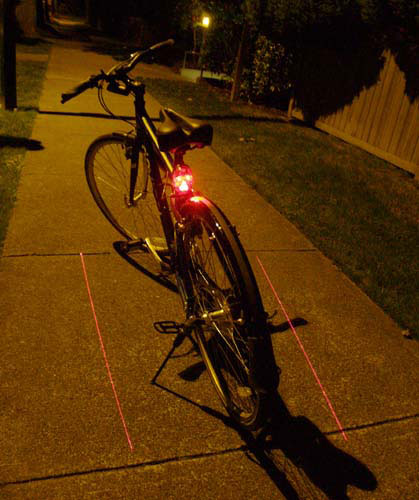
Bike light with laser cannon creates a glowing, personal bike-lane

ThinkGeek's $25 Blazing Skull Bicycle Tail Light has a pair of "laser cannon" that draw six-foot lines of red light on either side of your bike, creating "your own glowing bike lane."

In Food Cravings, Sugar Trumps Fat

What makes a milkshake so irresistible?
Is it the sweet flavor that our taste buds are after? Or the smooth and creamy texture? Or perhaps it is the copious blend of fat and sugar?
An intriguing new study suggests that what really draws people to such treats, and prompts them to eat much more than perhaps they know they should, is not the fat that they contain, but primarily the sugar

Exercise as Potent Medicine

Exercise can be as effective as many frequently prescribed drugs in treating some of the leading causes of death, according to a new report. The study raises important questions about whether our health care system focuses too much on medications and too little on activity to combat physical ailments.
For the study, which was published in October in BMJ, researchers compared how well various drugs and exercise succeed in reducing deaths among people who have been diagnosed with several common and serious conditions, including heart disease and diabetes.

Tuesday, December 10, 2013

Differences in How Men and Women Think Are Hard-Wired

So many things come down to connections—especially the ones in your brain.
Women and men display distinctive differences in how nerve fibers connect various regions of their brains, according to a half-dozen recent studies that highlight gender variation in the brain's wiring diagram. There are trillions of these critical connections, and they are shaped by the interplay of heredity, experience and biochemistry.
No one knows how gender variations in brain wiring might translate into thought and behavior—whether they might influence the way men and women generally perceive reality, process information, form judgments and behave socially—but they are sparking controversy.
(..)
Dr. Verma's maps of neural circuitry document the brain at moments when it is in a fury of creation. Starting in infancy, the brain normally produces neurons at a rate of half a million a minute, and reaches out to make connections two million times a second. By age 5, brain size on average has grown to about 90% of adult size. By age 20, the average brain is packed with about 109,000 miles of white matter tissue fibers, according to a 2003 Danish study reported in the Journal of Comparative Neurology.
Spurred by the effects of diet, experience and biochemistry, neurons and synapses are ruthlessly pruned, starting in childhood. The winnowing continues in fits and starts throughout adolescence, then picks up again in middle age. "In childhood, we did not see much difference" between male and female, Dr. Verma said. "Most of the changes we see start happening in adolescence. That is when most of the male-female differences come about."

Can an App Improve Vision?

The Ache: In presbyopia, the eye's lens loses elasticity with age. The ability to focus on near objects deteriorates, resulting in the need for reading glasses.
The Claim: A 12-week, scientifically tested training program, newly available as an iPhoneapp, uses a technique called perceptual learning to reduce—or even eliminate—the need for reading glasses.
The Verdict: A 30-person study published in February 2012 in the journal Scientific Reports found that after trying the program—now on sale as an iPhone app calledGlassesOff GLSO -4.62% —participants on average could read letters 1.6 times smaller than they could previously. The program is much more likely to show improvement in adults 40 to 60 years old, scientists say.

5 Health Tech Trends to Watch in 2014


2013 was a big year for consumer health technology. According to mobile tech consultancy Research2Guidance, there are now close to 100,000 mobile health apps in 62 app stores, with the top 10 apps generating over 4 million free downloads every day.
This year also saw increased adoption of wearable tech, such as the Nike+ FuelBand and Fitbit — a market that is expected to grow to 100 million units by the end of 2014.
So if 2013 was the year of wearables and health apps, what’s on tap for next year? Here are five exciting health tech trends to keep an eye on for the new year.

What Does the Spleen Do?

Snacking Your Way to Better Health


The more often nuts were consumed, the less likely participants were to die of cancer, heart disease and respiratory disease, and not because nut eaters succumbed to other diseases. Their death rate from any cause was lower during the years they were followed. (The nuts in question were pistachios, almonds, Brazil nuts, cashews, hazelnuts, macadamias, pecans, pine nuts, peanuts and walnuts.)
Those who ate nuts seven or more times a week were 20 percent less likely to die from 1980 to 2010; even among those who consumed nuts less often than once a week, the death rate was 11 percent lower than for those who did not eat them.
I know what you’re thinking: Aren’t nuts fattening? Yes, an ounce of nuts has 160 to 200 calories, nearly 80 percent from fat.
But in study after study, the more often people ate nuts, the leaner they tended to be.

Your Contact Lens Might Someday Dispense Eye Drugs


Promising results in animal studies show they've delivered glaucoma meds continuously for a month

Saturday, December 07, 2013

Wasps and honeybees can remember individual faces

This blog is amazing for all who are fascinated by science... and this is an example of an article from it....
Uvealblues

When these insects view an individual (be it another insect or the person who just pissed them off by swinging a newspaper at them), their field of vision is broken up into hexagons from the thousands of ommatidia that make up the compound eye. Essentially, they process information based on these chunks from the structures in the eye that act as individual units and put the entire picture together. It might not be very clear compared to what we are used to since they don't have a pupil to regulate the amount of light coming in onto the retina, but it is good enough to allow wasps and bees to discern prominent facial features that can be used for identification. - 

Link
Photo credit: Hectonichus

Nelson Mandela and Freedom


Siri the Would Be Photographer

Most of you don’t know I grew up in Cupertino. Yep, graduated Cupertino High School class of 1970 (Go Pioneers!) Lived in Cupertino back when the big business in town was Mariani Brothers dried fruits. I had the pleasure of visiting again recently, and some of my Apple friends took me over to nearby Santa Cruz to show off some new photographic functions they’ve been working on. Here’s how it went:
Me: Siri, take a picture.
Siri: Here Thawm, I've found 242 things to take a picture of.
Me: Take a picture of the sunset.
Siri: Sure. Take a picture of the sunset. What would you like me to do with the dog in front of the camera?
Me: Silhouette the dog
For more--go to thegearophile.com  link

Wednesday, December 04, 2013

Malcolm Gladwell on the Advantages of Disadvantages

In his new bestseller, David and Goliath: Underdogs, Misfits, and the Art of Battling Giants, Malcolm Gladwell looks at what happens when ordinary people confront powerful opponents. He starts the book by dissecting the classic tale of David and Goliath, challenging our beliefs about what the story tells us regarding underdogs and giants, and ultimately, our fundamental assumptions about power.
Wharton management professor Adam M. Grant recently interviewed Gladwell about his new book when he visited campus as a guest lecturer in the Authors@Wharton series. Gladwell shared why he never roots for the underdog, where he comes up with the ideas for his books and sets the record straight on the biggest misunderstandings about his work.
An edited transcript of the conversation follows.

The Most Commonly Awarded Grade at Harvard Is an A

Harvard students are enjoying some extreme grade inflation.
Link

Monday, November 25, 2013

13 Scientific Reasons To Drink Coffee

Coffee is actually very healthy. It is loaded with antioxidants and beneficial nutrients that can improve your health.
The studies show that coffee drinkers have a much lower risk of several serious diseases. Here are the top 13


Read more: http://authoritynutrition.com/top-13-evidence-based-health-benefits-of-coffee/#ixzz2lijmk0vC

Saturday, November 23, 2013

This Insane 3-D Printed Toothbrush Cleans Your Teeth In Just Six Seconds

Brushing your teeth is one of those pesky but important tasks that too many people skimp on--it's just so easy to brush for a couple seconds and wait for the consequences to set in later. A new 3-D-printed toothbrush, designed by dentists and engineers, can supposedly clean your teeth in just six seconds. It's almost too convenient to believe.
Link

Sweat Your Way To A Healthier Brain

Moving your body may be the best way to protect your brain.
Physical exercise can ease depression, slow age-related memory loss and prevent Parkinson-like symptoms, researchers reported at the Society for Neuroscience meeting underway in San Diego.
The findings — some in animals, some in people — suggest that people may be making a mistake if they're relying primarily on crossword puzzles and brain-training games for mental wellness.

Link

New Study Shows Brain Benefits Of Bilingualism

The largest study so far to ask whether speaking two languages might delay the onset of dementia symptoms in bilingual patients as compared to monolingual patients has reported a robust result. Bilingual patients suffer dementia onset an average of 4.5 years later than those who speak only a single language.
(..)
Only when I read the research report itself, though, published in the journal Neurology and written by Suvarna Alladi and 7 co-authors, did I realize fully the brilliance of conducting this study in Hyderabad, India.
That choice of location, I believe, lends extra credibility to the study's results.
Here's why. India, as the researchers note, is a nation of linguistic diversity. In the Hyderabad region, a language called Telugu is spoken by the majority Hindu group, and another called Dakkhini by the minority Muslim population. Hindi and English are also commonly spoken in formal contexts, including at school. Most people who grow up in the region, then, are bilingual, and routinely exposed to at least three languages.
(..)
The sounds of multiple languages swirling around me when I visit New York or Paris are enchanting, and I enjoy discussing with bilinguals the claims that switching between languages allows different personality traits to emerge within a single individual.
Being bilingual opens up new worlds of global connection and understanding, and almost certainly allows some degree of flexibility in personal expression, too.
Now we know, more concretely and convincingly than before, that there's a brain benefit to bilingualism, too.
Link

How Incredibly Lazy People Can Form Productive Habits

If you want to change your behavior but not try that hard, then pay attention to the friction involved.
Link

That focus on friction is something that leaders understand. President Obama, for instance, keeps a deliberately minimalist wardrobe, as he unpacked to Vanity Fair:
"You'll see I wear only gray or blue suits," [Obama] said. "I'm trying to pare down decisions. I don't want to make decisions about what I’m eating or wearing. Because I have too many other decisions to make." He mentioned research that shows the simple act of making decisions degrades one’s ability to make further decisions. It’s why shopping is so exhausting. "You need to focus your decision-making energy. You need to routinize yourself. You can't be going through the day distracted by trivia."
The takeaway, then: rather than spending your energy on trivia, invest it in deep work or other productive habits--which reducing friction helps us do.

Friday, November 22, 2013

Harvard Yoga Scientists Find Proof of Meditation Benefit

Scientists are getting close to proving what yogis have held to be true for centuries -- yoga and meditation can ward off stress and disease.
John Denninger, a psychiatrist at Harvard Medical School, is leading a five-year study on how the ancient practices affect genes and brain activity in the chronically stressed. His latest work follows a study he and others published earlier this year showing how so-called mind-body techniques can switch on and off some genes linked to stress and immune function.
(..)
Unlike earlier studies, this one is the first to focus on participants with high levels of stress. The study published in May in the medical journal PloS One showed that one session of relaxation-response practice was enough to enhance the expression of genes involved in energy metabolism and insulin secretion and reduce expression of genes linked to inflammatory response and stress. There was an effect even among novices who had never practiced before.
Harvard isn’t the only place where scientists have started examining the biology behind yoga.
In a study published last year, scientists at the University of California at Los Angeles and Nobel Prize winner Elizabeth Blackburn found that 12 minutes of daily yoga meditation for eight weeks increased telomerase activity by 43 percent, suggesting an improvement in stress-induced aging. Blackburn of the University of California, San Francisco, shared the Nobel medicine prize in 2009 with Carol Greider and Jack Szostak for research on the telomerase “immortality enzyme,” which slows the cellular aging process.

How Doctors Die: Showing Others the Way

BRAVE. You hear that word a lot when people are sick. It’s all about the fight, the survival instinct, the courage. But when Dr. Elizabeth D. McKinley’s family and friends talk about bravery, it is not so much about the way Dr. McKinley, a 53-year-old internist from Cleveland, battled breast cancer for 17 years. It is about the courage she has shown in doing something so few of us are able to do: stop fighting.
Link

Friday, October 25, 2013

Your face may have been sculpted by junk DNA

Even the prettiest faces are built using junk. In mice, the shapes of the face and skull are finely tuned by junk DNA, so called because it was initially thought to lack function since it doesn't encode proteins. The same junk DNA sequences are found in humans, so they are probably also shaping our faces.
This finding could help us make sense of some congenital conditions, such as cleft palates, that can develop even when the genes that shape the face appear to be working normally

Slow metabolism 'obesity excuse' true

The mocked "obesity excuse" of being born with a slow metabolism is actually true for some people, say researchers.
A team at the University of Cambridge has found the first proof that mutated DNA does indeed slow metabolism.
The researchers say fewer than one in 100 people are affected and are often severely obese by early childhood.

Thursday, October 24, 2013

Text Messages Are Saving Swedes From Cardiac Arrest

Sweden has found a faster way to treat people experiencing cardiac emergencies through a text message and a few thousand volunteers.
A program called SMSlivräddare —or SMSLifesaver — solicits people who have been trained in cardiopulmonary resuscitation (CPR). When a Stockholm resident dials 112 for emergency services, a text message is sent to all volunteers within 500 meters of the person in need. The volunteer then arrives at the location within the crucial first minutes to perform lifesaving CPR. 
The odds for surviving cardiac arrest drop 10% for every minute it takes first responders to arrive.

Tuesday, October 22, 2013

A New Map of How We Think: Top Brain/Bottom Brain


Forget dated ideas about the left and right hemispheres. New research provides a more nuanced view of the brain

Except that it isn't. The popular left/right story has no solid basis in science. The brain doesn't work one part at a time, but rather as a single interactive system, with all parts contributing in concert, as neuroscientists have long known. The left brain/right brain story may be the mother of all urban legends: It sounds good and seems to make sense—but just isn't true.
(..)
This research reveals that the top-brain system uses information about the surrounding environment (in combination with other sorts of information, such as emotional reactions and the need for food or drink) to figure out which goals to try to achieve. It actively formulates plans, generates expectations about what should happen when a plan is executed and then, as the plan is being carried out, compares what is happening with what was expected, adjusting the plan accordingly.
The bottom-brain system organizes signals from the senses, simultaneously comparing what is being perceived with all the information previously stored in memory. It then uses the results of such comparisons to classify and interpret the object or event, allowing us to confer meaning on the world.

The Real Dirt on Face Washing

With new facial cleansers promising mild formulas that won't dry out the skin, experts say don't overscrub, overcleanse

Washing your face seems pretty simple, yet dermatologists and beauty companies think there's room for improvement.
Easy does it is the message experts have for consumers, as a new generation of facial cleansers promises mild formulas that won't dry out the skin. New devices offer deep-clean claims but with a lighter touch. Some doctors even say that people with good skin should wash their face just once a day—at night.
It's a tough sell for consumers familiar with strong formulas that can make skin feel tight and squeaky clean. Many people take that feeling as a sign of effectiveness, when actually it is a signal of overdrying or damage.
(..)
Face washing at night is most important, dermatologists say. It removes dirt, grime and pollutants that have gathered on the skin during the day, as well as makeup. Some doctors say people without a serious skin-care issue, such as acne, can skip the soap and just rinse in the morning.
"Your skin has just slept on a pillow, it is clean, it doesn't necessarily need to be washed," said Gervaise Gerstner, a Manhattan dermatologist and consultant for L'Oréal Paris. Dry skin from overcleansing is a problem for people as they age, she says.
For men, the biggest face washing issue is which product they use—or lack thereof. About half of men wash their face solely with water, says Rob Candelino, vice president of marketing for skin care at Unilever, maker of a Dove Men+Care brand. Of men who do use a cleanser, many use a bar of regular body soap, shampoo or whatever else they can find in the shower. Making matters worse, men generally don't moisturize or wear sunscreen every day and so tend to be more susceptible to drying and sun damage, Mr. Candelino says. Alcohol-based products like after-shave can also cause irritation, he says.

Thursday, October 17, 2013

How the Precious Orchid Got So Cheap


Taiwan's Efficient Growers, Who Copied Tech Industry, Bemoan Days When a Flower Fetched $100,000

Same Gene Mutations Tied to 12 Cancers


Researchers estimate that essentially all cancers are fueled by between 200 and 400 mutations, many of which are in genes that regulate molecular pathways responsible for cell growth. The mutations can cause normal cellular process to go awry, causing cancer.
Dr. Ding said that with the new study, combined with plans by an international consortium to study even more cancers, "I'm confident we are getting close to a complete list of cancer genes."

Monday, October 14, 2013

Scott Adams' Secret of Success: Failure

If you're already as successful as you want to be, both personally and professionally, congratulations! Here's the not-so-good news: All you are likely to get from this article is a semientertaining tale about a guy who failed his way to success. But you might also notice some familiar patterns in my story that will give you confirmation (or confirmation bias) that your own success wasn't entirely luck.

If you're just starting your journey toward success—however you define it—or you're wondering what you've been doing wrong until now, you might find some novel ideas here. Maybe the combination of what you know plus what I think I know will be enough to keep you out of the wood chipper.
Link

Is Music the Key to Success?


Multiple studies link music study to academic achievement. But what is it about serious music training that seems to correlate with outsize success in other fields?
The connection isn’t a coincidence. I know because I asked. I put the question to top-flight professionals in industries from tech to finance to media, all of whom had serious (if often little-known) past lives as musicians. Almost all made a connection between their music training and their professional achievements.


They are a mystery to researchers: people who are significantly overweight and yet show none of the usual metabolic red flags. Despite their obesity, they have normal cholesterol levels, healthy blood pressure levels and no apparent signs of impending diabetes.
Researchers call them the metabolically healthy obese, and by some estimates they represent as many as a third of all obese adults. Scientists have known very little about them, but new research may shed some light on the cause of their unusual metabolic profile.
A study in the journal Diabetologia has found that compared with their healthier counterparts, people who are obese but metabolically unhealthy have impaired mitochondria, the cellular powerhouses that harvest energy from food, as well as a reduced ability to generate new fat cells.

Tuesday, October 08, 2013

How Intense Study May Harm Our Workouts

Tire your brain and your body may follow, a remarkable new study of mental fatigue finds. Strenuous mental exertion may lessen endurance and lead to shortened workouts, even if, in strict physiological terms, your body still has plenty of energy reserves.
(..)
In simpler terms, exercise simply feels harder when your brain is tired, so you quit earlier, although objectively, your muscles are still somewhat fresh.
Link

A Tiny Pronoun Says a Lot About You

Surprising new research from the University of Texas suggests that people who often say "I" are less powerful and less sure of themselves than those who limit their use of the word. Frequent "I" users subconsciously believe they are subordinate to the person to whom they are talking.
(..)
"There is a misconception that people who are confident, have power, have high-status tend to use 'I' more than people who are low status," says Dr. Pennebaker, author of "The Secret Life of Pronouns." "That is completely wrong. The high-status person is looking out at the world and the low-status person is looking at himself."
(..)
The fifth study was the most unusual. Researchers looked at email communication that the U.S. government had collected (and translated) from the Iraqi military, made public for a period of time as the Iraqi Perspectives Project. They randomly selected 40 correspondences. In each case, the person with higher military rank used "I" less.
People curb their use of "I" subconsciously, Dr. Pennebaker says. "If I am the high-status person, I am thinking of what you need to do. If I am the low-status person, I am more humble and am thinking, 'I should be doing this.' "

Building a Better Trifocal Alternative

Optical Confusion: Progressive Lens Makers Try to Fine Tune Products

Sunday, October 06, 2013

Success In Life: How Do You Measure It?

Remember the Game of Life? It’s one of the most popular board games ever. You won if you ended the game with the most money.
Here’s the interesting thing you probably don’t know: The game wasn’t always about money.
The original version was about vice, virtue and happiness. But when it was re-released in 1960 it was about cash.
When Milton Bradley (the man) first created it, he saw the game as a tool to teach children about ethics.
(..)
From my interview with Michael Norton:
Some things are hard to measure. So, “Am I a better dad than I was last year?” Well, there’s no objective scale where I can look back and someone says, “Last year you were a 71 dad. This year, you’re a 74 dad. Or spouse or whatever it might be, it’s very, very hard to know.
The things that we can know are things we can count, and one thing that is really, really easy to count is money. So, if I want to know if I’m better off this year than last year, one of the first things I can do is say, “Do I have more money?” I think that alone makes it very, very motivating


Read more: http://www.bakadesuyo.com/2013/10/success-in-life-how-do-you-measure-it/#ixzz2gzwKgoCE

For Better Social Skills, Scientists Recommend a Little Chekhov

Say you are getting ready for a blind date or a job interview. What should you do? Besides shower and shave, of course, it turns out you should read — but not just anything. Something by Chekhov or Alice Munro will help you navigate new social territory better than a potboiler by Danielle Steel.
That is the conclusion of a studypublished Thursday in the journal Science. It found that after reading literary fiction, as opposed to popular fiction or serious nonfiction, people performed better on tests measuring empathy, social perception and emotional intelligence — skills that come in especially handy when you are trying to read someone’s body language or gauge what they might be thinking.

Thursday, October 03, 2013

Disruptions: Visually Impaired Turn to Smartphones to See Their World


Luis Perez loves taking photographs. He shoots mostly on an iPhone, snapping gorgeous pictures of sunsets, vintage cars, old buildings and cute puppies. But when he arrives at a photo shoot, people are often startled when he pulls out a long white cane.
In addition to being a professional photographer, Mr. Perez is almost blind.
“With the iPhone I am able to use the same technology as everyone else, and having a product that doesn’t have a stigma that other technologies do has been really important to me,” said Mr. Perez, who is also an advocate for blind people and speaks regularly at conferences about the benefits of technology for people who cannot see. “Now, even if you’re blind, you can still take a photo.”
Smartphones and tablets, with their flat glass touch screens and nary a texture anywhere, may not seem like the best technological innovation for people who cannot see. But advocates for the blind say the devices could be the biggest assistive aid to come along since Braille was invented in the 1820s.

Intensive-Care Units Pose Long-Term Brain Risk, Study Finds


Critically ill patients who survive a stay in an intensive-care unit, where they are often heavily sedated and ventilated, can find themselves mentally impaired long after release. A new study says the problem is far more common and lasting than previously believed.
Nearly 80% of patients with prolonged ICU stays showed cognitive problems a year or more later, and more than half exhibited effects similar to Alzheimer's disease and traumatic brain injury, according to a report Wednesday in the New England Journal of Medicine.

Wednesday, October 02, 2013

The End of Poverty, Soon


oday, more and more people are dreaming of a world free of poverty.
In April, the Development Committee of the World Bank set the goal of ending extreme poverty by the year 2030. More recently, the United Nations General Assembly working group on global goals concluded that “eradicating poverty in a generation is an ambitious but feasible goal.” As one who wrote in 2005 that ours was the generation that could end extreme poverty, I am pleased to see this idea take hold at the highest levels.
Are these errant dreams as the world barrels toward more confusion, conflict and climate change, or is there something substantial in the recent wave of high-level interest in the idea? The evidence is on the side of the optimists. And the evidence also supports both those who favor more markets and those who favor more public-private strategies. It’s all a matter of context.
The global picture will surprise doomsayers. According to the World Bank’s scorecard, the proportion of households in developing countries below the extreme-poverty line (now measured as $1.25 per person per day at international prices) has declined sharply, from 52 percent in 1980, to 43 percent in 1990, 34 percent in 1999, and 21 percent in 2010. Even sub-Saharan Africa, the region with the most recalcitrant poverty, is finally experiencing a notable decline, from 58 percent in 1999 to 49 percent in 2010.
The gains are more marked in health. According to the latest Unicef study this month, the mortality rate of children under 5 in Africa declined from 177 deaths per 1,000 births in 1990, to 155 per 1,000 births in 2000, to 98 per 1,000 in 2012. This is still too high, but the rate of progress is rapid and accelerating.

Researchers Say Hormone Therapy Good for Short-Term Use


In their most detailed analysis yet, researchers from the embattled Women's Health Initiative reiterated their conclusion that hormone therapy is a reasonable option for short-term relief of menopausal symptoms for women in their 50s but shouldn't be used to prevent chronic disease.
The study, in the Journal of the American Medical Association this week, is the latest salvo in a long-running debate over hormone therapy in the U.S.
(..)
The new JAMA study provides the most detailed breakdown yet of how the risks and benefits vary by age and type of hormone therapy, based on 13 years of study and follow-up.
For example, the risk of invasive breast cancer was 24% higher among women taking estrogen plus progestin compared with placebo, but 21% lower among women taking estrogen alone, regardless of age.
(..)
Overall, the authors said the risks of combined therapy outweighed the benefits, noting that for every 10,000 women taking the drugs, there were six more coronary events, nine more strokes, nine more pulmonary emboli and nine more cases of breast cancer, but also six fewer cases of colorectal cancer, one fewer case of endometrial cancer, six fewer hip fractures and one fewer death.

Exercise as Good as Drugs at Preventing Repeat Heart Attack, Study Finds


Exercise is as effective as drugs at preventing diabetes and repeat heart attacks, and it is potentially better than medication for averting additional strokes, according to an analysis published Tuesday.
Though the benefits of exercise are well documented, there have been few trials that directly pit exercise against medication, a "blind spot" in research, according to Huseyin Naci, one of the study authors and a fellow in pharmaceutical-policy research at Harvard Medical School.
(..)
The relatively small number of exercise trials compared with drug trials is due to a combination of factors, including better funding from drug companies and the complexity of carrying out exercise studies, according to Dr. Mead.
Exercise has also been shown to be helpful in the short term in a number of other conditions, including depression, cognition, blood pressure and cancer treatment. Dr. Naci and his colleagues plan to study some of these other diseases in future work.
He cautioned that patients with existing health conditions should talk to their doctor before stopping medication or engaging in exercise programs.

Related Posts with Thumbnails

ShareThis