Thursday, April 07, 2011

Growing Eyeballs

Embryonic stem cells growing in a dish can spontaneously form complex structures resembling the retina—a discovery that could one day help restore sight to the blind.

Researchers at the RIKEN Center for Developmental Biology in Kobe, Japan, began with clusters of about 3,000 mouse embryonic stem cells floating in a mix of chemicals designed to spur differentiation into retinal cells. After a week, several balloon-like sacs of cells began to protrude from the surface of each cluster. Over the next few days, those sacs pouched inward on themselves to form structures resembling the optic cup—the complex dual-layered structure that emerges early in development and eventually becomes the retina.
(..)
The research may also have a more immediate impact on treatments for diseases in which the photoreceptor cells of the eye are damaged or destroyed. Sowden's group has found that transplanting photoreceptor precursors—a type of cell that appears early in development—could restore sight in these cases. But it has been difficult to obtain large numbers of these cells. Because the structures in the new study developed according to a predictable pattern and timeline, Sowden says, they could provide an ideal source of photoreceptor precursors for transplantation.
Sasai also believes the entire inner sheath of the optic cup-like structure—which contains photoreceptor cells arranged in the particular intricate layout that is necessary for sight—could be transplanted. His group has already had some success with this approach in mice, and they hope to have a human version of the system within two years.

Wednesday, April 06, 2011

What to Do When You Can’t Read the Fine Print

A good overview of various options for presbyopia...I myself am still fighting getting reading glasses :)
Uvealblues

EVERYTHING seems to stiffen up as people age, and our eyes are no exception. As the years go by, the lens of the eye becomes harder and less elastic. The result is a gradual worsening of the ability to focus on objects up close, called presbyopia.

Link

Tuesday, April 05, 2011

Food May Be Addicting for Some

A new study suggests that people who struggle to say no to chocolate, french fries or other junk food suffer from something more insidious than lack of willpower: They may actually have an addiction.
Using a high-tech scan to observe the brains of pathological eaters versus normal eaters, the study found that showing a milkshake to the abnormal group was akin to dangling a cold beer in front of an alcoholic.
Link
(..)
Just as most people who abuse alcohol or smoke marijuana aren't addicts, this study suggests that no single explanation or solution exists for overeating. In cases where the underlying problem is addiction, psychiatrists say that neither gastric-bypass surgery nor lifestyle changes are likely to prove effective. Among addicted eaters, "the current emphasis on personal responsibility…may have minimal effectiveness," concluded the paper.

The Sleepless Elite

Why Some People Can Run on Little Sleep and Get So Much Done


To date, Dr. Jones says he has identified only about 20 true short sleepers, and he says they share some fascinating characteristics. Not only are their circadian rhythms different from most people, so are their moods (very upbeat) and their metabolism (they're thinner than average, even though sleep deprivation usually raises the risk of obesity). They also seem to have a high tolerance for physical pain and psychological setbacks.
"They encounter obstacles, they just pick themselves up and try again," Dr. Jones says.
Some short sleepers say their sleep patterns go back to childhood and some see the same patterns starting in their own kids, such as giving up naps by age 2. As adults, they gravitate to different fields, but whatever they do, they do full bore, Dr. Jones says.

Regular Fasting May Boost Heart Health

The researchers found that people who fasted regularly had a 58 percent lower risk of coronary disease compared with those who said they didn’t fast, according to the report presented at the American College of Cardiology conference in New Orleans this week.
Link

After Breach, Companies Warn of E-Mail Fraud

And the governement want your data  as  a patient in the amorphous cloud....in an electronic medical record???
EMR bad for doctors and patients....
uvealblues

The breach exposed the e-mail addresses of customers of some of the nation’s largest companies, including JPMorgan Chase, Citibank, Target and Walgreens. In some cases customer names were also stolen.
While the number of people affected is unknown, security experts say that based on the businesses involved, the breach may be among the largest ever. And it could lead to a surge in phishing attacks — e-mails that purport to be from a legitimate business but are intended to steal information like account numbers or passwords.
“It is clearly a massive hemorrhage,” said Michael Kleeman, a network security expert at the University of California, San Diego.
Link

Wednesday, March 30, 2011

When a Girl Is Executed … for Being Raped


Shocked, outraged--wondering how people get more excited about the Final Four than this kind of thing that happens everyday... Thanks to all those who strive mightily to fight injustice... (and grateful for those of my friends who fight against this kind of stuff everyday--you know who you are)
uvealblues
We’re all focused right now on Libya and budget battles at home, but this story from Bangladesh just broke my heart and outraged me — and offers a reminder of the daily human rights struggles of so many women and girls in villages around the world. A 14-year-old Bangladeshi girl, Hena,allegedly was ambushed when she went to an outdoor toilet, gagged, beaten and raped by an older man in her village (who was actually her cousin). They were caught by wife of the alleged rapist, and the wife then beat Hena up.

Why Getting 'High' Increases Acts of Charity

Want to persuade people to give more? Then get them "high" first — physically that is. New research published in the Journal of Experimental Social Psychology shows that people act twice as nice when they have just ridden up an escalator or walked up stairs. On higher ground, people's thoughts are apparently more elevated.
(..)
Why would height make such a difference? A spate of new research suggests that humans are enormously susceptible to such metaphors because of the way our brains work in the context of our bodies: that is, the thoughts and concepts in our minds are shaped by the experiences of the body. The theory is called "embodied cognition." So, for example, giving someone a warm drink actually makes people feel and behave more "warmly" toward others, while a cold drink evokes the "cold shoulder" and promotes distant behavior.

Tuesday, March 29, 2011

Tipping Doesn't Reward Good Behavior

So why do we do it? It turns out that our most common understanding—that tipping is meant to reward and encourage good service—doesn't hold much water.

Why Exercise Won't Make You Thin

How Your Schedule Can Help (or Hurt) Your Health


Ophthalmologists have long been cognizant of the importance of circadian rhythms. One of the drivers to maintain as much vision as possible in say a severely traumatized eye is to help maintain such rhythms...
uvealblues

New research shows that each of our organs contains cells with their own circadian-clock genes that help bodily processes, such as digestion, operate with maximum efficiency at certain times of day.
When a person's circadian clock is thrown off—by jet lag or shift work or eating at the wrong time—it can, over time, contribute to weight gain and depression. It may even increase the likelihood of heart and liver problems.
(..)
The brain used to be thought of as the body's master clock, sending signals telling organs when to operate. But over the past decade or so, as scientists discovered clock genes in cells in different organs in the body, the brain has come to be seen as the conductor of an orchestra. Each organ operates on its own internal clock, producing enzymes and molecules at different levels depending on the time of day; the brain works to make sure all the clocks are synchronized. Dyssynchrony between the brain and the rest of the organs, or between individual organs, can lead to problems. For example, if the pancreas is out of sync with the liver, insulin production may be too low or too high, Dr. Turek says.
(..)
It isn't clear exactly how disruptions in circadian rhythm could influence body weight. One theory is that at certain times of day, intestinal bacteria may be more or less active at breaking down food into molecules to be absorbed by the intestine. Eating fat at a time when the bacteria are less active could lead to poorer food breakdown and more fat stored, Dr. Turek says.

Monday, March 28, 2011

Regimens: Drug Is Seen to Limit Progression to Diabetes

People at high risk of developing diabetes may be able to ward off the disease by taking the drug pioglitazone, a new study suggests, but critics say the potential side effects of the medication may outweigh the benefits for those who are still disease-free.
Link

'Gamifying' The System To Create Better Behavior

Gamification "is the process of using game thinking and game mechanics to engage users and solve problems," says Gabe Zichermann, co-author of the book Game-Based Marketing and chairman of the Gamification Summit.
He tells Weekend Edition Sunday host Liane Hansen that the speed-camera lottery in Sweden turns the whole idea of fines and penalties on its head, in a way that only "game people" think of.
Instead of being structured around punishment and negativity, he says, the speed-camera lottery is "all about positive reinforcement." If you drive the speed limit, or under it, you may win some money.
(..)
"Now, what's interesting about Biggest Loser and other gamified examples of weight loss, is they hue to a model for user rewards that I call SAPS," he says.
SAPS stands for Status, Access, Power and Stuff. Zichermann says those are things people want in their lives as rewards — in that order. "It turns out," he says, "that cash isn't that good of a reward. Status is a fantastic motivator for getting people to do stuff."

Friday, March 25, 2011

Second Sight

My role model in ophthalmology, David Paton, has just published an autobiography! He was chairman at Baylor (where I completed my residency training), started the King Khaled Eye Specialist Hospital (where I spent 8 years as a Senior Consultant) and was the founder of Orbis (with whom I have participated in numerous charity ventures across the globe). He is a tour de force, who has had a huge influence on global eye care, as well as on me personally as an ophthalmologist. You can purchase his book here.


You can learn more about Orbis here.
uvealblues

In a Brazilian Town, a Rogue Gene and a Boom in Twins

I had heard many "outlandish theories" about this town and its twin population, as described further in the article...glad to see it is all in the genes!
uvealblues

SANTIAGO, Chile — For years, so many twins have been born in the small southern Brazilian town of Cândido Godói that residents wonder whether something mysterious lurks in the water, or even if Josef Mengele, the Nazi physician known as the Angel of Death, conducted experiments on the women there.
But a group of scientists now says it can rule out such long-rumored possibilities. Ursula Matte, a geneticist in Porto Alegre, Brazil, said a series of DNA tests conducted on about 30 families since 2009 found that a specific gene in the population of Cândido Godói appears more frequently in mothers of twins than in those without. The phenomenon is compounded by a high level of inbreeding among the population, which is composed almost entirely of German-speaking immigrants, she said.
“We analyzed six genes and found one gene that confirms, in this population, a predisposition to the birth of twins,” Dr. Matte said. 
Link

Thursday, March 24, 2011

Tools Suggest Earlier Human Arrival in America

For many years, scientists have thought that the first Americans came here from Asia 13,000 years ago, during the last ice age, probably by way of the Bering Strait. They were known as the Clovis people, after the town in New Mexico where their finely wrought spear points were first discovered in 1929.

But in more recent years, archaeologists have found more and more traces of even earlier people with a less refined technology inhabiting North America and spreading as far south as Chile.
(..) 
Archaeologists and other scientists report in Friday’s issue of the journal Science that excavations show hunter-gatherers were living at the Buttermilk Creek site and making projectile points, blades, choppers and other tools from local chert for a long time, possibly as early as 15,500 years ago. More than 50 well-formed artifacts as well as hundreds of flakes and fragments of chipping debris were embedded in thick clay sediments immediately beneath typical Clovis material.

The Aurora

 Incredible video of the Aurora Borrealis by
Terje Sorgjerd
uvealblues
I spent a week capturing one of the biggest aurora borealis shows in recent years.


The Aurora from Terje Sorgjerd on Vimeo.

the graveyard

Another poignant piece of writing from the always insightful Bongi, a surgeon from South Africa, Mpumalanga province. All of us as physicians have our graveyards...as Bongi recounts in a painfully honest, personal post. The subsequent commentary is also worth reading....
uvealblues


this is a difficult story to tell but if i am to be true to the complete experience of a surgeon, i do need to tell it.


one of my seniors used to say that every surgeon has a graveyard hidden away somewhere in the dark recesses of his mind. he went on to say it was unfortunately normal, so long as you remember all the names engraved on the tombstones. at the time i thought he was being a bit melodramatic, especially seeing as though i could barely remember the names of any of my living patients. somewhat like one of our consultants i used to refer to them as the guy with the pancreatitis or the lady with the bleeding peptic ulcer. unfortunately i learned what he meant.

Wednesday, March 23, 2011

How Free Is Your Will?

Fascinating article in the realm of perceptual control theory...
uvealblues

A clock face, advanced neurosurgery--and startling philosophical questions about the decision to act.
Scientists from UCLA and Harvard -- Itzhak Fried, Roy Mukamel and Gabriel Kreiman -- have taken an audacious step in the search for free will, reported in a new article in the journal Neuron. They used a powerful tool – intracranial recording – to find neurons in the human brain whose activity predicts decisions to make a movement, challenging conventional notions of free will.
(..)

They had their patients look at a hand sweeping around a clock-face, asked them to press a button whenever they wanted to, and then had them indicate where the hand had been pointing when they decided to press the button. This provides a precise time for an action (the push) as well as the decision to act. With these data the experimenters can then look for neurons whose activity correlated with the will to act.
Such neurons, they found, abound in a region of the frontal lobe called the supplementary motor area, which is involved in the planning of movements. But here is the interesting thing: about a quarter of these neurons began to change their activity before the time patients declared as the moment they felt the urge to press the button. The change began as long as a second and a half before the decision, and as early as seven tenths of a second before it, this activity was robust enough that the researchers could predict with over 80 percent accuracy not only whether a movement had occurred, but when the decision to make it happened.
(..)
Other interpretations might require that we reconstruct our idea of free will. Rather than a linear process in which decision leads to action, our behavior may be the bottom-line result of many simultaneous processes: We are constantly faced with a multitude of options for what to do right now – switch the channel? Take a sip from our drink? Get up and go to the bathroom? But our set of options is not unlimited (i.e., the set of options we just mentioned is unlikely to include “launch a ballistic missile”). Deciding what to do and when to do it may be the result of a process in which all the currently-available options are assessed and weighted. Rather than free will being the ability to do anything at all, it might be an act of selection from the present range of options. And the decision might be made before you are even aware of it. Think about that next time you reach for the remote.

How Sports May Focus the Brain

Who can cross a busy road better, a varsity wrestler or a psychology major? That question, which seems to beg for a punch line, actually provided the motivation for an unusual and rather beguiling new experiment in which student athletes were pitted against regular collegians in a test of traffic-dodging skill.
The results were revelatory.

Baylor Guard Regains Vision and Sees a Title

Interesting story of a college basketball player treated for optic neuropathy with intravenous steroids for 30 hours! All studies have shown no benefit from steroids for optic neuropathy that I am aware of. In any case this is great news for Melissa Jones!
uvealblues
Link

Career Counselor: Bill Gates or Steve Jobs?

Monday, March 21, 2011

Why to Eat Like a Greek


The Mediterranean diet is high in monounsaturated fats such as olive oil and also relies heavily on whole-grain cereals, fruits and vegetables, fish and low consumption of animal fats. It has been shown in numerous studies and clinical trials to reduce mortality from such causes as cardiovascular disease and cancer.Experts believe the antioxidant and anti-inflammatory benefits of the foods associated with the diet confer health benefits across a variety of diseases.
In a new analysis that pooled findings from 50 different studies involving a total of more than 500,000 patients, researchers led by Demosthenes B. Panagiotakos of Harakopio University, Athens, found the diet had beneficial effects against five components of a prediabetic condition called the metabolic syndrome. The analysis found that adherence to a Mediterranean diet was associated with a 31% reduction in risk of developing the syndrome.

Wednesday, March 16, 2011

Losing Sight, Then Losing Touch

At least 50% of the patients I see in the States have Macular Degeneration. (In much of the developing world where I worked in the past macular degeneration is an unknown entity). It really can have a devastating impact on people psychologically and in terms of their independence. This article touches on the frustration experienced and also offers a link to a good website (mdsupport.org)
Uvealblues

When you’re past 80 and losing your central vision to macular degeneration, as the eight members of this support group are, life throws up plenty of roadblocks.
(..)
Happily, a very comprehensive Web site called mdsupport.org provides not only a ton of information but links to more than 120 affiliates that operate hundreds of support groups in 33 states (and more overseas), plus telephone and online support groups, Webcasts and more. Rehab facilities, vision organizations and medical centers offer support groups, too.

Is Fitness All in the Genes?


That question has bedeviled countless people who’ve started exercise programs. It has also motivated a major new study of the genetics of fitness. 
(..)
The researchers looked at 324,611 individual snippets over all. Each of the volunteers had already completed a carefully supervised five-month exercise program, during which participants pedaled stationary bicycles three times a week, at controlled and identical intensities. Some wound up much fitter, as determined by the increase in the amount of oxygen their bodies consumed during intense exercise, a measure called maximal oxygen capacity, or VO2max. In others, VO2 max had barely budged. No obvious, consistent differences in age, gender, body mass or commitment marked those who responded well and those who continued to huff and struggle during their workouts, even after five months.
But there was a divergence in their genomes. The researchers identified 21 specific SNPs, out of the more than 300,000 examined, that differed consistently between the two groups. SNPs come in pairs, since each of us receives one paternal copy and one maternal copy. So there were 42 different individual versions of the 21 SNPs. Those exercisers who had 19 or more of these SNPs improved their cardiorespiratory fitness three times as much as those who had nine or fewer.

Monday, March 14, 2011

The Longevity Project: Decades of Data Reveal Paths to Long Life

Worrying is always bad for your health." Wrong. A study lasting for more than 80 years debunks conventional wisdom.
In The Longevity Project (Penguin, $25.95, March 3) the psychology professors Howard S. Friedman and Leslie Martin describe their two-decade-long odyssey to answer that question using Terman's data. Eventually publishing about 50 scholarly papers on the subject, they discovered that many adages promising long life—get married, exercise regularly, think happy thoughts, don't work so hard—are not shortcuts to immortality, and for certain groups of people, they can actually have the opposite effect. 


via Simoleon sense

More evidence of the benefits of fish oil in Macular Degeneration

ONLINE FIRST
Dietary {omega}-3 Fatty Acid and Fish Intake and Incident Age-Related Macular Degeneration in Women
(From the latest issue of Archives of Ophthalmology-subscription required)


About 40,000 women in the health care profession were followed for 10 years prospectively and 235 cases of Macular Degeneration developed.
It was found that women who consumed either omega 3 fatty acids or a serving of fish once a week had relative risk of macular degeneration of about .6, i.e. a 40% reduction in risk for macular degeneration.

Gene Work Yields New Treatment For Lupus

The Food and Drug Administration approved the first new drug for lupus in more than 50 years, a milestone in the effort to mine data from the human genome to discover and develop new medicines.
(..)

Benlysta is a bioengineered antibody that blocks a protein called BLyS, or B-lymphocyte stimulator, which is elevated in lupus and other autoimmune diseases and is believed to contribute to production of cells that attack blood vessels and other healthy tissue.
Human Genome Sciences discovered the drug under its founder William Haseltine through a then-novel strategy of mining a library of human DNA that its scientists compiled. A $125 million investment from Glaxo's predecessor company, SmithKline Beecham, supported the effort.
Researchers hunted for genes whose function wasn't necessarily known, but whose characteristics indicated they played a role in health and disease. Conventional wisdom then, said Dr. Haseltine, was that you couldn't use a gene to find a drug without knowing what the gene did.
Ultimately it took only a few weeks to find the BLyS gene—one that others had spent years hunting for without success, Dr. Haseltine said.

The Tragedy of the Tsunami in Japan

This picture says it all...
Uvealblues

In Tsunami’s Wake, Much Searching but Few Are Rescued


Saturday, March 12, 2011

Study: Diet May Help ADHD Kids More Than Drugs

Hyperactivity. Fidgeting. Inattention. Impulsivity. If your child has one or more of these qualities on a regular basis, you may be told that he or she has attention deficit hyperactivity disorder. If so, they'd be among about 10 percent of children in the United States.
Kids with ADHD can be restless and difficult to handle. Many of them are treated with drugs, but a new study says food may be the key. Published in The Lancet journal, the study suggests that with a very restrictive diet, kids with ADHD could experience a significant reduction in symptoms.

Ex-Starbucks Exec Helps Develop Global Eye Banks

Some 10 million people suffer from corneal blindness. It's relatively rare in the U.S., and if you have it, you're likely to have a corneal transplant and your vision will be restored. But in the developing world, where most corneal blindness occurs, it's a different matter.
Now, a Seattle-based nonprofit is applying lessons learned in the coffee business in its efforts to bring sight to as many people as it can.
Tucked away in a downtown Seattle office building is one of the largest eye banks in the world. It's run by an organization called SightLife. It finds organ donors, collects the corneas from the newly deceased and prepares the tissue for surgery.
(..)

What if, he wondered, his organization could help create 900 eye banks around the world to meet the local demand? Just about everyone thought his idea was crazy — except Schottman.
"[He] looked at it and said, 'Ah, only 900 — that's not that hard,'" Montoya says.
Schottman had been part of the global strategy team at Starbucks. "There were times we were putting plans together to open five, six, seven stores in a day," he says. "So to me, 900 over a 10- to 20-year time period seemed very modest in terms of its ambition."

Making Genome Sequencing Part of Clinical Care

Researchers at the Medical College of Wisconsin are taking pioneering steps to make whole-genome sequencing a standard part of diagnostic testing for children with rare inherited disorders not easily diagnosed by traditional methods. The technology has come far in the decade since the $3 billion human genome project was published—so far, in fact, that a health insurer has offered to cover the sequencing in cases where it would be cheaper than conventional genetic testing.
Whole-genome sequencing—reading a patient's entire DNA code—now costs about the same as sequencing just a few genes through commercial diagnostic tests, says Howard Jacob, director of the college's Human and Molecular Genetics Center.

Friday, March 11, 2011

The Happiest Man in America, Annotated

This is an interesting article looking at demographic correlates of happiness...(link)
Uvealblues
Gallup also asks its survey respondents other questions about their demographics, like age, gender and religion. Using the data, we asked Gallup to come up with a statistical composite of the happiest person in America, based on what demographic characteristics are most closely correlated with higher levels of well-being. Gallup said that the happiest person would be: male, Asian-American, a religious Jew, self-employed, living in Hawaii, married, has children, receiving a household income of at least $120,000.
Given this, I figured I’d write a profile of a fictional person, whom I nicknamed Moishe Chang (or sometimes Deng Xiao Shapiro). But then, lo and behold, it turned out that a real person fulfilling all these requirements actually exists! His name is Alvin Wong, and he lives in Honolulu. He says he is indeed a very happy person.

Wednesday, March 09, 2011

Urge to Own That Clapton Guitar Is Contagious, Scientists Find

It took me a while (and a considerable amount of money later) to overcome the subliminal belief that my playing would improve if I played the same guitar as one of my guitar heroes...
Uvealblues
One of their conclusions is that the seemingly illogical yearning for a Clapton relic, even a pseudorelic, stems from an instinct crucial to surviving disasters like the Black Death: the belief that certain properties are contagious, either in a good or a bad way. Another conclusion is that the magical thinking chronicled in “primitive” tribes will affect bids for the Clapton guitars being auctioned at Bonhams in Midtown Manhattan.
Link
(..)
“Cultural practices such as burning voodoo dolls to harm one’s enemies are consistent with a belief in the law of similarity,” Dr. Newman said. “An identical Clapton guitar replica with all of the dents and scratches may serve as such a close proxy to Clapton’s original guitar that it is in some way confused for the real thing. Of course, the replica is worth far less than the actual guitar that he played, but it still appears to be getting a significant amount of value for its similarity.”

Tuesday, March 08, 2011

How anger can make us more rational

magine you're in a room with four people, one is lip-snarling angry, the others are calm. Who among them would you consider the most likely to think rationally? A surprising new study suggests that in at least one important respect it's actually the angry individual who will be the more rational decision maker. How come? Because they'll be less prone to the confirmation bias - our tendency to seek out information that supports our existing views.
via Simoleon Sense

Monday, March 07, 2011

Hugs Follow a 3-Second Rule

Ever wondered how long a hug lasts? The quick answer is about 3 seconds, according to a new study of the post-competition embraces of Olympic athletes. But the long answer is more profound. A hug lasts about as much time as many other human actions and neurological processes, which supports a hypothesis that we go through life perceiving the present in a series of 3-second windows.

Sunday, March 06, 2011

A cheaper way to scan for cancer

A conversation in a hotel lobby led to a cancer detection breakthrough.

(..)
Doctors rely on positron-emission tomography (PET) scans to see tumors. But PET machines cost more than $2.5 million apiece and are usually found only in major medical centers. Bryant's employer, MD Anderson Cancer Center in Houston, had developed a chemical that could light up a tumor on a common SPECT (single photon emission computed tomography) camera. He wanted Colip, 62, a pharmaceutical industry veteran, to help turn it into a product.

Saturday, March 05, 2011

Smartphone apps can eventually save us billions in health care costs

Search Appolicious Advisor Advisor-bar Smartphone apps can eventually save us billions in health care costs Posted February 13, 2011 1:26pm by Kevin Maney Tags: Demascopes, healthcare, medical, stethoscopes Apps mentioned: * handyscope * iStethoscope Pro Buzz up! Apps just might be able to cure health care.
One major barrier to health care reform is the costly, age-old practice of making patients physically visit a doctor for everything from a hypertension screening to a follow-up visit to see if an injury is healing.
Smartphone apps could change that. The industry is seeing some of the first apps that point the way toward giving you a doc in your pocket. And we’re not just talking about apps that provide health information from the web. These new apps do some medical heavy lifting.
Nobody suggests apps are going to replace doctors. But if they can reduce in-person doctor visits by even a small percentage while at the same time catching problems like skin cancer a bit earlier, the nation would spend billions of dollars less on health care.

New Microscope Produces 3-D Movies of Live Cells In Action

It’s been a big week for the world of the small. In a new microscope breakthrough, researchers have figured out how to use a minuscule sheet of light to produce movies of living cells, revealing mitosis in action and illuminating cells' three-dimensional architecture with the greatest detail ever seen.
The technique uses a highly focused, super-thin beam of light similar to the type used in supermarket checkout scanners. It could allow cell biologists to watch the molecular underpinnings of cell action as they unfold.
“In looking at living systems, you want to be God. You want to have this omniscient power and be able to look at all time scales — not just single cells sitting on a microscope cover slip, but observe what’s happening in a single molecule in a single cell that is inside your heart right now. That’s the dream,” said Eric Betzig, research leader at the Janelia Farm Research Campus, part of the Howard Hughes Medical Institute. “You want to have this (omniscience) in a way that the organism is completely unaware and unaffected by that observation.”

Friday, March 04, 2011

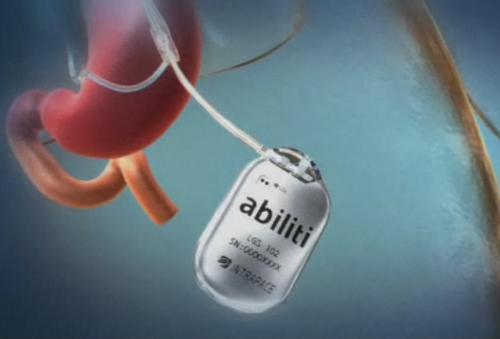
Obesity Shocker: Pacemaker Zaps Stomach Internally to Prevent Overindulging

Forget stomach stapling and lap band surgery. The next big thing in weight loss surgery may be the stomach pacemaker.
Designed by pacemaker manufacturer Intrapace, the abiliti stomach pacemaker is purportedly the first "intelligent" form of obesity intervention. Instead of simply constricting the stomach, the surgically-implanted pacemaker detects when a patient downs food or drink, and zaps the stomach with a series of electrical impulses to generate a feeling of fullness (the system utilizes the nerves around the stomach that signal fullness to the brain). As a result, patients eat less than they would normally.

Thursday, March 03, 2011

For Tendon Pain, Think Beyond the Needle

Two time-honored remedies for injured tendons seem to be falling on their faces in well-designed clinical trials.

The first, corticosteroid injections into the injured tendon, has been shown to provide only short-term relief, sometimes with poorer long-term results than doing nothing at all.
The second, resting the injured joint, is supposed to prevent matters from getting worse. But it may also fail to make them any better.
Rather, working the joint in a way that doesn’t aggravate the injury but strengthens supporting tissues and stimulates blood flow to the painful area may promote healing faster than “a tincture of time.”
And researchers (supported by my own experience with an injured tendon, as well as that of a friend) suggest that some counterintuitive remedies may work just as well or better.

Toward computers that fit on a pen tip: New technologies usher in the millimeter-scale computing era

Can Exercise Keep You Young?

Thursday, February 24, 2011

Wine in Two Words

Good post on wine tasting from Eric Asimov at the NYTimes!
Uvealblues
While it may seem heretical to say, the more specific the description of a wine, the less useful information is actually transmitted.
(..)
But the general character of a wine: now, that’s another matter. A brief depiction of the salient overall features of a wine, like its weight, texture and the broad nature of its aromas and flavors, can be far more helpful in determining whether you will like that bottle than a thousand points of detail. In fact, consumers could be helped immeasurably if the entire lexicon of wine descriptors were boiled down to two words: sweet or savory.

How to Make Oatmeal . . . Wrong

Raw oats with milk and honey is my favorite way!
Uvealblues

There’s a feeling of inevitability in writing about McDonald’s latest offering, their “bowl full of wholesome” — also known as oatmeal. The leading fast-food multinational, with sales over $16.5 billion a year (just under the GDP of Afghanistan), represents a great deal of what is wrong with American food today. From a marketing perspective, they can do almost nothing wrong; from a nutritional perspective, they can do almost nothing right, as the oatmeal fiasco demonstrates.
(..)
Like so many other venerable foods, oatmeal has been roundly abused by food marketers for more than 40 years. Take, for example, Quaker Strawberries and Cream Instant Oatmeal, which contains no strawberries, no cream, 12 times the sugars of Quaker Old Fashioned Oats and only half of the fiber. At least it’s inexpensive, less than 50 cents a packet on average. (A serving of cooked rolled oats will set you back half that at most, plus the cost of condiments; of course, it’ll be much better in every respect.)
(..)
Others will argue that the McDonald’s version is more “convenient.” This is nonsense; in the time it takes to go into a McDonald’s, stand in line, order, wait, pay and leave, you could make oatmeal for four while taking your vitamins, brushing your teeth and half-unloading the dishwasher. (If you’re too busy to eat it before you leave the house, you could throw it in a container and microwave it at work. If you prefer so-called instant, flavored oatmeal, see this link, which will describe how to make your own).
If you don’t want to bother with the stove at all, you could put some rolled oats (instant not necessary) in a glass or bowl, along with a teeny pinch of salt, sugar or maple syrup or honey, maybe some dried fruit. Add milk and let stand for a minute (or 10). Eat. Eat while you’re walking around getting dressed. And then talk to me about convenience.

Wednesday, February 23, 2011

Brain Reacts to Cellphones

Cellphone use appears to increase brain activity in regions close to where the phone antenna is held against the head, according to a new study, but researchers said the implications for health are still unknown.
(..)

The main concern is that radiation from phones could cause DNA mutations or changes to chemicals in the brain, leading to tumors or cognitive decline. But to date there is no known evidence that the frequency of the waves emitted from phones are powerful enough to cause such changes, according to Reto Huber, a professor at the University Children's Hospital Zurich who has published several studies on electromagnetic fields and cellphones but wasn't part of this latest study.
In Tuesday's study, researchers from the National Institutes of Health in Bethesda, Md., and Brookhaven National Laboratory in New York measured glucose metabolism—how much sugar a cell takes in to fuel activity—in the brains of 47 adults, the largest study of its kind to date.

Brains of Blind People Reading in Braille Show Activity in Same Area That Lights Up When Sighted Readers Read

ScienceDaily (Feb. 22, 2011) — The portion of the brain responsible for visual reading doesn't require vision at all, according to a new study published online on Feb. 17 in Current Biology, a Cell Press publication. Brain imaging studies of blind people as they read words in Braille show activity in precisely the same part of the brain that lights up when sighted readers read. The findings challenge the textbook notion that the brain is divided up into regions that are specialized for processing information coming in via one sense or another, the researchers say.

"The brain is not a sensory machine, although it often looks like one; it is a task machine," said Amir Amedi of The Hebrew University of Jerusalem. "A brain area can fulfill a unique function, in this case reading, regardless of what form the sensory input takes."

Tuesday, February 22, 2011

Tequila!


via Placebo Journal blog

Painful Shingles Can Strike More Than Once

Having shingles can be a miserable experience. Now, to make matters worse, the long-held notion that people can only get shingles once in their lives appears to be false, according to a study in the journal Mayo Clinic Proceedings this month. Link (WSJ)
(..)

The CDC has urged all Americans age 60 and older to get the shingles vaccine—whether they've had shingles or not. But supplies of the vaccine are on back order in some areas. Merck & Co., the only company that makes it, has encountered frequent supply problems since the vaccine was approved in 2006.
(..)
In rare cases, shingles has other serious consequences. Blisters can become infected. A rash on the face can spread shingles into eyes, which can lead to loss of vision, sometimes permanent. A rash around the ear can cause a complication known as Ramsey Hunt syndrome, which can include deafness and weakness of the facial muscles.
A big unknown is whether people who got the chicken-pox vaccine as children will be susceptible to shingles in later years or protected from it—or even vulnerable to full-blown chicken pox if their immunity has weakened. Since the chicken-pox vaccine was only approved in 1996, it will be several decades before the first generation of Americans to be widely vaccinated reaches the typical shingles years.

Grand Rounds is up at "The Covert Rationing Blog"

Lot's of good medical blogging at Grand Rounds hosted at the Covert Rationing Blog here
Uvealblues

Some of the highlights for me:

the pay for performance fiasco (and the impact on further erosion of the on going patient-physician relationship)

pay for performance and patient harm

bureaucrats and bioethicists

The reductive monotony of electronic medical records worsening patient notes

Snooky the Cat and the Metronome

A little humor to start your morning
uvealblues


via Dr. Mercola

Thursday, February 17, 2011

Why There's No Turning Back in the Middle East

Will history fail to turn in the Middle East? Will these protests in Yemen, Bahrain, Jordan and beyond peter out, and in a few years, will we look back at 2011 and realize that very little actually changed? It's certainly possible, but there are two fundamental reasons the tensions that have been let loose in the Middle East over the past few weeks are unlikely to disappear, and they encompass two of the most powerful forces changing the world today: youth and technology

Ecuadorean Villagers May Hold Secret to Longevity

People living in remote villages in Ecuador have a mutation that some biologists say may throw light on human longevity and ways to increase it.


The villagers are very small, generally less than three and a half feet tall, and have a rare condition known as Laron syndrome or Laron-type dwarfism. They are probably the descendants of conversos, Sephardic Jews from Spain and Portugal who were forced to convert to Christianity in the 1490s but were nonetheless persecuted in the Inquisition. They are also almost completely free of two age-related diseases, cancer anddiabetes.
(..)

The Laron patients’ mutation means that their growth hormone receptor lacks the last eight units of its exterior region, so it cannot react to growth hormone. In normal children, growth hormone makes the cells of the liver churn out another hormone, called insulinlike growth factor, or IGF-1, and this hormone makes the children grow. If the Laron patients are given doses of IGF-1 before puberty, they can grow to fairly normal height.
This is where the physiology of the Laron patients links up with the longevity studies that researchers have been pursuing with laboratory animals. IGF-1 is part of an ancient signaling pathway that exists in the laboratory roundworm as well as in people. The gene that makes the receptor for IGF-1 in the roundworm is called DAF-2. And worms in which this gene is knocked out live twice as long as normal.
The Laron patients have the equivalent defect — their cells make very little IGF-1, so very little IGF-1 signaling takes place, just as in the DAF-2-ablated worms. So the Laron patients might be expected to live much longer.
(..)
Dr. Longo said that some level of IGF-1 was necessary to protect against heart disease, but that lowering the level might be beneficial. A drug that does this is already on the market for treatment of acromegaly, a thickening of the bones caused by excessive growth hormone. “Our underlying hypothesis is that this drug would prolong life span,” Dr. Longo said. He said he was not taking the drug, called pegvisomant or Somavert, which is very hard to obtain.
A strain of mice bred by John Kopchick of Ohio University has a defect in the growth hormone receptor gene, just as do the Laron patients, and lives 40 percent longer than usual.

For Cold Virus, Zinc May Edge Out Even Chicken Soup

Thursday, February 10, 2011

Molecular discovery could lead to prevention of geographic atrophy

Lexington, KY—A team of researchers has discovered a molecular mechanism implicated in geographic atrophy that may lead to the development of ways to prevent the condition.
The investigators’ article, “DICER1 deficit induces Alu RNA toxicity in age-related macular degeneration,” was published online by the journal Nature on Feb. 6. The study also elaborates, for the first time, a disease-causing role for a large section of the human genome once regarded as non-coding “junk DNA.”
The team, led by University of Kentucky (UK) ophthalmologist Jayakrishna Ambati, MD, discovered that an accumulation of a toxic type of RNA, called Alu RNA, causes retinal cells to die in patients with geographic atrophy. In a healthy eye, a “DICER” enzyme degrades the Alu RNA particles.

Wednesday, February 09, 2011

What Is Synesthesia Like? Watch These Videos for a Taste

Fantastic videos in which artist Michel Levy, recreates what she sees when she listens to music.. link
(via Amy Capellazzo)

One from Michal Levy on Vimeo.

Pete Eckert – seeing without sight

A photographer with Retinitis Pigmentosa who takes amazing images...

Nice video at this link

Sunday, February 06, 2011

Wired Science News for Your Neurons Previous post Next post Video: Uncontacted Tribe in Brazilian Jungle


Video of an uncontacted tribe spotted in the Brazilian jungle has been released, bringing them to life in ways that photographs alone cannot.
The tribe, believed to be Panoa Indians, have been monitored from a distance by Brazil’s National Indian Foundation, a government agency charged with handling the nation’s indigenous communities. Many of the world’s 100 or so uncontacted tribes live in the Amazon.

A Loose Grip Provides Better Chemotherapy

ScienceDaily (Feb. 5, 2011) — Researchers at Case Western Reserve University have developed a little bomb that promises a big bang for cancer patients.
Preliminary tests show an anti-cancer drug loosely attached to gold nanoparticles starts accumulating deep inside tumors within minutes of injection and can be activated for an effective treatment within two hours. The same drug injected alone takes two days to gather and attacks the tumor from the surface -- a far less effective route.

Saturday, February 05, 2011

Water flea’s 31,000 genes top humans

The animal with the most genes—about 31,000—is the water flea, a near-microscopic freshwater crustacean. By comparison, humans have about 23,000 genes.
Water vision
“We were surprised to find the incredibly high level of complexity of the set of Daphnia vision genes,” says co-author Todd Oakley, an associate professor at the University of California, Santa Barbara. Oakley’s team focused on vision genes in the tiny creature.
“While humans have four light-sensing proteins (opsins), the Daphnia genome has 46 opsins,” says Oakley. “A possible explanation for this complexity is that Daphnia use these genes to understand the complex light regime of their aquatic environment.”

Thursday, February 03, 2011

Appendix: Apps for Free Calls to Regular Phones

I reviewed a bunch of apps (Google Voice, Skype, Line2 and so on) in the column. But in the hours since the column was posted online, readers have flooded my in-box to let me know about some other options. In some cases, these additional apps disprove my thesis that “there’s still no app that offers all three of these elements: free calls, to regular phone numbers, from your cellphone.”
Here, then, is an appendix to today’s column.

Forget Bombs, Dogs Can Now Smell Cancer

One Donor Cornea, Two Patients Helped: New Surgical Approach May Help Meet Demand for Donor Corneas

German researcher Claus Cursiefen, MD, also affiliated with Harvard School of Medicine, reports good results with a new surgical strategy that uses a single donor cornea to help two patients with differing corneal diseases. In the United States keeping pace with demand for donated corneal tissue for use in transplant surgery is a cause for concern, while in Europe and Asia shortages lead to treatment delays.

Wednesday, February 02, 2011

Taxi Driver Imitates Michael Jackson, Delights the Internet [VIDEO]

A Sharper Future for Retinal Implants

Researchers grow neurons on a photosensitive polymer hybrid.
(..)
A retinal implant restores vision by sending a signal from a video camera attached to a pair of glasses to electrodes implanted on the back of a person's retina. But the silicon or platinum components typically used to for the electrodes tend to produce images of limited quality, and can leave the retina scarred.
Organic semiconducting polymers are softer and more flexible than silicon, and they have useful mechanical and electrical properties, making them ideal for biomedical applications. In fact, they are already used in some medical devices such as glucose sensors and the electrodes that record neural activity in the brain. Researchers at the Italian Institute of Technology have now shown how organic polymer could be used to make better electrodes for retinal implants.
One of the first possible applications for a polymer-neuron interface could be in optogenics, says Guglielmo Lanzani, a professor at IIT who led the research, which is published in the January 18 issue of Nature Communications. "Our short-term goal was to establish communication between an [organic] semiconductor and a neuron," says Lanzani. 
Related Posts with Thumbnails

ShareThis