Monday, December 31, 2012


Sunday, December 30, 2012
The Future of Medicine Is Now
From cancer treatments to new devices to gene therapy, a look at six medical innovations that are poised to transform the way we fight disease
Thursday, December 27, 2012
Who’s the next Ravi Shankar?
The legendary sitarist is gone, but legions of Indian performers have taken up his torch as world music ambassadors VIDEO

Wednesday, December 26, 2012
Why Persuasion is an Art, Not a Science
There is over 60 years of research into behavioral science and managers and executives should learn to use these tools to drive profits says Steve Martin, a director and behavior expert at consultancy Influence at Work.
Sunday, December 23, 2012
Radical Stem Cell Treatment Saves Man's Sight
A year ago, Canadian Taylor Binns was slowly going blind after developing a rare and painful eye disorder that affected his corneas. Today, he's driving, reading and living a normal life because of a revolutionary stem-cell treatment completed by a team of doctors at Toronto Western Hospital.
 Link
Link

Thursday, December 20, 2012
Slavery's Global Comeback
There are now twice as many people enslaved in the world as there were in the 350 years of the transatlantic slave trade.
Link

Link

Monday, December 17, 2012
The Power of Concentration
Though the concept originates in ancient Buddhist, Hindu and Chinese traditions, when it comes to experimental psychology, mindfulness is less about spirituality and more about concentration: the ability to quiet your mind, focus your attention on the present, and dismiss any distractions that come your way. The formulation dates from the work of the psychologist Ellen Langer, who demonstrated in the 1970s that mindful thought could lead to improvements on measures of cognitive function and even vital functions in older adults.
Now we’re learning that the benefits may reach further still, and be more attainable, than Professor Langer could have then imagined. Even in small doses, mindfulness can effect impressive changes in how we feel and think — and it does so at a basic neural level.
In 2011, researchers from the University of Wisconsin demonstrated that daily meditation-like thought could shift frontal brain activity toward a pattern that is associated with what cognitive scientists call positive, approach-oriented emotional states — states that make us more likely to engage the world rather than to withdraw from it.
Aerobic exercise trumps resistance training for weight and fat loss
Aerobic training is the best mode of exercise for burning fat, according to Duke researchers who compared aerobic training, resistance training, and a combination of the two. The study, which appears Dec. 15, 2012, in theJournal of Applied Physiology, is the largest randomized trial to analyze changes in body composition from the three modes of exercise in overweight or obese adults without diabetes.
(..)
Aerobic exercise was also a more efficient method of exercise for losing body fat. The aerobic exercise group spent an average of 133 minutes a week training and lost weight, while the resistance training group spent approximately 180 minutes exercising a week without shedding pounds.
The combination exercise group, while requiring double the time commitment, provided a mixed result. The regimen helped participants lose weight and fat mass, but did not significantly reduce body mass nor fat mass over aerobic training alone. This group did notice the largest decrease in waist circumference, which may be attributed to the amount of time participants spent exercising.
Friday, December 14, 2012
The Science of Our Optimism Bias and the Life-Cycle of Happiness
“If I expect as little as possible, I won’t be hurt,”Susan Sontag famously wrote in her diary. And yet we’re wired to expect a lot — and to expect great things. So argues neuroscientist Tali Sharot in The Science of Optimism: Why We’re Hard-Wired for Hope — a short, absorbingTED Book summarizing Sharot’s own research, as well as that of others in the field, using a combination of neuroimaging and behavioral science to explore why we’re “more optimistic than realistic,” what this might mean for our everyday well-being, and whether it’s due to the specific architecture of our brains.

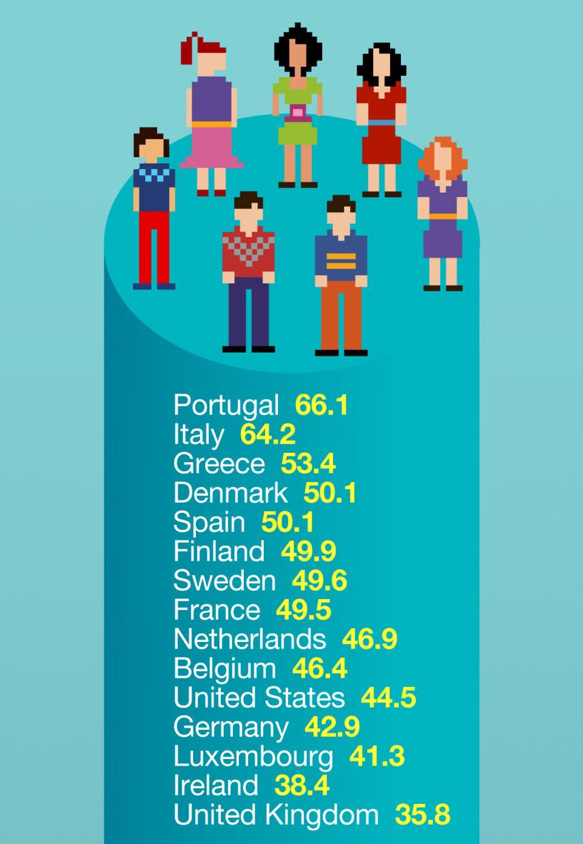
Lowest points of happiness by country...
LinkThree Crucial Ways To Motivate Yourself To Do Anything
I don’t want to write this. I want to go back to bed and sleep for a month.
How do you get motivated when you just don’t feel it?
Read more: http://feedproxy.google.com/~r/bakadesuyo/~3/vbeOyz0gLeo/#ixzz2F2YCGlqJ
Eyewire: a citizen science quest to map the connectome
t’s time to mobilize a global community of citizen neuroscientists to trace the 3D structure of J Cells and understand how retinal connectomes relate to visual perception. — Eyewire
MIT’s Seung Lab has released EyeWire, which will enlist “citizen scientists” to to map the 3D structure of neurons by analyzing nanoscale brain images using web browsers and mobile devices.

10 facts on the state of global health
Collecting and comparing health data from across the globe is a way to describe health problems, identify trends and help decision-makers set priorities.
Studies describe the state of global health by measuring the burden of disease – the loss of health from all causes of illness and deaths worldwide. They detail the leading causes of deaths worldwide and in every region, and provide information on more than 130 diseases and injuries across the world
Wednesday, December 12, 2012
Tuesday, December 11, 2012
Repair damaged eyes with stem cell discs
Engineers have developed a new technique to graft a biodegradable disc loaded with stem cells onto damaged eyes.
 Link
Link

Monday, December 10, 2012
In Girl’s Last Hope, Altered Immune Cells Beat Leukemia
Desperate to save her, her parents sought an experimental treatment at the Children’s Hospital of Philadelphia, one that had never before been tried in a child, or in anyone with the type of leukemia Emma had. The experiment, in April, used a disabled form of the virus that causes AIDS to reprogram Emma’s immune system genetically to kill cancer cells.

The treatment very nearly killed her. But she emerged from it cancer-free, and about seven months later is still in complete remission. She is the first child and one of the first humans ever in whom new techniques have achieved a long-sought goal — giving a patient’s own immune system the lasting ability to fight cancer.
(..)
To perform the treatment, doctors remove millions of the patient’s T-cells — a type of white blood cell — and insert new genes that enable the T-cells to kill cancer cells. The technique employs a disabled form of H.I.V. because it is very good at carrying genetic material into T-cells. The new genes program the T-cells to attack B-cells, a normal part of the immune system that turn malignant in leukemia.
The altered T-cells — called chimeric antigen receptor cells — are then dripped back into the patient’s veins, and if all goes well they multiply and start destroying the cancer.
The T-cells home in on a protein called CD-19 that is found on the surface of most B-cells, whether they are healthy or malignant.
Sunday, December 09, 2012
The iPad as a Hand-Held Darkroom
To transfer the photos from your camera, you plug a connector into the base of your iPad, connect your camera with a USB cord, then turn the camera on. The iPad will detect that the device is connected and allow you to select which images you would like to import. It’s quicker than a Polaroid.
The immediacy of digital has pushed photographers to want to edit their photos and then share them right away. A number of applications allow you to do this, some free and some costing as much as $20.
For a list: Link
Do Schools Kill Creativity?
This is the most viewed TED talk with over 20 million downloads in over 150 countries, and continues to be downloaded over 10, 000 times a day..
There are two main themes in the talk. First, we're all born with deep natural capacities for creativity and systems of mass education tend to suppress them. Second, it is increasingly urgent to cultivate these capacities -- for personal, economic and cultural reasons -- and to rethink the dominant approaches to education to make sure that we do. One reason the talk has traveled so far is that these themes resonate so deeply with people at a personal level. I hear constantly from people around the world who feel marginalized by their own education.
(..)
There are two main themes in the talk. First, we're all born with deep natural capacities for creativity and systems of mass education tend to suppress them. Second, it is increasingly urgent to cultivate these capacities -- for personal, economic and cultural reasons -- and to rethink the dominant approaches to education to make sure that we do. One reason the talk has traveled so far is that these themes resonate so deeply with people at a personal level. I hear constantly from people around the world who feel marginalized by their own education
Link
There are two main themes in the talk. First, we're all born with deep natural capacities for creativity and systems of mass education tend to suppress them. Second, it is increasingly urgent to cultivate these capacities -- for personal, economic and cultural reasons -- and to rethink the dominant approaches to education to make sure that we do. One reason the talk has traveled so far is that these themes resonate so deeply with people at a personal level. I hear constantly from people around the world who feel marginalized by their own education.
(..)
There are two main themes in the talk. First, we're all born with deep natural capacities for creativity and systems of mass education tend to suppress them. Second, it is increasingly urgent to cultivate these capacities -- for personal, economic and cultural reasons -- and to rethink the dominant approaches to education to make sure that we do. One reason the talk has traveled so far is that these themes resonate so deeply with people at a personal level. I hear constantly from people around the world who feel marginalized by their own education
Link
The Power of Negative Thinking
Both ancient philosophy and modern psychology suggest that darker thoughts can make us happier
Fortunately, both ancient philosophy and contemporary psychology point to an alternative: a counterintuitive approach that might be termed "the negative path to happiness." This approach helps to explain some puzzles, such as the fact that citizens of more economically insecure countries often report greater happiness than citizens of wealthier ones. Or that many successful businesspeople reject the idea of setting firm goals.
(..)
Just thinking in sober detail about worst-case scenarios—a technique the Stoics called "the premeditation of evils"—can help to sap the future of its anxiety-producing power. The psychologist Julie Norem estimates that about one-third of Americans instinctively use this strategy, which she terms "defensive pessimism." Positive thinking, by contrast, is the effort to convince yourself that things will turn out fine, which can reinforce the belief that it would be absolutely terrible if they didn't.
(..)
But the pro-goal consensus is starting to crumble. For one thing, rigid goals may encourage employees to cut ethical corners. In a study conducted by the management scholar Lisa Ordóñez and her colleagues, participants had to make words from a set of random letters, as in Scrabble. The experiment let them report their progress anonymously—and those given a specific target to reach lied far more frequently than those instructed merely to "do your best."
Goals may even lead to underachievement. Many New York taxi drivers, one team of economists concluded, make less money in rainy weather than they could because they finish work as soon as they reach their mental target for what constitute a good day's earnings.

(..)
The ultimate value of the "negative path" may not be its role in facilitating upbeat emotions or even success. It is simply realism. The future really is uncertain, after all, and things really do go wrong as well as right. We are too often motivated by a craving to put an end to the inevitable surprises in our lives.
This is especially true of the biggest "negative" of all. Might we benefit from contemplating mortality more regularly than we do? As Steve Jobs famously declared, "Remembering that you are going to die is the best way that I know to avoid the trap of thinking you have something to lose."
To Yelp Or Not To Yelp? Lawsuit Puts The Chill On Bad Reviews
The next time you're about to post a scathing review of a business on a site like Yelp or Angie's List, you might want to think twice.
This week, a housing contractor named Christopher Dietz sued a former customer for $750,000 in defamation charges for what she wrote in a review on Yelp.
Jane Perez wrote that there was damage to her home and that jewelry was missing after she'd had work done from Dietz's company, Dietz Development LLC.
On Thursday, a judge took the unusual step of ordering Perez to take down parts of those reviews.
(..)
The lawsuit itself, Goldman says, is a reminder that even though we have the freedom to voice our opinions on the Internet, we also own those words and can be held responsible for them.
"Most people don't realize that they're betting their house ... every time they put their opinions out into the public discourse," he says. "When people realize that, it becomes incredibly inhibiting."
Link
Link
Subscribe to:
Posts (Atom)


 Posts
Posts


