Wednesday, September 12, 2007

Drugs Banned, Many of World’s Poor Suffer in Pain

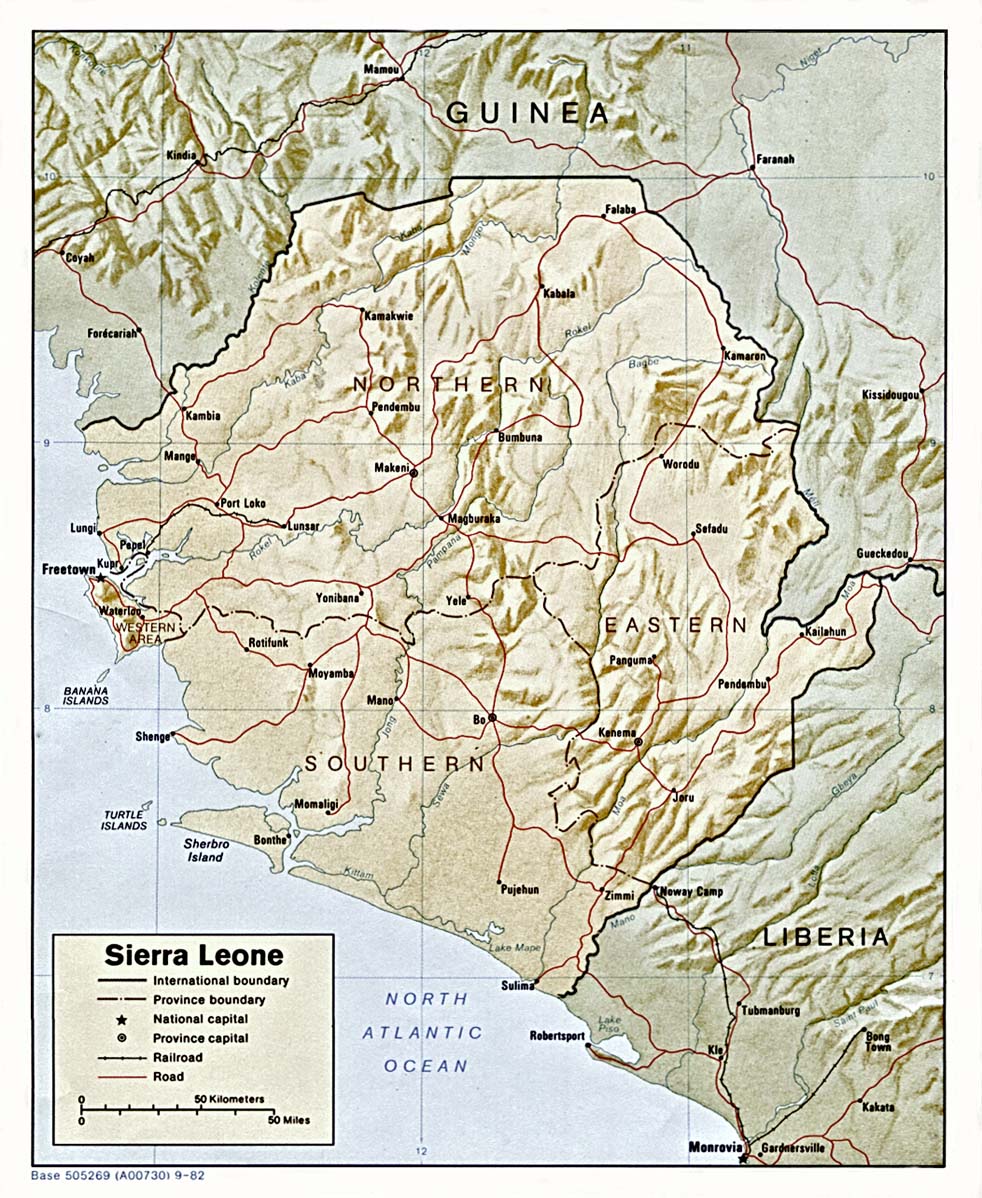
This article sheds light on the abysmal state not only of pain management but of the entire health system in places like Sierra Leone. When I was there last Fall, I was surprised to find that the country had not had an electricity for >40 years. Even the hospitals I visited depend on generators. However, most of the hospitals I visited either did not have functioning generators or could not afford the petrol required to run them. I visied the "ICU" in Kissey Hospital in Freetown, where there was a single patient being fanned by his relative. He had a high fever and was delirious. He had no I.V. nor monitors hooked up. The nurses said there were no bags of saline etc.. for the I.V. The monitors hadn't worked in years. Anyway, the generators weren't working. I asked the nurse what then made this and "ICU?" She repllied, there are two nurses per patient.....


Like millions of others in the world’s poorest countries, she is destined to die in pain. She cannot get the drug she needs — one that is cheap, effective, perfectly legal for medical uses under treaties signed by virtually every country, made in large quantities, and has been around since Hippocrates praised its source, the opium poppy. She cannot get morphine.

That is not merely because of her poverty, or that of Sierra Leone. Narcotics incite fear: doctors fear addicting patients, and law enforcement officials fear drug crime. Often, the government elite who can afford medicine for themselves are indifferent to the sufferings of the poor.
(..)
At pain conferences, doctors from Africa describe patients whose pain is so bad that they have chosen other remedies: hanging themselves or throwing themselves in front of trucks.

Westerners tend to assume that most people in tropical countries die of malaria, AIDS, worm diseases and unpronounceable ills. But as vaccines, antibiotics and AIDS drugs become more common, more and more are surviving past measles, infections, birth complications and other sources of a quick death. They grow old enough to die slowly of cancer.

About half the six million cancer deaths in the world last year were in poor countries, and most diagnoses were made late, when death was inevitable. But first, there was agony.
(..)
When he first saw her, her tumor was wrapped with clay and leaves prescribed by a local healer. The smell of her rotting skin made her feel ashamed.

She had seen a doctor at one of many low-cost “Indian clinics” who pulled at the breast with forceps so hard that she screamed, misdiagnosed her tumor as an infected boil, and gave her an injection in her buttocks that abscessed, adding to her misery.

Nothing can be done about the tumor, Mr. Lewis explained quietly. “All the bleeders are open,” he said. “Her risk now is hemorrhage. Only a knife-crazy surgeon would attend to her.”

Earlier diagnosis would probably not have changed her fate. Sierra Leone has no CAT scanners, and only one private hospital offers chemotherapy drug treatment. The Sesays are sharecroppers; they have no money.

Quote of the Day

"Prayer is our humble answer to the inconceivable surprise of living."
Rabbi Abraham Joshua Heschel

Monday, September 10, 2007

A Global Coalition of Good

Dr. Tabin gets recognized by Dr. Jeffrey Sachs,the famous economist from Columbia and author of "The End of Poverty" in this week's Time magazine. According to the statistics below, Dr. Tabin and his team saw over 650 patients a day!!!

Geoffrey Tabin, an accomplished American ophthalmologist, sent me an e-mail recently reporting on the week he spent in a poor village in Ghana, in West Africa. "We examined 4,600 people and documented their visual status, refractive errors and any pathology or disease," he wrote. "We gave spectacles to all who needed glasses and gave away 500 pairs of reading glasses. My retinal partner and I performed 159 cataract surgeries. All of the patients were seen one week postoperatively. There were no infections or serious complications."

Sunday, September 09, 2007

The Note That Makes Us Weep


A PUBLICIST long ago gave Luciano Pavarotti the sobriquet King of the High C’s, for his remarkable ability to hit and sing the heck out of one of the highest notes of the tenor voice.
(..)
The tenor high C has a long and noble tradition, and a healthy dose of mystique.
“It’s the absolute summit of technique,” said Craig Rutenberg, the Metropolitan Opera’s director of musical administration — in effect, its chief vocal coach. “More than anywhere else in your voice, you have to know what you’re doing. To me it signals a self-confidence in the singer that lets him communicate to us that he knows what he’s doing and he has something very important to express with that note.”
(..)
“The reason it’s so exciting to people is, it’s based on the human cry,” said Maitland Peters, chairman of the voice department at the Manhattan School of Music. “It’s instinctual. It’s like a baby. You’re pulled into it.” When a tenor sings a ringing high C, it seems, “there’s nothing in his way,” Mr. Peters said.
(..)
Mr. Pavarotti once described the feeling this way: “Excited and happy, but with a strong undercurrent of fear. The moment I actually hit the note, I almost lose consciousness. A physical, animal sensation seizes me. Then I regain control.”

Saturday, September 08, 2007

Vitamin A Fortified Cooking Oil

This potentially seems like a great solution to Vit A deficiency which depresses immune function and is particularly relevant to measeles infection. Vit A deficiency in itself is a leading cause of developing world blindness.

HKI Announces $2.7 million multi-partner public/private initiative to produce vitamin A-fortified cooking oil in eight countries in West Africa.

Fortifying cooking oil with vitamin A has proven to be effective, widely-accepted, sustainable and low cost. Approximately 70% of the target population, including children, consume industrially processed oil. The cost of fortification per liter is only 1 cent, an imperceptible increase to the consumer since cooking oil prices normally experience slight seasonal variations.

Back Home

Well, Devin and I finally made it home last night. Perhaps the best part of the flight to JFK was the final approach when we hit major turbulence. Let me explain.

There was a large section in the middle of the airplane with many Nigerian children. They were whooping,hollering, and laughing as the airplane lurched up and down and sideways. To them it was like being on a roller coaster. Even though we were about 10-15,000 feet above ground, or so I judged looking out the window, they were oblivious. The joy that these kids were having made all the adults on the plane smile and erased the normal anxiety one might feel when one suddenly finds one's stomach in one's throat. When we landed the kids were absolutely ecstatic! I had never experienced anything like it on the numerous flights I have taken in the past. It was a great reminder of the vibrant character of Nigeria and its people.

Thanks to ORBIS INTERNATIONAL for a very successful trip!

Thursday, September 06, 2007

Lagos Airport


The airport

9pm--After saying "Goodbye" (with some difficulty) to Ahmed and Amelia, we started the arduous process of going through the Nigerian check-in procedure. There were a total of 8 checkpoints that I can remember, including one where I was told that I had committed a grave error by not checking in my wooden statues with the Museum of National Antiquities.The two guards simultaneously, as if on cue, pointed to a rickety wooden sign which appeared to be at least 100 years old and hung askew on a concrete pillar behind them, stamped with the same message. The flimsy wooden tablet, crookedly hanging reflected,at least in my mind, the level of the gaurd's true concern about the two statues they had unearthed in my suitcase. I could tell that they had done this act before. I had never heard of the Museum of Natural Anquities. In fact I wasn't sure that such a museum existed. I wasn't sure where the gaurds were going with this, so I played it cool and they eventually let me go, despite my "sin."

10:30 pm--we are at the Boarding Gate, after going through our final 2 security checks. The fatigue starts to set in as Devin, Sandy, and I plop down on the blue metal benches. My mind a bit of a mush by this point, is easily distracted as my eyes wander over the boarding area. I am transfixed by multiple protuberant 2" inch high black pieces of rubber protruding from and screwed into the tile floor every few feet. Other than testing feet to eye coordination, what function could these multiple rubber stoppers serve? Perhaps an artistic attempt to simulate mushrooms at the boarding gate? Part of the randomness...

My sense of relaxation slowly starts to erode as our scheduled boarding time passes without comment from the staff of North American Airlines. I wonder why an airline that serves North Africa, with its fleet of 10 planes as claimed (Devin and I thought they surely had only one plane), would name itself "North American Airlines." Are they are trying to emulate our airlines not only in name but also consistent delays?

1:45pm--2 hours past the scheduled boarding time, and an employee at the Gate announces cheerily and sharply--in the tone of a bugle call and with the ubiquitous smile of Nigerians: "North American Airlines Flight 134" is having mechanical problems. We are working on it." Well at least we finally know why we are delayed, but there is no indication if or when the problem might be resolved.

Fortunately and inexplicably, Devin's cellphone, a Samsung Blackjack, is working for the first time since the beginning of this trip. This is a rather exciting development. Unfortunately we can't figure how to get the "+'"sign for international calls to come up. Devin recalls that he was able to text message his wife, Laurie, last week without the plus sign. So we try and text Laurie as well as Dolores Craig, travel arranger for Orbis based in New York City. The dice don't roll our way however, as the error messages abound from the Blackjack.

After numerous unsuccessful texting attempts, I decided that I must get into a zen relationship with the cryptic keyboard and "play" the Blackjack, instead of it playing me--like Einstein riding the photon to come up with his Theory of Relativity, E=MC2. Entering into a trance-like state, clarity strikes as I mentally ride the GSM bandwidth..I see what I must do to materialize the '+" sign on the keyboard--the mark of cultural literacy among the international cognescti and the culturally hip..."Ah ha" I exclaim as I push on zero and count to three.
Sandy, thinking that we have received a text message on our communication device, promptly stands up to walk over. At precisely this same moment, a large African flying insect flys right by Sandy's nose at rapid velocity, nearly knocking her glasses off and setting her back down in its wake.Another example of the random nature of the day.

+ sign leading the way, we are able to call Dolores Craig's contact number based on the information given us by Amelia..but unexpectedly we get someone other than Dolores on the other end. After a bit of oblique conversation (I don't want to say I am calling from Lagos, Nigeria as this could raise suspicion and result in her hanging up. She is our lifeline to Ms. Craig-must keep her on the line). We determine that I am calling Dolores Craig's friend. She puts me on hold and tries to call Dolores' cell phone. Given inernational cellphone calling rates, it is decided that she will keep trying to call Dolores and have her call us. Wait 20 minutes but don't hear back. We are in a bit of a dilemma as we don't want to bother Ms. Craig,, and don't want to bother Ahmed and Amelia who are both asleep in the "Hardly Suites" (true name) as they have worked so unbelievably hard for the Orbis team since we have been here the past two weeks.

Tonight probably represents the first night of real sleep for them. However, we do want to get on the next flight, which is a Virgin Atlantic Flight in the morning. lest we be stranded in Lagos, officially rated as the worst airport on the Earth, for an indeterminate amount of time. Our anxiety partially stems from difficulties another Orbis team member, Alicia, had in getting back to the States after missing a flight. (Of course she was flying from Nigeria to Columbia--two countries that are not exactly on the "no crime" radar of international transport authorities). The other concern of course is the connecting flights from New York to each of our individual destinations. We process all the options and resolve to relax and wait a bit longer.


Around 2:30 am we suddenly note large plumes of black smoke coming from the front door of the plane. Images of our airplane exploding into a ball of flames rush in as we rush over to the window to get a better view. We can see that it is actually petrol fumes comng from a large portable generator adjacent to the plane. Whew--big sigh of relief, sort of...I mean the airline surely wouldn't purposely allow such a visible anxiety-provoking "smoking" of the plane on purpose. The large clouds of black smoke keep recurring. There must be something terribly wrong and out of control. I could be wrong but I don't think that an American based airline would allow billowing clouds of black smoke to envelop a plane as the passengers-to-be looked on. Might..I don't know..make one think twice about boarding....Confidence levels indeed drop precipitously and I can hear the faint murmur of discontent growing increasingly audible as more and more passengers are pulling out their cell phones and trying to control the escalting sense of alarm --" Book me on the Virgin Air flight tomorrow am" seems to be the identical theme of these multiple conversations--an idea we have been considering as well--Now we are thinking that there will be a direct correlation to the availability of the Virgin flight seats and the height and duration of the black smoke continuing to envelop our vessel of return to the New World.

Devin and Sandy both seem content to wait a bit longer, while my fingers, holding the Blackjack,are itching to call Amelia and Ahmed--our "special ops."

3:00 am-- Devin makes the comment: "This is looking worse." As the word "worse" is being formed by his buccal cavity and not even vocalized yet, my fingers are already calling Ahmed's number. I wake the poor guy out of a deep sleep--pretty much as I expected I would, and explain the situation. He, as consistently as ever, responds with great kindness as he simultaneously and quickly throws off the mantle of sleepiness to jet into a "high alert" state of consciousness.
He will book flights on Virgin for us through the internet. He rapidly fires instructions:
"Find a local Nigerian phone as phone calls from Devin's U.S. sim card phone will be too expensive. In the event your flight does take off leave your phone on until the last minute before take off. On arrival to JFK check your email to find your new connecting flight information. I will call Amelia immediately after we hang up to enlist her assistance in obtaining seats. We will continue to contact Dolores as well."

I am marveling at his (and Amelia's) ability to yet again instantaneously shift into crisis solving mentality as I take mental notes on the above. I am sure that he either was totally unconscious from fatigue or dreaming of meeting up with his wife and two beautiful children in Cairo tomorrow when he received my call. Unbelievable people he and Amelia are. I feel much better, having these guys on our sides.

3:10am--Good news. An airplane representative (different one this time), crisply, happily, and authoritatively announces that everyone can now get on the plane. The whoops of excitement give way to a mad rush to the boarding gate. I call Ahmed and Amelia to tell them the seemingly good news. Ten minutes elapse... and we start to see the passengers stream back from the boarding gate--off the plane! The previous murmurs of frustration have now reached full shouting level as people retake their seats in the boarding gate area. The potential for the scene to get ugly starts to rear its head. We inform Ahmed of the latest development. By this time it is nearly 4:00am. Ahmed says he and Amelia are just going to come to the airport! Wow!!! I cannot believe the sacrifice and dedication of these guys. In fact I am so struck by their dedication to our welfare that this sentiment not only ameliorates but even supercedes any anxiety about how and when we will get back across the Atlantic.

Around 4:30am another airline employee in the same sort of stilted and Nigerian accented, cheerful delivery announces "North American Ailines Flight 431 will now begin boarding!." Surreally, there is no reference to the previous aborting attempt, nor explanation of why there has now been a 4 and 1/2 hour delay. At this point a few intrepid passengers tentatively head on to the boarding ramp; others, whose anxiety has now been combined with a liberal dose of indignity have to practically be coaxed to get on the plane--a total reversal of the chaotic boarding process that is usually the case for flights in the developing world and which occured on the first boarding attempt.

Once all the passengers, collectively bound by a huge leap of faith in the airline (and an astounding ability to shut out visions of aviation disaster) are on the plane, a very high-pitched whirring sound followed by staccato, grating "knife like" sounds (reminiscent of a horror movie soundtrack) rises to incessantly pound our eardrums at very high volumes. These are not the normal sounds associated with an airplane starting up--more akin to what might imagine--"mechanical failure" to sound like. I wonder if we are unknowing participants in a psychological experiment to see how much toruture can be administered to prospective passengers and still have them board the plane...

The captain gets on the P.A. and mumbles something which basically sounds like "blah, blah, blah" to me--something about the need to replace a battery. I am thinking that is really weird. Is it like jump-starting your car? Pull out the jumper cables, attach to monster generator, and if the battery doesn't start, run down the local Sears store for a replacement? Where do you get a replacement battery for a jet at 3am in Lagos, Nigeria? I don't know. Are my sleep-deprived neurons are at this point lacking in coherent connectivity, or I am in the set of the next movie version of "Airplane." Obsessing over whether or not key neurotransmitters levels are depleted or whether I really am a character in a slapstick comedy and just don't know it, I settle into my seat, next to Devin. (Nurse Sandy, due to an error at the scheduling gate, is not seated with us. Another random absurdity, as she was standing with me at the ticket counter, plainly visible to the ticketing agent when I announced that "all three of us would like to be seated together. Several minutes later (security check #5 out of 10 I believe it was) we did notice that she had been assigned a seat far from us. We felt that in the overall scheme of things, it was a minor inconvenice. Little did we know that was a sign--a sign; yes (sigh), a sign...)

We settle in, and Devin, peering through the window, notes that the airplane is unable to taxi backwards. A vehicle is called in to the runway to tow this tube of steel in which we will be hurtling over the Atlantic during the next 11 hours... backwards... Now the pilot is testing the wing flaps. Up, down, up, down--feel like I am watching a marionette show. Is the Captain really going through a safety check, or is he a really happy guy having fun? Is it hot in here of are my just catecholaminses just a little ramped? . Actually, at this point the butterflies in my stomach can't be roused --they have all gone to sleep. Some part of my consciousness, which is going up and down in rhythm with the wing flaps, and in parallel with my nodding head, keeps saying in a soothing manner "Relax, this is all a dream."

The Captain interrupts my slumber to cheerily announce in the exuberant tone that has become a trademark of this airlines, "We are almost ready to go...We just have to wait for paperwork in order to document the previous problems." Heavens to Betsy--Paperwork? Yes he said, "paperwork." "Can't you see that we are weary, hungry, sleep-deprived and..and...and... smell bad" I want to say. Well I for one sure am glad that we are committed to protocol. Definitely agree that we wouldn't want to say start out 5 hour delayed/11 hour journey without filling out the paperwork.... After all what possibly could be more important right now? Surely not 300 passengers mentally and physically fatigued, bordering on the edge of lunacy... and on track to miss all our connecting flights " from J.F.K.. "Should only be another 10 or 15 minutes to get that paperwork!" the same voice cheerily announces. Do they have some kind of Happy acoustical filter in the P.A. system, or is the Captain just a little too out of touch with reality for all of our good I wonder as I slump down into my seat, not quite yet in a foetal position..

Fianlly the plane starts to move in fits and starts. Or am I just imaging this as I dazedly gaze out the airplane window. It is real. The plane is picking up speed.
At 5:15 am, a "slight delay" from the 11:45 pm scheduled time, we are lifiting off....

Monday, September 03, 2007

The Waterfall streaming down the cliff

The Waterfall

We had breakfast and said "Bye" to Alicia, who was planning to fly back early to Bogota.

Ahmad and I did a live television interview with Dr. Ezepue on the NT national television station about ORBIS and the symposium. We took calls as well--the first caller was an irate gentlemen, upset that live broadcasting of the under 17 soccer world cup had been interrupted. No more call were taken after that. The first call notwithstanding, the interview went fantastic with discussions centering on eyebanking, early ophthalmologic exams for new onset eye symptoms, and acknowledgement of the enthusiasm of the local ophthalmologists. Ahmad also did a great job informing everyone of the purpose and history of Orbis, leading into an overview of the success of this mission.

We then came back and changed out of our jackets and ties. Devin, Ahmad, Amelia and I went with a male resident and a female consultant, Dr. Ezegwui, and her three kids to a "waterfall." But before we left, I asked the front desk attendant why he had was wearing two ties. He explained that there was about to be a wedding and he was trying to help the best man get his tie on. He implored us to help. Feeling sympathetic and a bit of wonderment at the proximity of the tying of the tie to nuptialization, Ahmed and I went to work helping these chaps out. It was a nice exchange and we were happy to help the groom try and match the sartorial style and elegance of his bethrothed (who we saw later that day).

Back to the hike--described to Amelia and Ahmad in minimal terms as a half hour walk across flat terrain. It actually turned out to be much more than this.

As our vehicle turned and headed into the densely vegetated forest; Ahmed, after a period of silence, inexplicably to me brought up a random comment about the foilage at the Monastery being a great place for war! "The dense foilage would provide many hiding places," he elaborated.. in response to my gaze of puzzlement. My question was "But what brought war to your mind; we are in a monastery?" "Eventually to bring balance and hoping that the tears in Ahmed's eyes (as well as the rest of us) were those of laughter and not hurt, I thought a little levity and more gravitas was in order. Thus, I been enquiring of the male resident about the Biafran war and acknowledging (on Ahmad's behalf) this jungle would truly be a great place to have a war. After a quick review of the history of the Biafran war, Ahmed , not surprsingly I guess, gave a full account of the details of the war. Completely confused as to how Ahmed knew so much about the Biafran was, I was nonetheless quite impressed. We were still chuckling several minutes later as the bus came to a halt inside the monastery grounds, at which point Amelia promptly noted that she "had to go to the bathroom." I chivalrously pulled out a travel pack of mini Kleenex for her. Grasping it with great gratitude, she hurriedly headed into an unpopulated area to find a spot. The male resident accompanied her to scout out a place. As they disappeared into the distance, the resident asked her in a mattter-of -fact tone if she had to "pee or poo." As she related later, " I thought the question was a little personal. But after regaining my composure, I replied."Pee." A suitable spot was found. Business was accomplished and we began our nice "Sunday stroll."


Uh actually ...a bit different .... Though it started out like a scene out of the "Sound of Music" (in Africa) as originally envisioned, the nature of the terrain began changing. The path started getting steeper. Vines formed natural steps. The green bushes started getting closer on either side. The firm ground gave way a bit more...There were many Nigerians on all sides of us, engaged in purposeful walk and excited talk. They were moving at a rather rapid clip and a bit more focus than I would associate with a "relaxing stroll" Every once in awhile we would pass somebody drenched and excitingly shouting "The Water. The Water." I am thinking "Oh okay, it seems that you might actually be able to duck your head under the Fall." As we kept advancing we encountered increasing numbers people of all ages were singing and laughing and talking excitedly as we made our way down a muddy path. Enjoying the beautiful harmonies and polyrhythmic singing, we stopped suddenly. We had reached a 3 feet creek, with about 6 inches of water. The forward momentum of the Orbis group came to an abrupt halt. We glanced down at the stream and at everyone taking their shoes off in order to traverse it . Luckily for me, earlier the male resident had noticed my black leather dress shoes and had insisted on buying me a set on Nigerian flip-flops--this despite Amelia's protestations that I should have to "muddy my shoes to learn my lesson"--something about packing right.... We had even bought an extra pair of bright green (with design) slippers for Ahmad. But he was insistent on wearing his black leather shoes. Everyone else had appropriate hiking footwear.

Realizing at this point that this hike might take on a different character than originally expected, we each made an individual calculation as to whether or not to take our shoes off and go on, or just turn around--to perhaps go past "the point of no return." The residents who were with us had never gone past this point, so really couldn't help in our decision either. As I was pondering the possibilites of schistosomiasis, onchocerciasis, and other parasites that might be residing the water, I looked up and saw that Devin and Amelia had made the decision for the group. Ahmad and I rolled off up our pants, took off our shoes, vanquished thoughts of tropical parasitemia as we crossed to join our barefoot buddies.

Sensing no acute signs of parasitic infection, we marched forward on the dirt path--passing large "trains" of people coming the other side. Some were carrying jugs of water, considered holy, on their heads as we passed their smiling faces. Others were excitedly telling us about the water. I couldn't really understand the details of these passing conversations, but started to realize that this hike could indeed be completely different than imagined.

We then came to a river bed at the mouth of a canyon. The canyon walls at least 100 feet high and insinuating did not allow a further look as to what lay ahead. Realizing this was our last chance to turn back...we hesitated. In the space of the hesitation, it was clear that we were surrounded by very, very happy Nigerians, singing, dancing and praying. No one seemed to be wretching, writhing, or showing other signs of sickness. Having "boldly"surmounted our first creek, we felt rather intrepid--ready to handle the river (and whatever lurked beneath). As we sloshed through the river of various depth from 6' to 3 feet, we started feeling a childhood sense of joy from doing something we weren't planning on doing. All around, behind, in front and on the side of us people were walking with us. Amelia, as usual, was making friends with many of the Igbo people around us.

Turning through dark caverns, with water sliding down the walls beside us, we were in communion with hundreds of Igbo Nigerians singing and laughing and dancing and praying and soaking up the water. The turns were rather abrupt and I lost sight of our fearless leader, Devin. Knowing he was leading the charge we kept marching forward, occasionally, okay more than occasionally, wincing with pain from stepping on the steep rocks invisible under the flowing water. The flowing water and the flowing people kept us moving forward in a near-hypnotic march, as we were focused on avoiding sharp rocks and not falling into the water en bloc,and intermittently looking up to see where the rest of the group was.

It was amazing--so much human African spirit rejoicing at the beauty of nature and the nature of God.
Amelia pointed out to me a spiderweb on the side of the cavern about 50 feet up-- with a ray of sunlight reflecting off and shining through the wet silk. Her only words were "This is one of those moments."-- a reference to discussions we have had in the past where one is totally opened to the Spirit, to God.It was truly transcendent moment. Everything stopped. I hope one day, Ahmad, will paint it. He is an accomplished oil painter. (But don't as ask him about his childhood violin lessons).


When we got to the end of the riverbed, the canyons which had varied between 2 and 6 feet wide, opened up into a natural amphitheater about 60 x 60 feet.
At the end of this was the waterfall-- rushing down a sheer rock face into the base of the river. The loud Fall was a great acoustic backdrop for all the pilgrims and celebrants in naturally harmonious praise, dancing, and laughing...
Some would say they were "catching the spirit." I stood there with Ahmed, Amelia, and transifixed--just took it all in.
At one point Amelia, in awe of the whole scene, asked someone how long they stayed here at the end of the journey to the Fall. In typical Nigerian fashion, the woman answered, "Not long. Once we get here, we turn around. Some people are coming. Some people are going."
That brought us back from our group fugue state and we started heading back.

We then navigated the rocky, and at times sandy, way back through the river bed, clutching the walls of the cavern to keep from falling. Luckily no one fell in the water and exposed themself to any seriously high titer of parasites. No river snakes were seen. No flash floods occurred, and we made it back to the mouth of the riverbed.

As we emerged from the riverbed, shook ourselves dry, and regained our bearings on solid ground, we were surrounded by many others who had just completed the pilgrimmage. Ahmed, perhaps still inhaling the air of exhiliration, greeted everyone around us with great sincerity with the unwritten message that we have shared something fantastic with you. Shaking his head alternately left and right while walking forward as though on a great diplomatic stage, he beamed out "Anisha! Anisha!" He must have uttered this word about 15 times. Later on the path we learned that the word, "Anisha" does not mean "Hello," but "white person." Upon learning that this was the meaning, Ahmend's first response was "But this is very bad."

Onward we walked and were pleasantly surprised by seeing the rest of the Orbis staff who had driven here, after a surgery for congenital ectropion.


It was one of the most incredible experiences I have ever had.
I was very fortunate to share it with my friends.

The weekend

We had a busy, culturally enriching weekend and made many further connections with our hosts here. I don't have time at the moment to detail them all as I need to refine a uveitis talk to be given later today. Today is the opening of the Nigerian Opthalmologic Society. Several hundred ophthalmologists from all over Nigeria are expected to attend.

Anyway, I can't wait to share a "walk to a waterfall," which turned out to be much more than that--in fact it was one of the most amazing experiences I have had in all my travels to Africa.

Meanwhile here is a quote (sorry--I can't remember the author at the moment) which rings true:

"Africa's not an issue. It's not a cause or a problem. It's a continent - a complicated, confusing, beautiful continent, with wealth and poverty, peace and strife, success and tragedy. When Africa becomes a cause, we tend to see only one side of the continent - a helpless, dependent, starving side that "needs our help"."

I think that anyone who has been to Africa would certainly agree that this continent is so rich in so many ways, and it does it unjustice to reduce it to a cause...

Thursday, August 30, 2007

The first OCT in the History of Enugu Hospital

Dr. Lawrence holding Grand Rounds

Drs. Harrison and Miller

Amelia helping patients

Optical Coherence Tomography (OCT)


We spent much time teaching ophthalmologists in how to use the OCT Machine.
This is one of our patients.

Dr. Alicia Montoya

I inadvertently neglected to mention a key member of our team in yesterday's posting:
Presenting the ocular imagist extraordinaire: Dr. Alicia Montoya.
She is teaching the ophthalmologists here how to image the eye through ultrasonography and optical coherence tomography.
She works at the Barraquer Institue in Bogota, Columbia.
Today she gave severral lectures with beautful images of not only ultrasounds but also pathology slides of enucleated eyes (hmmm...beautiful to an ophahlmologist perhaps)...:)


Tuesday, August 28, 2007

Day 3 Enugu

Yesterday morning started with a 3 way mind meld between Drs. Harrison, Lawrence and myself followed by a prayer of supplication--- to get the dedicated Nidek laser that had been donated to the hospital to work. To make a long story short, Dr. Harrison alighted on the idea of plugging a nonfunctional transmitter into the back of the laser box; I then had a flashback to my jacuzzi in which a random combination of buttons are required to reset it, and Dr. Lawrence came up with this totally non-intuitive combination of simultaneously pushing 3 buttons on the front laser panel-- after a short prayer (accompanied by the a chorus of live, beautifully harmonized gospel singing; the singers consisting of the staff and patients in the main waiting area----which is the way every morning starts at the Enugu General Hospital). Voila', the laser began counting down to set itself and then the panel alit with the welcoming display of "ready to treat" paramaters. This laser, which cost at least 30K had not been used for many months as no one could figure out how to use it. I will now be able to teach the staff and residents how to do laser for diabetes, vein occlusions, retinal tears etc....Very exciting indeed!

Well this epiphanic start was followed by a marathon session of lectures. The audience of about 30 was stuffed into a small, non air condtioned room, but they were so hungry for knowledge that I ended up lecturing with few breaks from 9:30am to 5:00 pm. The impact of technology is evident in that many people carry usb flash drives. At the end of each lecture I would see many flash drives in front of me with their owners asking for the lecture just given to be downloaded on their drive. Given the lack of readily available teaching material here, it seems like quite a reasonable request.

Drs. Lawrence and Miller also had good attendance at their ped ophth. lectures, while Devin had a full day of clinic consisting of patients with severe corneal disease.

Dr. Harrison saw several patients with bullous keratopathy and severe corneal clouding due to non-state of the art cataract surgery. In many places the highly inflammatory and grossly large 5-0 silk sutures are being used to close cataract wounds (as opposed to 10-0 nylon sutures that are used in most of the world). Unfortunately without an eyebank to procure corneas for transplantation these patients will be blind for life. I don't think there is an eyebank anywhere in sub Saharan Africa. Unfortunately there are many patients who would benefit from corneal transplantation here as the incidence of corneal scarring is so high, from diseases such as measles, trachoma, onchocerciasis, and sometimes post cataract surgery.

Dr. Lawrence has done many courses here on small incision cataract surgery, which hopefully will reduce the incidence of corneal complications after cataract surgery.

Drs. Miller and Lawrence are also doing alot of great work on the rehabilitation of blind children. They also had an unusual patient--a 3 week old with bilateral congenital ectropion--where the eyelids were turned out and were so swollen that the baby's eyes were completely occluded.

Well after a busy day it was back to the hotel bar for some surprsingly good Spanish red wine ("Baron de Villa") consumed with granola bars and trail mix.

During "dinner" Dr. Miller spoke very highly of an ophthalmologist named Larry Schwab, who spent 25 years in Eastern Africa, noting that his motivation was solely wanting "to do the right thing."
Another living example of the maxim that the greatest truths are the most simple. It seems that if "do the right thing" can maintain status as the governor of one's conscience, not only "right things" but "great things" can be done, as in this case...as the obstacles of e.g. physical discomfort/inconvenience etc...fade away....and one raised in the luxurious lifestyle of America can go on to spend most of one's life in Africa.

Our team leader, Amelia Chamberlin, is another person who I find very enigmatic and delightful. Although only 29 years old she has the savvy and moxie, perhaps related to being raised in New York in an extended family of around 20, most of whom consisted of adopted children, to take complete command and control of not only our team but of organizing our hosts as well. She was even called into the Governor's mansion today to meet with him regarding security issues.

"Nurse Sandy" is doing a great job keeping patient flow moving along briskly...

Finally, I also want to recognize the lead ophthalmologist, Ahmed Gomaa, from Egpyt is the consumate diplomat with not only a very pleasant demeanor, but a great work ethic, and much experience in ophthalmology despite being only in his mid 30s.

Monday, August 27, 2007

ORBIS TRIP IN ENUGU

Well I just wanjted to give a quick update on the trip thus far.
First I want to give credit for the ORBIS team for doing a tremendous job in organizing this trip. It is very impressive. Even while here in Nigeria, the two Orbis organizers, Amelia Chamberlin and Dr. Ahmed Gomaa, are absolutely phenomenal.
None of my previous trips to Africa have ever gone this smoothly. These two guys take care of everything for us. So that is one of the neat things about going on a mission trip with orbis. No worries about logistics at all thanks to these two. ORBIS also donated a tremendous amount of equipment, including a new slit lamp and indirect ophthalmoscope. There was also a laser given.

We have 2 pediatric ophthalmologists (Drs. Marilyn Miller and Linda Lawrence), one cornea specialist (Dr. Devin Harrison), one nurse (Sandy Burnet), one specialist in ultrasound (Alicia Montoya) who is from Bogota, Columbia. They are all very well-travelled and skilled in "third world" ophthalmology. They all are extremely generous and kind people as well. It is truly a privelege and joy to be working with them.

Yesterday I saw about 25 retina patients. I saw one Marfan's patient with bilateral chronic retinal detachments and lens dislocations who was completely blind in one eye. Unfortunately the ORBIS plane did not make it here so I don't have any way to take this very unfortunate 28 year old girl to the OR. There is one place in the private sector that does retinal surgeries here in Nigeria...yes, one retinal surgeon for about 200 million people! Unfortunately the cost will be too high for this young lady (~5000$). I got her phone number. Hopefully when the ORBIS team comes next time she can be contacted for surgery...hopefully before she is completely blind in her only remaining eye.

I saw one HIV pt who had complete whitening of all the vessels in both of her retinas and the whitest (i.e. "most dead") optic nerves I have ever seen. She is very depressed as she has three young kids to take care of her. Unfortunately there is nothing that can help her. The good news is that she is on highly active retroviral therapy. Apparently now (and this is different from two years ago when I was here) all pts who are HIV+ can receive such therapy thanks to many NGOs and the government.

I saw another 8 month old on referral from Drs. Miller and Lawrence with profound pigmentary changes throughout the retina and large areas of geographic atrophy in the macula. There was no history of maternal/child illness. It was probably a variant of a cone rod dystrophy; however it looked different than any of the numerous cases of cone rod dystrophy I saw in 8 years at KKESH in Saudi Arabia.
The retina had a white or silvery appearance that was very strking. Dr. Harrison pointed out that this might be Oguchi's disease. Although his retina seemed much "whiter" than what I would expect for that diagnosis. I wish there was a camera here so that I could take pictures of this pathology. Also saw quite a few endstage proliferative diabetic retinopathies. With all the pathology here, it was like I was back in KKESH in Saudi Arabia!

It was very enjoyable to teach the faculty and numerous residents how to use an indirect ophthalmoscope and how to do a slit lamp exam with a 90 diopter lens. They were all very enthusiastic and picked up these skills right away. I was really impressed with their knowledge of ophthalmology. They were able to rattle off differential diagnoses right away for most of the pathology we saw.

Tomorrow I will be giving lectures along with the ped ophthalmologists. I will also be trying to troubleshoot the diode laser and do some optical coherence tomography.

Sorry I can't upload any pics as the internet connection is a bit dodgy and very slow. In fact this is the first time in 24 hours that it has been working very well.
Hope to have more updates in the near future...

Thursday, August 23, 2007

Another photo from the Lake Tahoe Shakespeare Festival

Shakespeare At Lake Tahoe


This Shakespeare lover had the opportunity to see a fantastic performance of"Romeo and Juliet" at an outdoor venue at Lake Tahoe last week:
The picture says it all...

Wednesday, August 22, 2007

Actor Dan Hoyle "bringing it home" to Nigeria

Go to the world.org and listen to today's broadcast to hear an excellent rendition of a Nigerian accent. BTW, I will be headed to Enugu, Nigeria in a few days so blogging will be light for a few weeks unless I get internet access there.


Actor Dan Hoyle

Actor Dan Hoyle traveled to Nigeria. He brought home stories about big oil, local warlords, and the people caught in between.

Tuesday, August 21, 2007

World Clock

This is cool!

China’s Trade in Africa Carries a Price Tag

This article reminded me of a conversation I had with a shopkeeper in Freetown, Sierra Leone last fall. He noted that although there was a great deal of rice grown upcountry in Sierra Leone, his shelves were stocked with rice imported from China. Due to the terrible road conditions in Sierra Leone it was very difficult for the farmers to get the rice to him. Instead he would go to Dubai on a regular basis to import foodstuffs such as rice...(Dubai is a huge intersection point for the Far East, Middle East, Africa and Europe).

To give an idea of how bad the roads are--it took 8 hours to go from Freetown to the hospital in the Bush at which I worked--the distance was about 100 miles.

From South Africa’s manganese mines to Niger’s uranium pits, from Sudan’s oil fields to Congo’s cobalt mines, China’s hunger for resources has been a shot in the arm, increasing revenues and helping push some of the world’s poorest countries further up the ladder of development.

But China is also exporting huge volumes of finished, manufactured goods — T-shirts, flashlights, radios and socks, just to name a few — to those same countries, hampering Africa’s ability to make its own products and develop healthy, diverse economies.

(..)

But China’s growing presence in global trade is wiping out thousands of jobs in countries with fledgling manufacturing sectors like Zambia and South Africa.

Despite relatively low wages in many countries, African manufacturers find it very hard to compete, arguing that China’s currency policies undervalue the yuan and give Chinese exporters a huge advantage.

Many industries in China also benefited at various points from subsidies and free or low-cost government financing, making their costs lower. Beyond that, there are major infrastructure problems in Africa, where industry struggles with inadequate roads and railways, and unreliable electricity and water supplies.

Monday, August 20, 2007

Looking Past Blood Sugar to Survive with Diabetes

Nearly 73,000 Americans die from diabetes annually, more than from any disease except heart disease, cancer, stroke and pulmonary disease.

Yet, largely because of a misunderstanding of the proper treatment, most patients are not doing even close to what they should to protect themselves. In fact, according to the federal Centers for Disease Control and Prevention, just 7 percent are getting all the treatments they need.

Rising Brand of Immigrant: Skilled and Welcome

This article captures well the dynamics of international migration--a phenomenon quite "foreign" to many citizens here..

An economist with a Louisiana doctorate and a Mississippi drawl, he shocked his friends when he left a tenured job in Virginia for the American University of Sharjah, a school conjured from nothing by a sheik in the suburbs of Dubai. But when he lists the benefits of working abroad, Mr. Mitias crows.

He has free housing and utilities. (“Sweet!”) He has international experience on his résumé. (“Huge!”) He has cheap household help, good schools for his children and a BMW and a Mercedes he was able to buy by paying no income tax. Not to mention plenty of American fast food.

“Papa John’s delivers to my house,” he said. “It’s all here!”

This is migrant work, Ph.D.-style — a lesson about labor, a comment on class, a window onto globalization and a phenomenon on the rise.

(..)

He describes life abroad as a successive discovery of freedoms: freedom from taxes, freedom from mortgages, freedom from crime, freedom from the sex and violence his daughters would see on American television. He and his wife have taken them to places as different as London and Vietnam, and to Thailand three times. “The world’s at your fingertips,” he said.

Sunday, August 19, 2007

Lobes of Steel

Should I start prescribing exercise for my retinal patients?

Scientists have suspected for decades that exercise, particularly regular aerobic exercise, can affect the brain. But they could only speculate as to how. Now an expanding body of research shows that exercise can improve the performance of the brain by boosting memory and cognitive processing speed. Exercise can, in fact, create a stronger, faster brain.
(..)

Gage’s discovery hit the world of neurological research like a thunderclap. Since then, scientists have been finding more evidence that the human brain is not only capable of renewing itself but that exercise speeds the process.


“We’ve always known that our brains control our behavior,” Gage says, “but not that our behavior could control and change the structure of our brains.”

Emergency flashlight from a Pencil!


Turn A PENCIL Into A LIGHT ! - video powered by Metacafe

Saturday, August 18, 2007

Bruce Cockburn Concert

I want to draw your attention to a fantastic artist, Bruce Cockburn, who played here in Reno two nights ago. He is a poet, who sets his lyrics of peace and social justice, to complex insistent, even hypnotic, guitar-based rhythms.

He played as a solo guitarist in the fantastic outdoor venue, Bartley Ranch, in front of a crowd of about 2000. We, the audience, shared an intimate evening with one of Canada's most appreciated musicians. For reasons unclear to me, heis not widely known here in the States.

As the beautifully percussive strumming draws you into his space, it as as though you are moving out of the surrounding darkness into the spotlight with him--to share his and the world's agonies...and beauty at the same time. His lyrics, poignant, passionate, and visually evocative, reverberate with his driving rhythm...in the mind and...the heart. One senses that as he himself gropes toward truth and justice in his music, he asks us to do the same--to brave the dark and mysterious, and to illuminate with love.


Here is a picture my son, Ryan, took at the concert


Here is concert footage from another venue:

How To Save a Live

Any fans of "The Fray" out there?
Here is an excellent mashup of one of my must see websites on a weekly basis (postsecret) with The Fray's "How to Save a Life."

Saturday, August 11, 2007

Millions Flock to Vote in Sierra Leone


Millions of people lined up to vote in Sierra Leone in the first election since United Nations peacekeeping efforts ended two years ago, ready to choose the first new president since the country’s brutal civil war in 2002 and close a grim chapter in the country’s history.
(..)

“The real significance of this election is in its conduct and not really in its outcome,”
(..)

The election is a bookend to a violent era that turned Sierra Leone, a hilly, palm-fringed country roughly the size of South Carolina on the southern coast of West Africa, into an indelible symbol of human brutality.

The war began in 1991, when a band of rebels led by a retired soldier and journalist named Foday Sankoh attacked from a jungle hideout in western Liberia. Trained in Libya’s insurgent camps and backed by the Liberian warlord Charles G. Taylor, Mr. Sankoh’s Revolutionary United Front unleashed a tide of death and misery that would leave hundreds of thousands of people homeless, maimed, raped or dead.

The war’s signature atrocity — the amputation of hands, feet and ears — arose in part as a bloody answer to a campaign slogan in the 1996 election, when Ahmad Tejan Kabbah, who was elected president that year and is to retire after this election, told his supporters that the future was in their hands.
(..)
But many of the problems that led to the war persist. The vast gulf between the richest citizens — who control political power, and the country’s diamonds and other resources — and the poor masses remains larger than ever. Efforts to tackle endemic corruption have foundered as entrenched political elites have thwarted attempts to loosen their grip on the country’s purse strings.

Most troubling of all is the country’s huge generation gap. Unemployment among young people — more than half of Sierra Leone’s population is under the age of 35 — stands at 80 percent.

Water, Water Everywhere, but Guilt by the Bottleful

While I am not an ardent over-the-top environmentalist, there are two environmental issues that really bug me: styrofoam and single-use containers for beverages and foodstuff. This article highlights some of the issues....

In the last few months, bottled water — generally considered a benign, even beneficial, product — has been increasingly portrayed as an environmental villain by city leaders, activist groups and the media. The argument centers not on water, but oil. It takes 1.5 million barrels a year just to make the plastic water bottles Americans use, according to the Earth Policy Institute in Washington, plus countless barrels to transport it from as far as Fiji and refrigerate it.
(..)

Over the last 15 years, the bottled water industry has been astonishingly successful in turning a product that once seemed an indulgence into a daily companion. Savvy marketers even managed to recast this mundane product as a talisman of sexiness — Jennifer Aniston is the new face of Glacéau SmartWater.

But the fickleness of fashion may be tilting against the industry.

Wednesday, August 08, 2007

Galaxies Clash in Four Way Merger


Four gigantic galaxies have been seen crashing into one another in one of the biggest cosmic collisions ever seen.

The clashing galaxies are expected to eventually merge into a single, behemoth galaxy up to 10 times as massive as our own Milky Way.

Monday, August 06, 2007

THE INCREDIBLE COURAGE OF MIA FARROW

Mia Farrow has written a letter to Omar Hassan Al-Bashir in which she will give up her freedom so that Sulemein Jamous, the humanitarian coordinator of the Sudan Liberation Movement, can travel for a medical procedure...

I am therefore offering to take Mr. Jamous’s place
, to exchange my freedom for his in the knowledge of his importance to the civilians of Darfur and in the conviction that he will apply his energies toward creating the just and lasting peace that the Sudanese people deserve and hope for.

Friday, August 03, 2007

China Insists on Naming Living Buddhas

The things that make you go hmmm....

BEIJING - Ratcheting up its control over Tibetan Buddhism, China on Friday asserted the sole right to recognize living Buddhas, reincarnations of famous lamas that form the backbone of the religion's clergy.

All future incarnations of living Buddhas related to Tibetan Buddhism "must get government approval," the official Xinhua News Agency said, citing the State Administration for Religious Affairs.

Thursday, August 02, 2007

Who’s Minding the Mind?

Fascinating article on the power of our unconscious guidance systems

In a recent experiment, psychologists at Yale altered people’s judgments of a stranger by handing them a cup of coffee.

(..)

Findings like this one, as improbable as they seem, have poured forth in psychological research over the last few years. New studies have found that people tidy up more thoroughly when there’s a faint tang of cleaning liquid in the air; they become more competitive if there’s a briefcase in sight, or more cooperative if they glimpse words like “dependable” and “support” — all without being aware of the change, or what prompted it.

More fundamentally, the new studies reveal a subconscious brain that is far more active, purposeful and independent than previously known. Goals, whether to eat, mate or devour an iced latte, are like neural software programs that can only be run one at a time, and the unconscious is perfectly capable of running the program it chooses.

The give and take between these unconscious choices and our rational, conscious aims can help explain some of the more mystifying realities of behavior, like how we can be generous one moment and petty the next, or act rudely at a dinner party when convinced we are emanating charm.

“Well, we’re finding that we have these unconscious behavioral guidance systems that are continually furnishing suggestions through the day about what to do next, and the brain is considering and often acting on those, all before conscious awareness.”
(..)


What You Don’t Know


Using subtle cues for self-improvement is something like trying to tickle yourself, Dr. Bargh said: priming doesn’t work if you’re aware of it. Manipulating others, while possible, is dicey. “We know that as soon as people feel they’re being manipulated, they do the opposite; it backfires,” he said.

And researchers do not yet know how or when, exactly, unconscious drives may suddenly become conscious; or under which circumstances people are able to override hidden urges by force of will. Millions have quit smoking, for instance, and uncounted numbers have resisted darker urges to misbehave that they don’t even fully understand.

Yet the new research on priming makes it clear that we are not alone in our own consciousness. We have company, an invisible partner who has strong reactions about the world that don’t always agree with our own, but whose instincts, these studies clearly show, are at least as likely to be helpful, and attentive to others, as they are to be disruptive.

I'm Ripping You Off

One measure of the inanity of our national farm policy is that you, as a taxpayer, are paying me not to grow crops here in Oregon. Democratic House leaders have rammed through another grotesque farm bill on the assumption that the only people who will pay attention will be the beneficiaries. Let’s hope that they’re wrong, because this is a classic example of weak-kneed politicians caving in to special interests.
(..)

The benefits overwhelmingly go to producers of just five crops — wheat, cotton, corn, soybeans and rice — with livestock producers mostly left out. The majority of payments go to commercial farmers who earn more than $200,000 annually, while 95 percent of farmers get little or no benefit from the farm bill. That’s why my friends from my F.F.A. days speak contemptuously about those who make a living “farming the government
(..)
The average American family pays $320 a year in farm subsidies, through higher taxes and food prices, according to a recent study by the Heritage Foundation. And those subsidies, particularly for cotton, exacerbate poverty in Africa by depressing prices of crops raised by small African farmers.

Saturday, July 28, 2007

Sierra Leone


I jreceived a call this morning from my friend, Sam Pieh, in Freetown, Sierra Leone.
He is a great man with a heartfelt commitment to improving his homeland.
In fact it is my hope that he will one day become president of Sierra Leone.
Anyway he tells me that they could use thermometers, blood pressure cuffs, and other assorted medical equipment for the clinic in Tiama.
In addition, due to recent heavy rain, ponchos would be useful.

If you are so moved please feel free to contact me with any potential donations and I will see that Sam gets them.

Thanks...

Friday, July 27, 2007

Legal Hurdles Stall Rape Cases on Native Lands


I had one of those proverbial NPR driveway moments when I heard the first in this series of reports on sexual assault of Native American Woman. (Where you turn your car off in the driveway and remain seated to hear the end of the story).

It is astonishing to me that one of every three Native American women will be raped in their lifetime.


Native American women and Alaska Native women suffer disproportionately high levels of sexual assault compared with other women in the United States. They're also the least likely to receive justice, according to a report from Amnesty International. Aid workers say most of the crimes are not perpetrated by Native American men. The report says that the perpetrators are most often outsiders, who know that little will be done to stop them.

'Kill Them All'

One thing that has always amazed me is how people who have suffered so much cruelty and evil retain their faith in God. I found the same phenomenon over and over in Sierra Leone on my last trip there in the Fall of 2006. One of the most interesting quotes was from a friend I made there named Mohammed. He and his 5 year old son was forced to watch the repeated raping of his wife by a rebel leader. The rebel leader kept his sonand wife, and told him to "run for his life."To make a long story short, he ended up with a compound femur fracture and withered away in the bush down to about 50 pounds over the course of about a month. His quote was "God seemed to answer my prayers quickly in those days. Now I am not sure when my prayers will be answered...


A victim of a recent militia attack in eastern Congo describes her horrific days in captivity.

In June, the Hot Zone reported the details of a recent massacre reportedly committed by Rwandan Hutu militia in eastern Congo in which 18 civilians, including six children, were killed.

One of the surviving victims, a 23-year-old woman we called Kahumba, provided a harrowing eyewitness account of the incident in which her brother was murdered in front of her and both she and her twin sister were sexually assaulted. The twin, who we'll call Mirenge, was kidnapped by the attackers and taken back to their camp. After weeks in the jungle, she escaped and returned to her village, but her suffering is far from over. This is her story, as told to reliable humanitarian sources on the ground in eastern Congo.
(..)

"I was suffering so much. One day I told them I was feeling ill and they tied me to a tree and three of them raped me. I felt like there was no more reason to live.
(..)
"We went to the river and decided we had to escape and return to our homes. We all slipped away into the jungle. It's only because of God that I am alive today.
(..)
"Now I am feeling very tired all over my body, I am urinating with much pain. I have constant headaches and backaches. When I stand up I am dizzy. When I remember what they did to me I wish I were dead.

"It is not important for me to get treatment because there is no difference between me and people who are dead.

Wednesday, July 25, 2007

Rodney Jones Soup Bone

Presenting one of the coolest jazz cats around...Rodney Jones.
This is the kind of amazing culture that makes me wnat to move to "The City"


Eight Americans graduate from free Cuban medical school

I am curious where they will get a residency...
HAVANA (AP) — Eight Americans who graduated from a Cuban medical school say they will put the education paid for by Fidel Castro's communist government to use in hospitals back home.
(..)

"I will be heading back to the United States with a great advantage over the American students who have stayed there," said Wing Wu, from Minneapolis, Minnesota. (uh...okay)

The Antiwar, Anti-Abortion, Anti-Drug-Enforcement-Administration, Anti-Medicare Candidacy of Ron Paul

What an interesting, principled presidential candidate--Ron Paul. I didn't know much about him before this article...Worth a read

Real Life Sea Monsters - 24 Bizarre Creatures of the Deep


The sea contains untold numbers of strange and bizarre creatures. It is said that we know more about our own solar system than we know about our oceans.

Monday, July 23, 2007

Why Bungee jumping is bad for the retina


From the latest New England Journal of Medicine:

A 25-year-old woman with no clinically significant medical history and with normal coagulation and hematologic studies went bungee jumping from a vertical height of 150 ft (45.7 m). Immediately afterward, she noticed a substantial decrease in vision in her left eye

Abraham Laboriel

A taste of the great Mexican Bassist, Abraham Laboriel

Sunday, July 22, 2007

New Leaders Say Pensive French Think Too Much

Still, the French seem to be divided about the best way to get rich. On Thursday, a widely reported TNS-Sofres poll of more than 1,000 people concluded that 39 percent of the French think that it is possible to get rich by winning the lottery; only 40 percent believe that getting rich can happen through work. Certainly, the veneration of money more than ideas is new to French politics.

RICARDO COBO IN CONCERT


I recently learned of an organization entitled the sierra guitar society, headed by Larry Aynesmith of Incline Village. They aim to bring classical guitarists to Reno. We were fortunate to see the beautiful Paraguayan guitarist Berta Rojas last month. Her musicality blew me away. There are only two guitarists I have seen who have opened my "ears and eyes" to new ways of approaching the guitar--Jeff Beck and Berta. (Also Berta signed my CD: "To Deep with Love..Berta)." :)

Next week the Columbian guitarist, Ricardo Cobo, will be coming to Reno. I think we will try and see him at the Trinity Church--a fantastic venue for music. Hope to see you there.

TWO CONCERTS
JULY 22
Concert: 7:00pm Sunday July 22, 2007
Location: Cal Neva Resort, Frank Sinatra Celebrity Showroom,
2 Stateline Road, Crystal Bay, NV

JULY 24
Concert: 7:30pm Tuesday July 24, 2007
Location: Trinity Episcopal Church, 200 Island Avenue, Reno, NV

Tickets for each concert at door, $10 to $25
Tel.: 775-338-1671
Email: sierraguitar@yahoo.com
Web: www.sierraguitar.org

Saturday, July 21, 2007

Los Lobos

"The wolves" put on a great concert last night at Barley Ranch. Originally from East LA, Los Lobos put together a great night of Latin flavored Rock and Roll last night. They thankfully asked the fans to supercede the "Rules" from security and to get up and dance. The crowd willingly obliged!
It was a festive night. We were fortunate to share the evening with our good friends who are very Latin oriented as well!


Here is a video of Chuco's Cumbia.
BTW, if you are local to Reno, do make an effort to check out some concerts at Bartley Ranch this summer it is a great venue. The concert listing can be found at 1moe.com.

Ciao's


For all local Reno-ites, if you haven't checked out "Ciao's" lately, I would highly recommend it. In fact, this is the first time I have been inspired to write a restaurant review on this blog! We had a fantastic dinner with great friends their last night.

The dining area is elegant and subdued-the tables spaced out far enough to allow initimate conversation with our friends. We all agreed that from the mojitos on, the entire meal was delectable.

Items we tried included a mushroom and cream soup topped with fontina cheese, after which one of our companions remarked "I am balanced and in harmony with the world." Every bite was to be savored... The most interesting of the salads we ordererd was one with succulent heirloom tomatoes, festooned with caramelized watermelon slices, and fresh mozarella-- drizzled with a balsalmic reduction. For the entrees, we had eroasted escalade with a basil chiffonade and ricotta stuffed pascilla pepper, halibut with zucchini flowerettes, and filet mignon with olive oil shipped potatoes and calabria chile demi glace--all elegantly presented and perfectly prepared. The desserts were a flourless chocolate torte (which my wife orders every time we dine here) and a savory dessert consisting of heirloom tomatoes and some minimally sweet cherries in a pie crust accompanied by a basil and mint sorbet.

Overall it was a wonderful time shared with our friends in a charming and intimate setting, whilst enjoying exquisitely prepared cuisine. Not only was great detail evident in the preparation of each component of the meal, but our waiter was attentive and actually quite entertaining in an "English or perhaps it was "Welsh" sort of way...

Give it a try. There is also a quaint outdoor patio to enjoy our pleasant summer evenings and an extensive Italian wine list!

Friday, July 20, 2007

A Partnership of Minds

Here is a fantastic oped by David Brooks of the NY Times (subsription required)--perhaps one of the finest he has ever written--
which beautifully highlights the interconnectedness of lives, experience, life and death...


Douglas Hofstadter was a happily married man. After dinner parties, his wife Carol and he would wash the dishes together and relive the highlights of the conversation they’d just enjoyed. But then, when Carol was 42 and their children were 5 and 2, Carol died of a brain tumor.

A few months later, Hofstadter was looking at a picture of Carol. He describes what he felt in his recent book, “I Am A Strange Loop”:

“I looked at her face and looked so deeply that I felt I was behind her eyes and all at once I found myself saying, as tears flowed, ‘That’s me. That’s me!’

“And those simple words brought back many thoughts that I had had before, about the fusion of our souls into one higher-level entity, about the fact that at the core of both our souls lay our identical hopes and dreams for our children, about the notion that those hopes were not separate or distinct hopes but were just one hope, one clear thing that defined us both, that wielded us into a unit, the kind of unit I had but dimly imagined before being married and having children. I realized that though Carol had died, that core piece of her had not died at all, but that it had lived on very determinedly in my brain.”
(..)


Carol’s death brought home that when people communicate, they send out little flares into each other’s brains. Friends and lovers create feedback loops of ideas and habits and ways of seeing the world. Even though Carol was dead, her habits and perceptions were still active in the minds of those who knew her.

Carol’s self was still present, Hofstadter sensed, even though it was fading with time. A self, he believes, is a point of view, a way of seeing the world. It emerges from the conglomeration of all the flares, loops and perceptions that have been shared and developed with others. Douglas’s and Carol’s selves overlapped, and that did not stop with her passing.

I bring all this up in an Op-Ed column because most political and social disputes grow out of differing theories about the self, and I find Hofstadter’s social, dynamic, overlapping theory of self very congenial.


It emphasizes how profoundly we are shaped by relationships with others, but it’s not one of those stifling, collectivist theories that puts the community above the individual.

It exposes the errors of those Ayn Rand individualists who think that success is something they achieve through their own genius and willpower.

It exposes the fallacy of the New Age narcissists who believe they can find their true, authentic self by burrowing down into their inner being. There is no self that exists before society.

It explains why it’s so hard to tackle concentrated poverty. Human beings are permeable. The habits that are common in underclass areas get inside the brains of those who grow up there and undermine long-range thinking and social trust.

It illuminates the dangers of believing that there is a universal hunger for liberty...

(..)
What’s being described is a vast web of information — some contained in genes, some in brain structure, some in the flow of dinner conversation — that joins us to our ancestors and reminds the living of the presence of the dead.

Saudi Wife Shows us into her Home (part 1)

A very nice video from a female reporter from the Saudi Gazette Journal that focuses on what it is like for a woman living in Saudi Arabia. She is a very pleasant woman--reminds me of many of my friends in Saudi. There are some nice shots of Riyadh as well. At the end of the video she notes that many Saudis are just as if not more knowledegeable about fashion trends and haut coutre as their Western counterparts. I had a friend in Riyadh, originally from London, who was a buyer from major Fashion houses. Saudi Arabia was one of his best markets...

Overall, this is a very nice video that puts a "human face" on the side of Saudi culture that is not often nor well-depicted in the Western media.

Killing Us Softly 3: Advertising's Image of Women

There are some amazing statistics regarding how many advertisements Americans are exposed to over the course of our lifetimes. My big concern is how these ads may eventually impact my 6 year old daughter, who now is just so innocently living life in the moment...

Thursday, July 19, 2007

Hope Found Beneath War-Torn Darfur

But it could apply to one of the root causes of the ethnic conflict: drought, at least according to observers including scientists, Britain’s foreign secretary and retired American military officials.

If only we had known … about an underground lake the size of Lake Erie in Darfur.

A team of geologists from Boston University discovered the imprint of a “megalake” using radar. Farouk el-Baz, director of the study, urged the digging of 1,000 wells to start tapping into it.


“If you find water for the farmers, in addition to that for the nomads, for agricultural production, to feed them, to give them grain, then you resolve the problem completely,” he said.

Wednesday, July 18, 2007

A Pale Blue Dot


"We succeeded in taking that picture [from deep space], and, if you look at it, you see a dot. That's here. That's home. That's us. On it, everyone you ever heard of, every human being who ever lived, lived out their lives. The aggregate of all our joys and sufferings, thousands of confident religions, ideologies and economic doctrines, every hunter and forager, every hero and coward, every creator and destroyer of civilizations, every king and peasant, every young couple in love, every hopeful child, every mother and father, every inventor and explorer, every teacher of morals, every corrupt politician, every superstar, every supreme leader, every saint and sinner in the history of our species, lived there on a mote of dust, suspended in a sunbeam.

Global Fishing Trade Depletes African Waters

Poor Nations Get Cash, The Rich Send Trawlers; A Dearth of Octopus
(..)

Wealthy countries subsidize their commercial fishermen to the tune of about $30 billion a year. Their goal is to keep their fishermen on the water. China, for example, provides $2 billion a year in fuel subsidies; the European Union and its member nations provide more than $7 billion of subsidies a year. Such policies boost the number of working boats, increase the global catch and drive down fish prices. That makes it more difficult for fishermen in poor nations like Mauritania, who get no subsidies, to compete.

The end result: African waters are losing fish stock rapidly, with ramifications both to the economies of Africa's coastal nations and to the world's ocean ecology. Over the past three decades, the amount of fish in West African waters has declined by up to 50%, according to Daniel Pauly, a researcher at the University of British Columbia.

Stop Trying to Save Africa


This author makes some very compelling points about the West's relationship to Africa. It is a must read. One of the most difficult things when talking about any group of other people is to convey their humanity and "sameness" to the audience to which one is speaking...while at the same time recognizing and appreciating the unique attributes of the other. It seems ithere is a tendency to either dehumanize or exoticize the other. The only way to supercede this simplification is to be engaged, to spend time with "the other."

Last fall, shortly after I returned from Nigeria, I was accosted by a perky blond college student whose blue eyes seemed to match the "African" beads around her wrists.

"Save Darfur!" she shouted from behind a table covered with pamphlets urging students to TAKE ACTION NOW! STOP GENOCIDE IN DARFUR!

My aversion to college kids jumping onto fashionable social causes nearly caused me to walk on, but her next shout stopped me.

"Don't you want to help us save Africa?" she yelled.

t seems that these days, wracked by guilt at the humanitarian crisis it has created in the Middle East, the West has turned to Africa for redemption. Idealistic college students, celebrities such as Bob Geldof and politicians such as Tony Blair have all made bringing light to the dark continent their mission.
(..)

This is the West's new image of itself: a sexy, politically active generation whose preferred means of spreading the word are magazine spreads with celebrities pictured in the foreground, forlorn Africans in the back. Never mind that the stars sent to bring succor to the natives often are, willingly, as emaciated as those they want to help.

Perhaps most interesting is the language used to describe the Africa being saved. For example, the Keep a Child Alive/" I am African" ad campaign features portraits of primarily white, Western celebrities with painted "tribal markings" on their faces above "I AM AFRICAN" in bold letters. Below, smaller print says, "help us stop the dying."

(..)

There is no African, myself included, who does not appreciate the help of the wider world, but we do question whether aid is genuine or given in the spirit of affirming one's cultural superiority. My mood is dampened every time I attend a benefit whose host runs through a litany of African disasters before presenting a (usually) wealthy, white person, who often proceeds to list the things he or she has done for the poor, starving Africans. Every time a well-meaning college student speaks of villagers dancing because they were so grateful for her help, I cringe. Every time a Hollywood director shoots a film about Africa that features a Western protagonist, I shake my head -- because Africans, real people though we may be, are used as props in the West's fantasy of itself. And not only do such depictions tend to ignore the West's prominent role in creating many of the unfortunate situations on the continent, they also ignore the incredible work Africans have done and continue to do to fix those problems.

Saturday, July 14, 2007

The Keys to Happiness, and Why We Don't Use Them

The road toward a more satisfying and meaningful life involves a recipe repeated in schools, churches and synagogues. Make lists of things for which you're grateful in your life, practice random acts of kindness, forgive your enemies, notice life's small pleasures, take care of your health, practice positive thinking, and invest time and energy into friendships and family.

The happiest people have strong friendships, says Ed Diener, a psychologist University of Illinois. Interestingly his research finds that most people are slightly to moderately happy, not unhappy.

(..)

"Research shows that people who are grateful, optimistic and forgiving have better experiences with their lives, more happiness, fewer strokes, and higher incomes," according to Easterbrook. "If it makes world a better place at same time, this is a real bonus."

(..)

Lethargy holds many people back from doing the things that lead to happiness.

Easterbrook, also a Visiting Fellow at the Brookings Institute, goes back to Freud, who theorized that unhappiness is a default condition because it takes less effort to be unhappy than to be happy.

"If you are looking for something to complain about, you are absolutely certain to find it," Easterbrook told LiveScience. "It requires some effort to achieve a happy outlook on life, and most people don't make it. Most people take the path of least resistance. Far too many people today don't make the steps to make their life more fulfilling one."

GW Micro's VoiceSense: PDA for the blind

Fort Wayne, Indiana based company GW Micro has developed a new type of PDA designed specifically for the blind and sight-impaired, called the VoiceSense.

Tuck Andress - Europa (live)

Presenting the incredible guitar fingerstyle master: Tuck Andress:
Related Posts with Thumbnails

ShareThis