Scientists discover that physical activity leads to beneficial changes in gene activity, even after a single workout.
Thursday, March 08, 2012


Wednesday, March 07, 2012
If You Feel O.K., Maybe You Are O.K.
EARLY diagnosis has become one of the most fundamental precepts of modern medicine. It goes something like this: The best way to keep people healthy is to find out if they have (pick one) heart disease, autism, glaucoma, diabetes, vascular problems, osteoporosis or, of course, cancer — early. And the way to find these conditions early is through screening.
It is a precept that resonates with the intuition of the general public: obviously it’s better to catch and deal with problems as soon as possible. A study published with much fanfare in The New England Journal of Medicine last week contained what researchers called the best evidence yet that colonoscopies reduce deaths from colon cancer.
Recently, however, there have been rumblings within the medical profession that suggest that the enthusiasm for early diagnosis may be waning.
How to Make Eyeball Stew
Because the eye is one of the first organs to form during embryonic development, it may be easier to culture using basic ingredients, says Conklin. Therefore, Sasai’s brew may not be easily tweakable for studying the development of other organs. But what this research does show is that it is possible to stimulate early organ growth from the right mix of molecules and stem cells alone.
“The main lesson in all of this is to first see what nature can do by itself when given essentially minimum instructions and the proper environment,” says Conklin. “And, given the right environment, the cells will jump into action.”
Why It’s So Important to Keep Moving
But in the current study, which was published this month in Medicine & Science in Sports & Exercise, the scientists created a more realistic version of inactivity by having their volunteers cut the number of steps they took each day by at least half.
They wanted to determine whether this physical languor would affect the body’s ability to control blood sugar levels. “It’s increasingly clear that blood sugar spikes, especially after a meal, are bad for you,” says John P. Thyfault, an associate professor of nutrition and exercise physiology at the University of Missouri, who conducted the study with his graduate student Catherine R. Mikus and others. “Spikes and swings in blood sugar after meals have been linked to the development of heart disease and Type 2 diabetes.”
(..)
And there were changes. During the three days of inactivity, volunteers’ blood sugar levels spiked significantly after meals, with the peaks increasing by about 26 percent compared with when the volunteers were exercising and moving more. What’s more, the peaks grew slightly with each successive day.
This change in blood sugar control after meals “occurred well before we could see any changes in fitness or adiposity,” or fat buildup, due to the reduced activity, Dr. Thyfault says. So the blood sugar swings would seem to be a result, directly, of the volunteers not moving much.
Sunday, March 04, 2012
Smartphones and Other Gadgets Help Low Vision
The American Academy of Ophthalmology (AAO) is working to educate medical practitioners — including ophthalmologists — that more than many realize can be done to help patients with low vision, said Lylas G. Mogk, MD, an AAO clinical correspondent.
(..)
(..)
Among the hottest new gadgets are applications available for smartphones and other portable devices, said John Kitchens, MD, a partner at Retina Associates of Kentucky in Lexington.
Perhaps the most useful program uses the camera in the device to magnify whatever is on its screen, in combination with the device's external light to improve contrast, said Dr. Kitchens. One such program is iRead, which is available for iPhones and Android phones for free from the iTunes store. It was developed by Richard G. Davis, MD, an ophthalmologist in Long Island, New York.
Patients with macular degeneration can learn to use such magnification devices to make use of their peripheral vision. Although peripheral vision is not damaged by the condition, it is naturally less clear than central vision.
These products are helpful especially for quick tasks, such as reading the price tag on an item on a store shelf or reading a restaurant menu.
And e-book readers and tablets such as the Kindle and iPad can also magnify text, making it possible for people with mild low vision to read books.
Orbis 30 year Anniversary
As many of you I am a fervent supporter of Orbis. This video nicely shows the impact Orbis has had on the world over the past 30 years!
Uvealblues
Uvealblues
Friday, March 02, 2012
Vitamin D on Trial
From my incredibly bright friend, Amy Maxmen
Uvealblues
Prevention trials for vitamins and supplements are notoriously difficult, but some researchers aren’t giving up on finding proof that vitamin D helps ward off disease.
Link
4 Health Rules You Can Break Today
Research is revealing that whoever wrote the old guidelines didn't have the whole picture, and that there are more paths to optimal health than we previously thought," Domar says. Happily, the new rules are more user-friendly than the old ones. Here, four tips to live by.
Link
Link
Thursday, March 01, 2012

Tuesday, February 28, 2012
For bringing medical care to the masses
Narayana Hrudayalaya is Walmart meets Mother Teresa.

The organization, a complex of health centers based in southern India (narayana hrudayalaya means "God’s compassionate home" in Sanskrit), offers low-cost, high-quality specialty care in a largely impoverished country of 1.2 billion people. By thinking differently about everything from the unusually high number of patients it treats to the millions for whom it provides insurance--and by thinking a lot like the world’s largest retailer--the hospital group is able to continually wring out costs. Narayana Hrudayalaya’s operations, for instance, include the world’s largest and most prolific cardiac hospital, where the average open-heart surgery runs less than $2,000, a third or less what it costs elsewhere in India and a fraction of what it costs in the U.S.
(..)
"This hospital is for poor people, but we also treat some rich people. So we’re mentally geared for people who are shabbily dressed and have trouble paying. We don’t look at them as outsiders. We look at them as customers." Narayana Hrudayalaya’s flagship hospital has 3,000 beds, more than 20 times as many as the average American hospital. The company (mostly family owned, with JPMorgan among a handful of investors) negotiates for better prices and buys directly from manufacturers, cutting out distributors.
(..)
The company targets even routine inefficiencies. A beefed-up support staff handles the onerous paperwork for surgeons, freeing Shetty and his colleagues to perform more operations than a typical cardiac surgeon would, about a dozen a week.
(..)
Patients who pay discounted rates are in effect compensated by those who pay full price or opt for extra perks. Typically, the latter group includes foreigners for whom a $7,000 heart operation, access to an experienced specialist, and a deluxe private room is a relative bargain. The balance of patients is, in fact, crucial. Every day, Narayana Hrudayalaya’s surgeons receive a P&L statement of the previous day that describes their operations and the various levels of reimbursement.
(..)
Before becoming one of India’s best-known health-care entrepreneurs, Shetty was its best-known heart surgeon. He was interrupted in surgery one day during the 1990s by a request to make a house call. "I said, 'I don’t make home visits,' " Shetty says, "and the caller said, 'If you see this patient, the experience may transform your life.' " Which is exactly what happened. The request was from Mother Teresa.
Link

The organization, a complex of health centers based in southern India (narayana hrudayalaya means "God’s compassionate home" in Sanskrit), offers low-cost, high-quality specialty care in a largely impoverished country of 1.2 billion people. By thinking differently about everything from the unusually high number of patients it treats to the millions for whom it provides insurance--and by thinking a lot like the world’s largest retailer--the hospital group is able to continually wring out costs. Narayana Hrudayalaya’s operations, for instance, include the world’s largest and most prolific cardiac hospital, where the average open-heart surgery runs less than $2,000, a third or less what it costs elsewhere in India and a fraction of what it costs in the U.S.
(..)
"This hospital is for poor people, but we also treat some rich people. So we’re mentally geared for people who are shabbily dressed and have trouble paying. We don’t look at them as outsiders. We look at them as customers." Narayana Hrudayalaya’s flagship hospital has 3,000 beds, more than 20 times as many as the average American hospital. The company (mostly family owned, with JPMorgan among a handful of investors) negotiates for better prices and buys directly from manufacturers, cutting out distributors.
(..)
The company targets even routine inefficiencies. A beefed-up support staff handles the onerous paperwork for surgeons, freeing Shetty and his colleagues to perform more operations than a typical cardiac surgeon would, about a dozen a week.
(..)
Patients who pay discounted rates are in effect compensated by those who pay full price or opt for extra perks. Typically, the latter group includes foreigners for whom a $7,000 heart operation, access to an experienced specialist, and a deluxe private room is a relative bargain. The balance of patients is, in fact, crucial. Every day, Narayana Hrudayalaya’s surgeons receive a P&L statement of the previous day that describes their operations and the various levels of reimbursement.
(..)
Before becoming one of India’s best-known health-care entrepreneurs, Shetty was its best-known heart surgeon. He was interrupted in surgery one day during the 1990s by a request to make a house call. "I said, 'I don’t make home visits,' " Shetty says, "and the caller said, 'If you see this patient, the experience may transform your life.' " Which is exactly what happened. The request was from Mother Teresa.
Link
Why Doctors Die Differently
It's not something that we like to talk about, but doctors die, too. What's unusual about them is not how much treatment they get compared with most Americans, but how little. They know exactly what is going to happen, they know the choices, and they generally have access to any sort of medical care that they could want. But they tend to go serenely and gently.
(..)
Why such a large gap between the decisions of doctors and patients? The case of CPR is instructive. A study by Susan Diem and others of how CPR is portrayed on TV found that it was successful in 75% of the cases and that 67% of the TV patients went home. In reality, a 2010 study of more than 95,000 cases of CPR found that only 8% of patients survived for more than one month. Of these, only about 3% could lead a mostly normal life.
Unlike previous eras, when doctors simply did what they thought was best, our system is now based on what patients choose. Physicians really try to honor their patients' wishes, but when patients ask "What would you do?," we often avoid answering. We don't want to impose our views on the vulnerable.
The result is that more people receive futile "lifesaving" care, and fewer people die at home than did, say, 60 years ago.
Link
(..)
Why such a large gap between the decisions of doctors and patients? The case of CPR is instructive. A study by Susan Diem and others of how CPR is portrayed on TV found that it was successful in 75% of the cases and that 67% of the TV patients went home. In reality, a 2010 study of more than 95,000 cases of CPR found that only 8% of patients survived for more than one month. Of these, only about 3% could lead a mostly normal life.
Unlike previous eras, when doctors simply did what they thought was best, our system is now based on what patients choose. Physicians really try to honor their patients' wishes, but when patients ask "What would you do?," we often avoid answering. We don't want to impose our views on the vulnerable.
The result is that more people receive futile "lifesaving" care, and fewer people die at home than did, say, 60 years ago.
Link
A Diet Rich in Fish May Help the Aging Brain
Eating fish and other foods rich in omega-3 fatty acids could help people maintain healthy brains as they age, as well as protect their hearts, new research suggests.
In a study to be released Tuesday, participants with low levels of omega-3 fatty acids in their blood had slightly smaller brains and scored lower on memory and cognitive tests than people with higher blood levels of omega-3s.
Link
In a study to be released Tuesday, participants with low levels of omega-3 fatty acids in their blood had slightly smaller brains and scored lower on memory and cognitive tests than people with higher blood levels of omega-3s.
Link
At-Risk Patients Gain Attention of Health Insurers
One percent of patients account for more than 25 percent of health care spending among the privately insured, according to a new study. Their medical bills average nearly $100,000 a year for multiple hospital stays, doctors’ visits, trips to emergency rooms and prescription drugs.
And they are not always the end-of-lifers. They are people who suffer from chronic and increasingly common diseases like diabetes and high blood pressure.
(..)
Health insurers are likely to have little choice other than to monitor these cases more closely, said Daniel Malloy, an executive at IMS Health. Under the federal health care law, which is expected to go into effect in 2014 if it is not struck down by the Supreme Court, insurers will no longer be able to deny coverage to anyone with a potentially expensive medical condition or put limits on how much they will pay in medical bills.
And avoiding these patients altogether will no longer be an option. Insurance companies will be required to enroll millions of new customers without the ability to turn them away or charge them higher premiums if they are sick. They will prosper only if they are able to coordinate care and prevent patients from reaching that top 1 percent, Mr. Malloy said. “The insurance model is fundamentally changing,” he said.
No Extra Benefits Are Seen in Stents for Coronary Artery Disease
This review, published in The Archives of Internal Medicine, included only prospective randomized trials that compared P.C.I. and medical therapy with medical therapy alone. There were 7,229 patients in all, half randomized to P.C.I. and half to medicine alone. More than 70 percent of the surgical patients received stents, and the studies followed patients for an average of more than four years.
Death rates were 8.9 percent with P.C.I. and 9.1 percent with medical treatment. Rates for nonfatal heart attacks were 8.9 percent for those who got stents and 8.1 percent for those on medicine alone.
Monday, February 27, 2012
Can You Comparison-Shop for Surgery?
I have an early-onset type of cataract, and my vision has gotten so bad
I’m ready for surgery. As a patient, I’m not too happy about being in
this situation, but as a health-care-policy wonk, this seems like the
perfect opportunity to test one of the central tenets of conservative
health-care-reform plans: comparison shopping.
Elizabeth Taylor’s Killer Beauty

Single molecule's electric charges seen in first image
Researchers have shown off the first images of the "charge distribution" in a single molecule, showing an intricate dance of electrons at tiny scales.
 Link
Link

Sunday, February 26, 2012
Dessert…for Breakfast?
A new diet study claims that changing the time of day you eat dessert can help you lose weight.

...By the end of the initial 16-week period, both groups had lost a whopping 33 pounds per person on average, but at a 16-week follow-up, the researchers discovered something very surprising: The low-carb group had regained most of the weight they had lost (around 22 pounds, on average), while the dessert-at-breakfast eaters had continued to slim down to the tune of another 15 pounds.
via Hercampus.com
Ben & Jerry's launches 'Lin-Sanity' flavor, takes out fortune cookie ingredient
Vermont-based ice cream company Ben & Jerry’s has begun selling a limited-release new flavor at its Harvard Square shop in honor of basketball’s sudden sensation, Jeremy Lin, a Harvard University graduate who was an Ivy League star during his time with the Crimson, but left the Cambridge campus undrafted and largely unknown.
Link
Link
Saturday, February 25, 2012
The Evolution of a Point Guard

The narrative is well-established, factual in its broadest strokes and altogether flawed, or at least woefully incomplete.
Jeremy Lin’s rise did not begin, as the world perceived it, with a 25-point explosion at Madison Square Garden on Feb. 4. It began with lonely 9 a.m. workouts in downtown Oakland in the fall of 2010; with shooting drills last summer on a backyard court in Burlingame, Calif.; and with muscle-building sessions at a Menlo Park fitness center.
Friday, February 24, 2012
How 1-Minute Intervals Can Improve Your Health
While many of us wonder just how much exercise we really need in order to gain health and fitness, a group of scientists in Canada are turning that issue on its head and asking, how little exercise do we need?
The emerging and engaging answer appears to be, a lot less than most of us think — provided we’re willing to work a bit.

Aging of Eyes Is Blamed for Range of Health Woes
The aging eye filters out blue light, affecting circadian rhythm and health in older adults.
For decades, scientists have looked for explanations as to why certain conditions occur with age, among themmemory loss, slower reaction time, insomnia and even depression. They have scrupulously investigated such suspects as high cholesterol, obesity, heart disease and an inactive lifestyle.
Now a fascinating body of research supports a largely unrecognized culprit: the aging of the eye.
Slow carb chemical may help heart
SEATTLE, Feb. 23 (UPI) -- Slow carbohydrates such as eggs, meat, legumes, lentils, broccoli and peas may affect a blood chemical linked to heart disease, U.S researchers said.
Tuesday, February 21, 2012
Diabetes May Begin in the Gut
Scientists studying mice have made a surprising discovery about the origin of diabetes. The disease may start in the intestines.
Link
Link
Wednesday, February 15, 2012
The Best Foods for Thought, Literally
We've long known that the Mediterranean diet is good for the heart. Now, it may be good for the brain as well.
A study published in this month's issue of the Archives of Neurology found that the diet might protect against blood-vessel damage in the brain, reducing the risks of stroke and memory loss.
It's the first study to specifically examine the effects of the diet centered around vegetables, fruits, fish, whole grains, nuts, olive oil and a moderate amount of alcohol, with limited consumption of red meat, sweets and refined grains like white bread or white rice—on the brain's small blood vessels.
In a Squeaky-Clean World, a Worm Might Help Fight Disease
Some bugs are good for our health, and a pig parasite called the whipworm appears to be one of them.
Whipworm eggs have been found in human studies to reduce symptoms in a host of diseases that affect the immune system. Researchers at several universities have shown promising results in small numbers of patients with multiple sclerosis, Crohn's disease and ulcerative colitis. Biotechnology companies are conducting large clinical trials of the treatment. Other studies targeting rheumatoid arthritis, autism and some allergies are expected to begin this year.
(..)
The introduction of the whipworm appears to spur the body to produce more of a different type of helpful immune cell—T2 helper cytokines—as a defense against the worms. This separate immune response appears to help counter the inflammatory response from diseases, say researchers(..)
Dr. Summers and his colleagues demonstrated encouraging findings in two studies published in 2005. One examined 29 patients with Crohn's disease and found that after six months, 21 were considered remitted. (There wasn't a control group for comparison.) The other was study of 54 patients with ulcerative colitis. Patients who received TSO treatment improved significantly more than those who got placebo.
Another area of interest for TSO researchers is in multiple sclerosis, with two small studies published last year. One of these, published in the Multiple Sclerosis Journal, showed brain lesions decreased in four of five patients three months into treatment, and rebounded two months after it ended.
Some researchers say the therapy could hold promise for autism as well.

Monday, February 13, 2012
Anatomy of a Tear-Jerker
Why does Adele's 'Someone Like You' make everyone cry? Science has found the formula
What I found fascinating is that even at the Grammy's last night, when she sang this ang, it stood on its own as very powerful, without the need for visual hype, dancers etc...It was just Adele's voice with her excellent backing band that again creates moments of transcendence...
uvealblues
What explains the magic of Adele's song? Though personal experience and culture play into individual reactions, researchers have found that certain features of music are consistently associated with producing strong emotions in listeners. Combined with heartfelt lyrics and a powerhouse voice, these structures can send reward signals to our brains that rival any other pleasure.

Link
Thursday, January 26, 2012
A Scientific Look at the Dangers of High Heels
How shoes affect human gait is a controversial topic these days. The popularity of barefoot running, for instance, has grown in large part because of the belief, still unproven, that wearing modern, well-cushioned running shoes decreases foot strength and proprioception, the sense of how the body is positioned in space, and contributes to running-related injuries.
Whether high heels might likewise affect the wearer’s biomechanics and injury risk has received scant scientific attention, however, even though millions of women wear heels almost every day. So, in one of the first studies of its kind, the Australian scientists recruited nine young women who had worn high heels for at least 40 hours a week for a minimum of two years. The scientists also recruited 10 young women who rarely, if ever, wore heels to serve as controls. The women were in their late teens, 20s or early 30s.
 Link
Link
Whether high heels might likewise affect the wearer’s biomechanics and injury risk has received scant scientific attention, however, even though millions of women wear heels almost every day. So, in one of the first studies of its kind, the Australian scientists recruited nine young women who had worn high heels for at least 40 hours a week for a minimum of two years. The scientists also recruited 10 young women who rarely, if ever, wore heels to serve as controls. The women were in their late teens, 20s or early 30s.

MIT Student Develops $3 Cutting-Edge Healing Device, Field Tested in Haiti
The new device could radically improve healing times for tens of millions, at a cost of $3.
Link
 No one really knows why, but for an open wound, simply applying suction dramatically speeds healing times. (The theory is that the negative pressure draws bacteria out, and encourages circulation.) But for almost everyone, that treatment is out of reach--simply because the systems are expensive--rentals cost at least $100 a day and need to be recharged every six hours.
No more. Danielle Zurovcik, a doctoral student at MIT, has created a hand-powered suction-healing system that costs about $3.
Link
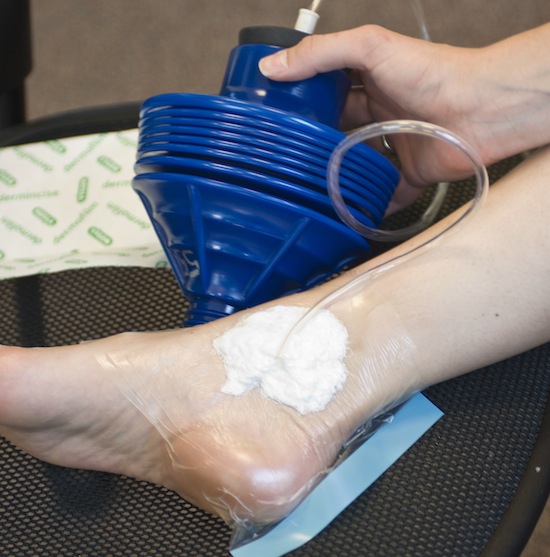
No more. Danielle Zurovcik, a doctoral student at MIT, has created a hand-powered suction-healing system that costs about $3.
NASA’s New Satellite Captures Amazing Hi-Res Image of Earth

Suomi NPP, NASA’s newest Earth-watching satellite, has taken a high resolution image of Earth, one of the most beautiful such images ever created. It’s available in 8000×8000 pixel resolution, and it takes a while to download, but it’s definitely worth it.
Link
Tuesday, January 24, 2012
Advanced Cell Technology: Stem cell retinal implants safe
Early results from the world's first human trial using embryonic stem cells to treat diseases of the eye suggest the method is safe, say researchers.
 Link
Link
US firm Advanced Cell Technology told The Lancet how two patients who had received the retinal implants were doing well, four months on.
Trials of the same technique have now started at London's Moorfields Eye Hospital.
But experts say it will be years before these treatments are proven.
The aim of these first human studies is to establish that the treatment is safe to use.

US firm Advanced Cell Technology told The Lancet how two patients who had received the retinal implants were doing well, four months on.
Trials of the same technique have now started at London's Moorfields Eye Hospital.
But experts say it will be years before these treatments are proven.
The aim of these first human studies is to establish that the treatment is safe to use.
Friday, January 20, 2012
Tuesday, January 17, 2012
For Intrigue, Malaria Drug Gets the Prize
Fascinating article on the history of one of the, if not the, strongest anti Malarials available. Who would have known that Mao Zedong, in a bid to help dying North Vietnamese, commissioned top researchers and herbal healers to find a cure for malaria!
(Ironically.... Even now in Africa, in almost every country I have been the average person still uses the generally ineffective anti-malarial, Chloroquine..)
Uvealblues
The Chinese drug artemisinin has been hailed as one of the greatest advances in fighting malaria, the scourge of the tropics, since the discovery of quinine centuries ago.
Artemisinin’s discovery is being talked about as a candidate for a Nobel Prize in Medicine. Millions of American taxpayer dollars are spent on it for Africa every year.
But few people realize that in one of the paradoxes of history, the drug was discovered thanks to Mao Zedong, who was acting to help the North Vietnamese in their jungle war against the Americans. Or that it languished for 30 years thanks to China’s isolation and the indifference of Western donors, health agencies and drug companies.
Link
(Ironically.... Even now in Africa, in almost every country I have been the average person still uses the generally ineffective anti-malarial, Chloroquine..)
Uvealblues
The Chinese drug artemisinin has been hailed as one of the greatest advances in fighting malaria, the scourge of the tropics, since the discovery of quinine centuries ago.
Artemisinin’s discovery is being talked about as a candidate for a Nobel Prize in Medicine. Millions of American taxpayer dollars are spent on it for Africa every year.
But few people realize that in one of the paradoxes of history, the drug was discovered thanks to Mao Zedong, who was acting to help the North Vietnamese in their jungle war against the Americans. Or that it languished for 30 years thanks to China’s isolation and the indifference of Western donors, health agencies and drug companies.
Link
Friday, January 13, 2012
The Richard Feynman Trilogy: The Physicist Captured in Three Films
This is a great find for all fans of Richard Feynman!
Uvealblues
It’s another case of the whole being greater better than the sum of the parts. Between 1981 and 1993, documentary producer Christopher Sykes shot three films and one TV series dedicated to the charismatic, Nobel Prize-winning physicist Richard Feynman (1918-1988). We have presented these documentaries here individually before (some several years ago), but never brought them together. So, prompted by a post on Metafilter, we’re doing just that today.
Link
Uvealblues
It’s another case of the whole being greater better than the sum of the parts. Between 1981 and 1993, documentary producer Christopher Sykes shot three films and one TV series dedicated to the charismatic, Nobel Prize-winning physicist Richard Feynman (1918-1988). We have presented these documentaries here individually before (some several years ago), but never brought them together. So, prompted by a post on Metafilter, we’re doing just that today.
Link
Wednesday, January 11, 2012
How much Vitamin D is tToo Much?
Too much Vitamin D is associated with lower levels of a marker for cardiovascular inflammation:
C-Reactive Protein
Link
C-Reactive Protein
Link
Sunday, January 08, 2012
The Fat Trap
For 15 years, Joseph Proietto has been helping people lose weight. When these obese patients arrive at his weight-loss clinic in Australia, they are determined to slim down. And most of the time, he says, they do just that, sticking to the clinic’s program and dropping excess pounds. But then, almost without exception, the weight begins to creep back. In a matter of months or years, the entire effort has come undone, and the patient is fat again. “It has always seemed strange to me,” says Proietto, who is a physician at the University of Melbourne. “These are people who are very motivated to lose weight, who achieve weight loss most of the time without too much trouble and yet, inevitably, gradually, they regain the weight.”
Anyone who has ever dieted knows that lost pounds often return, and most of us assume the reason is a lack of discipline or a failure of willpower. But Proietto suspected that there was more to it, and he decided to take a closer look at the biological state of the body after weight loss.
Wednesday, December 21, 2011
Friday, December 16, 2011
Angela Jolie's Directorial Debut
I am looking forward to seeing this!
http://www.vanityfair.com/video/2011/12/1326198072001
http://www.vanityfair.com/video/2011/12/1326198072001
Thursday, December 15, 2011
How Coffee Can Galvanize Your Workout
Can a cup of coffee motivate you to relish your trips to the gym this winter? That question is at the heart of a notable study of caffeine and exercise, one of several new experiments suggesting that, whatever your sport, caffeine may allow you to perform better and enjoy yourself more.
Link
Link
Wednesday, December 14, 2011
A short biography of Ron Paul
GREENVILLE, N.C. -- Long before he discovered Friedrich Hayek and other free-market economists, Ron Paul got a lesson in sound money from his oldest brother, Bill.
It was the height of World War II, and the Paul boys were laying aside quarters from their Pittsburgh Press routes and pooling pennies earned from pulling dirty milk bottles off the line at the family dairy to buy war bonds. One day, Ronnie suggested what was, in retrospect, a rather Keynesian solution: "Why doesn't the government just PRINT this money?"
"Well," Bill responded, "then the money wouldn't have any value."
Link
It was the height of World War II, and the Paul boys were laying aside quarters from their Pittsburgh Press routes and pooling pennies earned from pulling dirty milk bottles off the line at the family dairy to buy war bonds. One day, Ronnie suggested what was, in retrospect, a rather Keynesian solution: "Why doesn't the government just PRINT this money?"
"Well," Bill responded, "then the money wouldn't have any value."
Link
Tuesday, December 13, 2011
Losing 'Virginity': Olive Oil's 'Scandalous' Fraud
Extra-virgin olive oil is a ubiquitous ingredient in Italian recipes, religious rituals and beauty products. But many of the bottles labeled "extra-virgin olive oil" on supermarket shelves have been adulterated and shouldn't be classified as extra-virgin, says New Yorker contributor Tom Mueller.
Mueller's new book, Extra Virginity: The Sublime and Scandalous World of Olive Oil, chronicles how resellers have added lower-priced, lower-grade oils and artificial coloring to extra-virgin olive oil, before passing the new adulterated substance along the supply chain. (One olive oil producer told Mueller that 50 percent of the olive oil sold in the United States is, in some ways, adulterated.)
 Link
Link
Mueller's new book, Extra Virginity: The Sublime and Scandalous World of Olive Oil, chronicles how resellers have added lower-priced, lower-grade oils and artificial coloring to extra-virgin olive oil, before passing the new adulterated substance along the supply chain. (One olive oil producer told Mueller that 50 percent of the olive oil sold in the United States is, in some ways, adulterated.)

MIT builds camera that can capture at the speed of light (video)
A team from the MIT media lab has created a camera with a "shutter speed" of one trillion
exposures per second -- enabling it to record light itself traveling from one point to another. Using a heavily modified Streak Tube (which is normally used to intensify photons into electron streams), the team could snap a single image of a laser as it passed through a soda bottle.
Link
exposures per second -- enabling it to record light itself traveling from one point to another. Using a heavily modified Streak Tube (which is normally used to intensify photons into electron streams), the team could snap a single image of a laser as it passed through a soda bottle.
Link
Monday, December 12, 2011
Monday, December 05, 2011
Vascular condition and MS share risk factors
People with a specific vascular condition, but no known neurological disease, display many of the same risk factors as people with multiple sclerosis, a new study shows.
Link
The study, published in PLoS One, is the first to investigate risk factors for chronic cerebrospinal venous insufficiency (CCSVI ) in which blood flow from the central nervous system to the periphery is impaired. It has been hypothesized that this narrowing of veins restricts blood flow from the brain, altering brain drainage and possibly contributing to brain tissue injury that is associated with MS.
(..)
Link
The study, published in PLoS One, is the first to investigate risk factors for chronic cerebrospinal venous insufficiency (CCSVI ) in which blood flow from the central nervous system to the periphery is impaired. It has been hypothesized that this narrowing of veins restricts blood flow from the brain, altering brain drainage and possibly contributing to brain tissue injury that is associated with MS.
(..)
Common risk factors
The study found that CCSVI risk factors occurred more frequently in 1) those with a history of mononucleosis, i.e. infected with Epstein-Barr virus; 2) those with irritable bowel syndrome; 3) those who smoke or have a history of smoking.
“All three are confirmed risk factors for MS,” says second author Bianca Weinstock-Guttman, professor of neurology. According to the results, individuals with CCSVI were 2.7 times more likely than individuals without CCSVI to have infectious mononucleosis, 3.9 times more likely to have irritable bowel syndrome and 1.98 times more likely to have a history of smoking.
“Our finding that a risk factor that is highly significant for MS—Epstein-Barr virus, indicated by a history of infectious mononucleosis—is strongly associated with CCSVI, is important,” says Zivadinov. “This is the first time a connection has been found between Epstein-Barr virus and CCSVI.
Sunday, December 04, 2011
The Life Reports II
From David Brooks of the NY TIMES:
A few weeks ago, I asked people over 70 to send me “Life Reports” — essays about their own lives and what they’d done poorly and well. They make for fascinating and addictive reading, and I’ve tried to extract a few general life lessons: Link
A few weeks ago, I asked people over 70 to send me “Life Reports” — essays about their own lives and what they’d done poorly and well. They make for fascinating and addictive reading, and I’ve tried to extract a few general life lessons: Link
Gifts That Say You Care
GIVE Grandma a bit of credit! These holidays, would she rather receive a silly reindeer sweater or help a schoolchild acquire glasses to see the blackboard clearly for the first time?
Choosing the perfect holiday gift is one of life’s greater challenges, modestly more difficult than earning a Ph.D. in astrophysics. So it is time for my annual gift guide.
For starters, the Web sites of the major humanitarian organizations offer alluring holiday gifts. Through the International Rescue Committee, $30 buys a flock of chickens for a needy family. At CARE, $29 gets a girl a school uniform. Through Heifer International, you can stock a fish pond for $300. With Mercy Corps, $69 can start a female entrepreneur in the sewing business.
Beyond those organizations, here are some lesser-known charities that may help put a grin on Grandma — and on someone else.
Helen Keller International
fights blindness and malnutrition around the world with simple and cost-effective programs. One of the best ways to improve children’s health is to focus on micronutrients, like iodine, vitamin A and zinc — and in some cases to fortify foods with nutrients at a negligible cost. Helen Keller International, at hki.org, is a leader in that effort, and gets more bang for the buck than almost any group I can think of.
And those glasses I mentioned for a schoolchild? That’s a Helen Keller International program, ChildSight, which operates in the United States as well as in Indonesia and Vietnam. Schoolchildren are screened for vision problems, and those who need glasses get them. Providing glasses costs just $25 per child — which is a much better value than a sweater that will sit in a drawer for eternity.
12 Things You Didn’t Know Facebook Could Do
As the number of features grows, though, so does a corresponding problem: Most of Facebook’s 750 million users don’t know these features exist. Some don’t know how to find them, some don’t go hunting for them in Facebook’s ever-growing interface of controls and many don’t even think of them in the first place. A few minutes of exploration can uncover functions that make Facebook not just an addiction but a pleasure to use.
Link
Link
Tuesday, November 29, 2011
New Hope of a Cure for H.I.V.
Medical researchers are again in pursuit of a goal they had all but abandoned: curing AIDS.
Link
Link
Until recently, the possibility seemed little more than wishful thinking. But the experiences of two patients now suggest to many scientists that it may be achievable.
One man, the so-called Berlin patient, apparently has cleared his H.I.V. infection, albeit by arduous bone marrow transplants.
More recently, a 50-year-old man in Trenton underwent a far less difficult gene therapy procedure. While he was not cured, his body was able to briefly control the virus after he stopped taking the usual antiviral drugs, something that is highly unusual.
“It’s hard to understate how the scientific community has swung in its thinking about the possibility that we can do this,” said Kevin Frost, chief executive of the Foundation for Aids Research, a nonprofit group. “Cure, in the context of H.I.V., had become almost a four-letter word.”
Wednesday, November 16, 2011
Apple’s AssistiveTouch Helps the Disabled Use a Smartphone
If you’re blind, you can literally turn the screen off and operate
everything — do your e-mail, surf the Web, adjust settings, run apps —
by tapping and letting the phone speak what you’re touching. You can
also magnify the screen or reverse black for white (for better-contrast
reading).
Link
(..)
One new feature, called AssistiveTouch, is Apple’s accessibility team at its most creative. When you turn on this feature in Settings->General->Accessibility, a new, white circle appears at the bottom of the screen. It stays there all the time.
When you tap it, you get a floating on-screen palette. Its buttons trigger motions and gestures on the iPhone screen without requiring hand or multiple-finger movement. All you have to be able to do is tap with a single finger — even a stylus you’re holding in your teeth or fist.
Link
(..)
One new feature, called AssistiveTouch, is Apple’s accessibility team at its most creative. When you turn on this feature in Settings->General->Accessibility, a new, white circle appears at the bottom of the screen. It stays there all the time.
When you tap it, you get a floating on-screen palette. Its buttons trigger motions and gestures on the iPhone screen without requiring hand or multiple-finger movement. All you have to be able to do is tap with a single finger — even a stylus you’re holding in your teeth or fist.
Tuesday, November 15, 2011
Students Hack Microsoft’s Kinect to Assist the Visually Impaired
Two computer science students from the University of Pennsylvania, Eric Berdinis and Jeff Kiske,  have hacked together a very impressive tactile feedback system for the visually impaired using a Microsoft Kinect device and a number of vibration actuators. The Kinecthesia is a belt worn camera system that detects the location and depth of objects in front of the wearer using depth information detected by the Kinect sensor. This information is processed on a BeagleBoard open computer platform and then used to drive six vibration motors located to the left, center and right of the user. The video below shows a demo of the system in use and gives a quick explanation of its operation.
Thursday, November 10, 2011
Study Finds Signs of Awareness in 3 ‘Vegetative’ Patients
Three severely brain-injured people thought to be in an irreversible “vegetative” state showed signs of full consciousness when tested with a relatively inexpensive and commonly used method of measuring brain waves, doctors reported Wednesday. Experts said the findings, if replicated, would change standards in treating such patients.
Link
Link
Thursday, November 03, 2011
Cell Study Finds a Way to Slow Ravages of Age
Having spent two years in a laboratory studying the mechanism of age related macular degneration, I have long suspected that the accumulation of toxins from senescent cells may be responsible for some of the devastating effects on vision which can happen in this condition. This study gives further credence to this idea...
Uvealblues
Link
Scientists may have found a way to put off some conditions of aging, according to a study in which they postponed or even prevented such afflictions as cataracts and wrinkle-inducing fat loss in mice by removing cells that had stopped dividing.
(..)
Researchers at the Mayo Clinic in Rochester, Minn., found for the first time that by using a drug to target and kill senescent cells, they could essentially freeze some aspects of the aging process.
Though the research, published Wednesday in the journal Nature, is in its very early stages, it suggests that senescent-cell clearance could be one path to staying healthy while aging.
(..)
When cells become senescent, they produce harmful compounds such as those that cause inflammation. Chronic tissue inflammation with aging is thought to underlie dementia, atherosclerosis and diabetes, among other ills, according to James Kirkland, head of Mayo's Center on Aging, who was also an author of the study.
(..)
In the study reported on Wednesday, the team used mice designed to age faster than normal and treated them with a drug that identifies cells that have stopped dividing. The drug then initiates the natural process that leads to cell death by puncturing the membranes of those cells alone.
The researchers treated some mice over the course of their lifetimes and found a "quite dramatic delay" in the development of cataracts and age-related changes to muscle and fat, Dr. van Deursen said.
Uvealblues
Link
Scientists may have found a way to put off some conditions of aging, according to a study in which they postponed or even prevented such afflictions as cataracts and wrinkle-inducing fat loss in mice by removing cells that had stopped dividing.
(..)
Researchers at the Mayo Clinic in Rochester, Minn., found for the first time that by using a drug to target and kill senescent cells, they could essentially freeze some aspects of the aging process.
Though the research, published Wednesday in the journal Nature, is in its very early stages, it suggests that senescent-cell clearance could be one path to staying healthy while aging.
(..)
When cells become senescent, they produce harmful compounds such as those that cause inflammation. Chronic tissue inflammation with aging is thought to underlie dementia, atherosclerosis and diabetes, among other ills, according to James Kirkland, head of Mayo's Center on Aging, who was also an author of the study.
(..)
In the study reported on Wednesday, the team used mice designed to age faster than normal and treated them with a drug that identifies cells that have stopped dividing. The drug then initiates the natural process that leads to cell death by puncturing the membranes of those cells alone.
The researchers treated some mice over the course of their lifetimes and found a "quite dramatic delay" in the development of cataracts and age-related changes to muscle and fat, Dr. van Deursen said.
Wednesday, November 02, 2011
David Hoffman--Congratulations!
David Hoffman, a Sageridge graduate, has just been named by Bloomberg Media one of the top 25 young entrepreneurs in America!!! He and his two co-founders have created a social media tool for upcoming bands...
 Link
Link

Monday, October 31, 2011
What Happens After a Python Gorges May Help Human Hearts

BOULDER, Colo. — Pythons are known for their enormous appetites. In a single meal they can devour animals at least as big as they are — deer, alligators pigs and house pets, for example.
Equally remarkable is what happens inside the python as it digests its prey. Within a day, its heart and other organs can double in size. The metabolic rate and production of insulin and lipids soar.
Then, like an accordion, the python’s organs return to normal size in just a few days. Metabolism slows. Then the snake can fast for months, even a year, without losing muscle mass or showing any ill effects, ready to ambush new prey.
How this process happens so rapidly is a biological mystery with important implications for human health, particularly when it comes to heart failure. Now scientists at the University of Colorado here are reporting that they have partly solved it.
(..)
Understanding such exaggerated variations, the researchers say, could help them develop novel ways to delay, prevent, treat or even reverse various hereditary and acquired human diseases.
Pharmaceutical companies have scientifically manipulated substances from other reptiles to develop marketed drugs. For example, Byetta, a diabetes drug, is derived from a hormone found in Gila monster saliva.
Thursday, October 27, 2011
Can Romance Be Reduced to Pronouns?
In the speed-dating study, Pennebaker and his colleague Molly Ireland found that couples who used similar levels of personal pronouns, prepositions and even articles were three times as likely to want to date each other compared with those whose language styles didn’t match.( ) The metric, called language style matching (L.S.M.), was also better at predicting who didn’t make a love connection than the individuals themselves, several of whom showed interest in a partner who did not reciprocate.(
 ) “It does better than humans themselves who are in the interaction,” said Pennebaker, author of the new book “The Secret Life of Pronouns.” “Some of the most revealing words we use are the shortest and most forgettable.”
Link
) The metric, called language style matching (L.S.M.), was also better at predicting who didn’t make a love connection than the individuals themselves, several of whom showed interest in a partner who did not reciprocate.() “It does better than humans themselves who are in the interaction,” said Pennebaker, author of the new book “The Secret Life of Pronouns.” “Some of the most revealing words we use are the shortest and most forgettable.”Link
Thursday, October 20, 2011
The Doctor’s Remedy: Turmeric for Joint Pain
Yet another reason to go eat some more curry!
Uvealblues
What the Science Shows: A study published in The Journal of Alternative and Complementary Medicine in 2009 compared the active ingredient in turmeric, curcumin, with ibuprofen for pain relief in 107 people with knee osteoarthritis. The curcumin eased pain and improved function about as well as the ibuprofen. Another study, by researchers at Baylor University Medical Center in 2008, reported that taking curcumin daily in moderate doses for up to three months was safe.
The Caveats
Because the active compound in turmeric can sometimes slow blood clotting, avoid taking it at least two weeks before any scheduled surgery, and do not mix with blood thinners like warfarin and Plavix. It may also worsen gallbladder problems, so avoid it if you have gallstones. Check with your doctor before trying it.
Link
Uvealblues
What the Science Shows: A study published in The Journal of Alternative and Complementary Medicine in 2009 compared the active ingredient in turmeric, curcumin, with ibuprofen for pain relief in 107 people with knee osteoarthritis. The curcumin eased pain and improved function about as well as the ibuprofen. Another study, by researchers at Baylor University Medical Center in 2008, reported that taking curcumin daily in moderate doses for up to three months was safe.
The Caveats
Because the active compound in turmeric can sometimes slow blood clotting, avoid taking it at least two weeks before any scheduled surgery, and do not mix with blood thinners like warfarin and Plavix. It may also worsen gallbladder problems, so avoid it if you have gallstones. Check with your doctor before trying it.
Link
Wednesday, October 19, 2011
First Results of Phase 3 Trial of RTS,S/AS01 Malaria Vaccine in African Children
Exciting news in the latest journal of New England Journal of Medicine regarding a vaccine for Malaria:
Uvealblues!
Link
As the accompanying editorial notes this could be available in some African countries in 2015!
Link
..
What does this vaccine mean for the future of the control and elimination of malaria? The considerable increase in global funding is paying dividends. In places where effective interventions (insecticide-treated bed nets, insecticides, and artemisinin-combination treatments) are being intensively deployed, malaria morbidity and mortality are falling. Several new, simple, affordable interventions, such as seasonal chemoprevention among young children in areas of seasonally high malaria transmission and the use of artesunate in patients with severe malaria, can also provide substantial reductions in mortality. The very low rate of death from malaria in this large trial (only 10 deaths directly attributed to malaria) testifies to the benefits of providing early diagnosis and effective antimalarial treatment. But there are real dangers ahead. How will the necessary funding be sustained in the face of a global economic downturn, along with a reduction in political pressure associated with declining mortality from malaria? In addition, artemisinin resistance in malaria parasites and pyrethroid resistance in anopheline mosquito vectors pose very serious threats.
Uvealblues!
Link
As the accompanying editorial notes this could be available in some African countries in 2015!
Link
..
What does this vaccine mean for the future of the control and elimination of malaria? The considerable increase in global funding is paying dividends. In places where effective interventions (insecticide-treated bed nets, insecticides, and artemisinin-combination treatments) are being intensively deployed, malaria morbidity and mortality are falling. Several new, simple, affordable interventions, such as seasonal chemoprevention among young children in areas of seasonally high malaria transmission and the use of artesunate in patients with severe malaria, can also provide substantial reductions in mortality. The very low rate of death from malaria in this large trial (only 10 deaths directly attributed to malaria) testifies to the benefits of providing early diagnosis and effective antimalarial treatment. But there are real dangers ahead. How will the necessary funding be sustained in the face of a global economic downturn, along with a reduction in political pressure associated with declining mortality from malaria? In addition, artemisinin resistance in malaria parasites and pyrethroid resistance in anopheline mosquito vectors pose very serious threats.
Sunday, October 16, 2011
The only Task is to Love
This is a profound essay on what it is like to raise a child with a terminal illness...
Uvealblues
Notes From a Dragon Mom: Link
Senegal Curbs a Bloody Rite for Girls and Women
Across the continent, an estimated 92 million girls and women have undergone it. But like more than 5,000 other Senegalese villages, Sare Harouna has joined a growing movement to end the practice.
(..)
In my many discussions with people in Africa, I learned that female genital cutting is such a long standing natural tradition which makes it hard to gain ground. However, the strategy outlined in this piece from Ms. Dugger at the New York Times shows that succss is indeed achievable!
Uvealblues
The movement to end genital cutting is spreading in Senegal at a quickening pace through the very ties of family and ethnicity that used to entrench it. And a practice once seen as an immutable part of a girl’s life in many ethnic groups and African nations is ebbing, though rarely at the pace or with the organized drive found in Senegal.
The change is happening without the billions of dollars that have poured into other global health priorities throughout the developing world in recent years. Even after campaigning against genital cutting for years, the United Nations has raised less than half the $44 million it set as the goal.
But here in Senegal, Tostan, a group whose name means “breakthrough” in Wolof, Senegal’s dominant language, has had a major impact with an education program that seeks to build consensus, African-style, on the dangers of the practice, while being careful not to denounce it as barbaric as Western activists have been prone to do.
Link to article: here
Link to accompanying video here:
Friday, October 14, 2011
Sprinter, 100, sets record and aims for marathon
Fauja Singh, a 100-year-old British man, has run his way to eight sprinting world records and is aiming to set another, when he takes part in the Toronto Marathon.
Mr Singh broke the records for 100-year-old men in all eight sprinting distances on Thursday. The Guinness Book of World Records will be on hand on Sunday to document his attempt at completing a full marathon distance.
Link
Mr Singh broke the records for 100-year-old men in all eight sprinting distances on Thursday. The Guinness Book of World Records will be on hand on Sunday to document his attempt at completing a full marathon distance.
Link
Wednesday, October 12, 2011
In Some Chinese Hospitals, Violence Is Out of Control and It's Doctors Who Are at Risk
On a recent Monday afternoon, doctors at Beijing Tongren Hospital stopped working. Their hour-long protest aimed to raise awareness about what they say is a rising problem in Chinese hospitals: attacks on medical personnel. "Punish the attacker severely and give dignity back to doctors," read a digital sign set up by the staff, according to state media.
Days earlier, Xu Wen, a 43-year-old otolaryngologist at the hospital, had been brutally attacked by a dissatisfied patient.
Read more: http://www.time.com/time/world/article/0,8599,2096630,00.html#ixzz1aZozluEO
Uncovering the business of child sacrifice in Uganda
A BBC investigation has discovered that many cases of child sacrifice in Uganda are not being followed up by the police and little is being done to protect potential victims.
According to a major report released by the charity Jubilee Campaign, around 900 Ugandan children have fallen victim to the practice.
The ritual, which some believe brings wealth and good health, was almost unheard of in the country until around three years ago, but it has re-emerged, seemingly alongside a boom in the country's economy.
Link (to a disturbing video)
According to a major report released by the charity Jubilee Campaign, around 900 Ugandan children have fallen victim to the practice.
The ritual, which some believe brings wealth and good health, was almost unheard of in the country until around three years ago, but it has re-emerged, seemingly alongside a boom in the country's economy.
Link (to a disturbing video)
Friday, October 07, 2011
Apple logo commemorating Steve Jobs a cyber hit
HONG KONG - A Hong Kong design student's poignant tribute to Apple founder Steve Jobs became an internet hit today with its minimalist, touching symbolism and brought a job offer and a flood of commemorative merchandise using his design.
Link

Link

Subscribe to:
Posts (Atom)


 Posts
Posts


